|
HOME |
Wey People : Over two hundred movers and shakers who were born, lived or worked in the Wey Valley. |
Wey WEY LIFE |
|
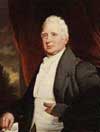
Sir William More Built Loseley House near Guildford and developed this prosperous agricultural estate from 1562 - 1568. The More-Molyneux family continue to live at the house today. Edmund Spenser
A contemporary of William Shakespeare, Spenser was a poet of some repute. Whilst resident in Alton he wrote many of his works including The Faerie Queen (1596). As mark of his literary contribution he is buried at Westminster Abbey alongside Chaucer. John Pitts The Catholic scholar and writer was born in Alton and was educated at Winchester College. Having graduated from New College Oxford in 1580 Pitts went on to be ordained as a priest eight years later and was appointed Professor at the English College in Reims, France in the same year. He was to spend most of his life living in France and Germany and had a number of scholarly works published including his best known work Relationum Historicarum de rebus Angliæ which was published posthumously in 1619, although three additional parts remained unpublished and were held in manuscript. Pitts was also appointed confessor and almoner to the Duchess of Cleves, a position he held for 12 years, before becoming dean of Liverdun, France. George Abbot
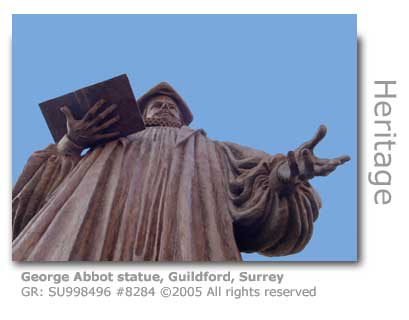
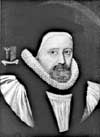
The son of a poor cloth worker in Guildford, Abbot was to become one of the most powerful figures of his time. Having been sponsored through his schooling by a local benefactor he was appointed the Archbishop of Canterbury in 1610. Abbot was a proponent of the Authorised Version of the Bible. His tomb is in the Church of the Holy Trinity in Guildford.
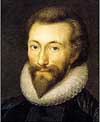
The poet and lyricist, whilst working at Pyrford Place near Woking as private secretary to Francis Wolly, eloped with Elizabeth More of the Loseley dynasty and was imprisoned for his impudence. Eventually released and pardoned he was at last allowed to marry. A portrait of Donne, reputed to have been commissioned by the poet to woo an unresponsive lover, has been saved for the nation partly through public subscription (May 2006). The British public have donated almost £300,000 towards the fund promoted by the National Portrait Gallery who have all but secured the £1.4m needed to buy the painting from the family of Tory MP Michael Ancram. The Ancram's have had possession of the painting since 1631. The campaign has been the the most successful public appeal the National Portrait Gallery has ever run in its 150 years. Public donations ranged from £2 up to an individual anonymous donation of £100,000. £750,000 was granted by the National Heritage Fund and £200,000 by The Art Fund charity. The portrait is regarded as one of the most important and charismatic paintings ever produced of of a British poet. It was painted in 1595 by an unknown artist. Donne was 23 when the portrait was painted and is depicted with a suggestively unlaced collar. At the time he was penning his now famous love poems which included To His Mistress Going To Bed and The Flea. The painting was bequeathed to Donne's friend, Robert Kerr, the 1st Marquess of Lothian and stayed with the family after Donne's death until Michael Ancram, the 13th Marquess of Lothian decided to put the painting up for sale in order to settle an inheritance tax bill following the death of his father two years ago. The family executors agreed to reduce the original gross asking price from £2.36m to £2m to aid the Portrait Gallery's purchase. Tax concessions meant that the gallery had to raise £1.4m. Source:
SEE THE PAINTING AT THE NATIONAL PORTRAIT GALLERY SITE Sir Richard Weston The founder of the Wey Navigation, Weston was an agricultural reformer who introduced revolutionary new land management practices that were to transform British farming. Owner of Sutton Place near Guildford, Weston was to build the canal after his experimentation with controlled flooding of pastures to boost hay yields. Weston is credited with introducing white clover and turnips into Britain. White clover is a protein rich fodder crop for cattle that has the added benefit of replacing nitrogen into the soil. Sir William Temple Diplomat, statesman and essayist who bought Compton Hall near Farnham and began to expand and develop the estate that he renamed Moor Park after the house where he and his wife had spent their honeymoon. Temple created a garden of some note in the new Dutch style and made a canal its centre piece. He died at the house. He was noted as being the diplomat that successfully negotiated the marriage between William of Orange and Princess Mary of England, a deal which was formalised under the Triple Alliance of 1668. The author Jonathan Swift (qv) worked for Sir William for a period as his secretary. Arthur Herbert Herbert, who was bestowed as Earl of Torrington, lived at Oatlands Park in Weybridge. He was court-martialled whilst a naval Admiral for retreating his Anglo-Dutch fleet during the Battle of Beachy Head in 1690. He was acquitted. Sir Theophilus Oglethorpe A professional soldier, politician and staunch supporter of the Stuart dynasty he owned Westbrook House (now the Meath Home) in Godalming. Contemporary rumour suggested that the son born to King William and Queen Mary died at birth, and Sir Oglethorpe smuggled his own recently born son into the royal bedchamber in a warming pan to replace the dead baby and hence ensure the royal lineage was preserved. Oglethorpe also represented Haslemere as MP and his three sons Lewis, Theophilus and James were also all to become MPs for the town. His son James was to found the state of Georgia in 1733 when he sailed to the Americas. John Balchen
Admiral Sir John Balchen was born in Godalming and served with the Royal Navy in a long and distinguished career. In his 60 years of service he fought numerous battles against the French and Spanish navies and was twice captured by the French. Balchen died in the shipwreck of the 100-gun HMS Victory off the Channel Islands during operations to prevent the French from blockading Spanish and Portugeuse ports in the War of the Austrian Succession (1740 - 1748). He was knighted shortly before his death. At the age of 21 Oglethorpe won the seat for Haslemere in Parliament but his career as both an MP and soldier was to be shortlived. Oglethorpe was wounded at the Battle of Schellenberg (1) in July 1704 and was to die of his wounds three months later. The Haslemere constituency was pretty much an Oglethorpe possession for quite a period as his father Sir Theophilus Oglethorpe had held the seat previously, and it was later to also be held by his two brothers, Theophilus and James respectively. (1) The Battle of Schellenberg was fought during the War of Spanish Succession as part of the Duke of Marlborough's campaign to rescue Vienna. Sir Thomas Hopson Admiral Hopson became a national hero when during the Battle of Vigo Bay in 1702 he manoeuvred his ship The Torbay to break through a nine foot (2.7 m) boom laid across the bay to defeat the Spanish. His family home was in Weybridge. David Colyear Career soldier Colyear was made an Earl in recognition of his service by William III. As Earl of Portmore he was to start a one hundred year financial interest for the Portmore family in the Wey Navigation by investing £3,000 in shares in the canal. The family pile was at Portmore Park near Weybridge. Daniel Defoe
Military strategist to William III and author, Defoe wrote Robinson Crusoe (1719) whilst a resident in the Wey Valley. Other works included Moll Flanders (1722) and Roxana (1724). Defoe was a prolific writer having produced over 500 books, pamphlets and journals on a wide variety of topics. He is accredited with having been the first English writer using the novel format.
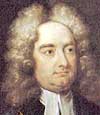
Secretary to the Whig statesman Sir William Temple at Moor Park near Farnham at the beginning of his career Swift, who later was to become famous for writing Gulliver's Travels, had demonstrated in person by the king, William of Orange during his visit to the house, how to cut and prepare asparagus, the king's favourite. Swift wrote Tale of a Tub (1704) and Battle of the Books (1704) whilst living at Moor Park. Swift was born in Ireland and returned to Ireland after the death of Sir William. It was at Moor Park that he met Stella to whom he dedicated his Journal to Stella (1710-11). Surprisingly Gulliver's Travels, a blistering satire on what he saw as a corrupt English Establishment, was the only work for which he was paid having received £200. Swift was extremely generous during his lifetime donating a third of his salary to charitable causes and another third to fund the foundation of St Patrick's Hospital for Imbeciles (1757). Towards the end of his life Swift slowly lost his mind and his last years were looked after by a trust. He is buried alongside his beloved Stella in St Patrick's Cathedral in Dublin.
One-time member of parliament for Haslemere, Oglethorpe went on to emigrate to America in 1732 where he founded the State of Georgia. He was born the son of Sir Theophilus Oglethorpe in Westbrook Place, Godalming. His father and two brothers Lewis and Theophilus jnr were also MPs for Haslemere. Oglethorpe was a professional soldier, an anti-slavery philanthropist and a champion of the poor and Jews. His Godalming house now as Meath Home provides people suffering from epilepsy with residential treatment. Stephen Elmer The son of a Farnham maltster as an artist Elemer continued to work in the family business throughout his painting career. He gained a high reputation for his works depicting animals, birds, still life and rural scenes. His game bird pictures were true to life, accurately drawn and captured the characteristic pose specific to each species. He was made a member of the Society of Artists in 1763 and in 1772 after sending paintings of fish, animals and birds to the Royal Academy, he was elected an Associate member of that body. He gained a reputation as the most successful British painter of still life and dead game of that generation. Elmer once owned Willmer House, now housing Farnham Museum in West Street. Gilbert White
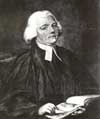
The reverend Gilbert White was a renowned naturalist who closely studied nature around his home in Selborne near Alton. He gathered all of his knowledge into his Natural History of Selborne (1788). Augustus Toplady
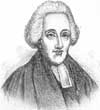
Born in Farnham, the Christian minister and hymnwriter campaigned bitterly against Calvinism throughout his life. Toplady composed the ever-popular hymn Rock of Ages (1775) apparently whilst sheltering from a violent thunderstorm. John Murray Regarded as being instrumental in the founding of the Universalist denomination in America, Murray was born into a strict Calvinist family in Alton. At the age of 20 he was to be excommunicated from the Methodist Church after he embraced Universalism (1) and fled to America where he preached as a Universalist minister. (1) Universalism is a religion and theology that holds that all persons and creatures are related to God and will be reconciled to God. John Russell Artist to George III and a member of the Royal Academy, Guildford born John Russell was a celebrated portrait artist of royalty and received many commissions to paint the most influential figures of his time. He was also a respected astronomer and many of his lunar sketches and engravings are held by the Museum of the History of Science. The Guildford House Gallery in his home town houses a collection of his portraits. There is a plaque marking his birthplace in High Street Guildford. William Curtis An Altonian who devoted his life to the study of British plants. His lavishly illustrated magazine The Flower Garden Displayed was launched in 1787, and continues today as Kew Magazine published by Kew Gardens. The Curtis Museum in Alton commemorates his life. Sir Home Riggs Popham A British admiral who l ived in Weybridge and devised the Semaphore Telegraph Stations system of passing naval messages from the coast to London. At the time the stations were referred to as Popham's Semaphore. William Cobbett
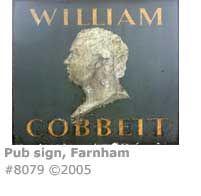
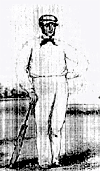
Born in Farnham, William Cobbett's name became synonymous with fair play and social justice, not just along the valley but throughout Britain, and even in the fledgling American states. Cobbett signed up for the army at the age of 21 and quickly discovered just how corrupt and unjust the military system was. In trying to expose what he saw as shocking, he became a victim and fled for his life fearing that his court martial was certain to lead to severe punishment, if not execution. Cobbett chose America as his new home in 1791, but stumbled headlong into the immense corruption of the politicians and government there. Irked by what he saw Cobbett started publishing his views under the pseudonym Peter Porcupine. Sued for libel in 1800 Cobbett had to flee back to England in order to escape the punitive judgement which drove him into bankruptcy. Two years later he founded the radical Political Register which campaigned for social and political reform. He later also founded a journal, Parliamentary Debate, in which he gave accounts of debates in the house to overcome what he saw as misreporting and misrepresentation. This publication still appears today in the form of The Hansard. Never one to rest from his tireless quest to expose corruption and injustice at every level Cobbett was hounded and threatened at every turn. He finally achieved his ambition of a seat in Parliament three years before his death. Throughout this web site are excerpts from Cobbetts highly illuminating Rural Lives. Published in 1830 it provided detailed accounts of his many travels around the country and at the time managed to expose the plight of the poor. BBC2 broadcast (September 2007) an hour long programme, presented by Nicholas Crane, as part of their Great British Journeys series investigating Cobbett's political campaigns and followed some of his 19th century Rural Rides. William 'Silver' Beldam Legendary cricketer who after his retirement became the landlord of the Barley Mow overlooking the cricket green in Tilford by the River Wey. Is accredited with laying the foundations of modern batting techniques. Jane Austen
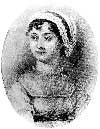
The Georgian novelist, Austen lived at Chawton just outside Alton from 1809 until her death. It was here that she wrote and revised many of her novels including Pride and Prejudice (1813) and Sense and Sensibility (1811). She is buried at Winchester Cathedral. John Austin A Weybridge resident who was attributed with being a leading political philosopher of his time. A noted British Jurist (1) Austin devoted his time to the study of law as a science and became Professor of Jurisprudence in the University of London (now University College London) 1826 - 32. (1) Jurist. Professional who studies, develops, applies or otherwise deals with the law. Cardinal Newman
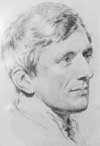
John Henry Newman was an English Catholic and radical theologian lived in Alton before becoming the first rector of the Catholic University of Ireland. Originally christened into the Church of England Newman was a major figure in the Oxford Movement, a group dedicated to trying to bring the Church of England back to its Catholic roots. He later converted to Roman Catholicism. Lord Tennyson
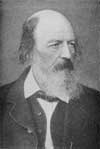
Alfred Tennyson, the Poet Laureate and dramatist, who was the fourth of twelve children, spent the last years of his life at Aldworth House, which he built in 1868 at the foot of Black Down in West Sussex close to the source of the River Wey's south branch. Tennyson often used to climb the hill to the Temple of the Wind at its summit to seek inspiration. His life was as colourful as his career as he developed a reputation as being something of a bohemian and fuelled by an addiction to port and tobacco held latitudinarian religious views flying in the face of his religious upbringing by his Anglican minister father. Tennyson was also to suffer ill health, financial failure and developed a nervous instability. He was proclaimed the national poet after his 1852 ode on the death of Wellington, further endorsed by his much vaunted The Idylls of the King in 1859. Tennyson was made a peer in 1884. He is buried at Westminster Abbey and a memorial stands in his honour in Haslemere. Fanny Kemble
A famous theatrical actress who lived in Weybridge, Kemble went on to publish her Journal of a Residence on a Georgian Plantation which was widely distributed by slavery abolitionists in 1863. Her campaign to raise awareness as to the plight of slaves in America came about when she married a wealthy planter and having joined him at his plantation was horrified at what she found. William John Conybeare Educated at Westminster and Trinity College, Cambridge where he was elected fellow in 1837, Conybeare the ecclesiastical essayist and author published a variety of works including Essays, Ecclesiastical and Social (1856) and a novel Perversion, or the Causes and Consequences of Infidelity. He is best known as the joint author of The Life and Epistles of St Paul (1851). Conybeare died at Weybridge and was buried in Brompton cemetery in London. James Wilde James Plaisted Wilde, 1st Baron of Penzance, was a British judge who presided over the Court of Probate and Divorce from 1863 until his retirement in 1872. He lived at Eashing Park near Godalming and as a keen amateur gardener he produced two new roses named Lady Penzance and Lord Penzance. From his Godalming gardens he also went on to produce a further 14 roses named after characters in the novels of Sir Walter Scott. Wilde was also vociferous in his proponent that the works of William Shakespeare were in fact authored by Francis Bacon based on the legal expertise employed in the plays. G. F. Watts
The Victorian artist and sculptor settled in Compton near Godalming to help with his deteriorating health. Watts become renowned for his allegorical pictures of great strengthy and mystery. His works can be seen in many important British galleries and also at the Watts Gallery in Compton. His wife Mary built a chapel in his name near to the gallery which with its unique architectural art nouveau has come to be an important local attraction. George Eliot
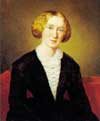
The novelist Mary Ann Evans used this pseudonym to overcome the sexism of publishers who were against the idea of women writing for a career. Her novel Middlemarch (1871) broke new ground with social observations of the time. Other works included The Mill on the Floss(1860), Silas Mariner (1861) and Daniel Deronda (1876). Evans lived for a time in Haslemere and was a regular visitor at the Crosses, home of her future husband in Weybridge. Sir John Rose
Scottish-born Rose emigrated with his parents when he was 16 to Canada and there he achieved political high office which included Solicitor General and a member of the commission (1864) to settle claims under the Oregon Treaty with the United States. In 1869 he settled in England to practice law and became an influential advisor to the Canadian Government. Rose rented Loseley Park near Guildford for some years and was interred there after his death. George MacDonald
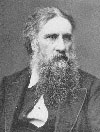
One time resident at Great Tangley Manor near Guildford and at St George's Wood at Haslemere, Scottish born MacDonald was a novelist, poet and preacher who was cited by Lewis Carroll as being an inspiration and mentor. MacDonald had been enthusiastic in his reception for Carroll's ideas for the adventures of Alice especially after seeing the excited reaction of his three daughters. As a writer of fantasy which he used to explore the human condition his works including Phantastes, the Princess and the Goblin (1872), and At the Back of the North Wind (1871) he was also to influence C. S. Lewis (who featured MacDonald as a character in The Great Divorce), J. R. R. Tolkien and the American children's novelist Madeleine L'Engle. Myles Birkett Foster The popular Victorian watercolour artist started his career as an apprentice to a wood engraver producing printing blocks for magazines including Punch and the Illustrated London News. Whilst later working as a book illustrator he trained himself to paint in watercolours and quickly became a sought after artist. He was appointed an Associate to the Royal Watercolour Society in 1860 and over a twenty year period exhibited regularly at the Royal Academy. After a succession of successful publications of his work including English Landscapes (1863) he moved in 1899 to Witley near Godalming where he had built The Hill. The house, which no longer exists, was furnished in contemporary style by the renowned furnishers Morris & Co and decorated with paintings by his friend Edward Burne-Jones, the pre-Raphaelite artist. Foster is credited with producing his best known works of idealised and sentimentalised views of the English countryside whilst living in Witley. Falling ill he moved to Weybridge in 1893 where he died. His funeral was held at All Saints Church in Witley where he is buried. Julius Caesar
The Surrey cricketer Julius Caesar, who played in 194 first-class cricket matches in a sporting career covering 18 years, was brought up in Godalming. He first played at The Oval for Godalming Cricket Club against Surrey in their winning match (Caesar scored 113 runs) in 1848 and very quickly gained a reputation for his devastating batting, which resulted him in being signed up to play for his country in 1853. He scored 4,879 runs in his career with a top score of 132 runs.
Professional cricketers were not well paid, £4 a match for a draw or loss and £5 for a win, and Caesar who was a carpenter and joiner by trade, also supplemented his earnings by working at The Cricketers pub in Nightingale Road, Farncombe in what was then a new pub. After he retired from professional cricket (1867) he became the cricket coach and groundsman at Charterhouse School in Godalming. Caesar died 11 years after retiring from professional cricket whilst lodging at the Railway Tavern (the Wey Inn today) in Godalming. Caesar was a long-standing family name, but whether his parents wanted a little amusement with the name of their last of seven children is not recorded.
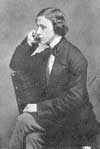
Carroll is best known for his Alice's Adventures in Wonderland (1865) and Through the Looking Glass (1872) and is commemorated on the banks of the River Wey with a unique sculpture of Alice and her sister (SEE HERE). Another sculpture was erected in the gardens of Guildford castle in 1990 (SEE HERE). The author’s family lived in The Chestnuts on Castle Hill in Guildford with their house overlooking the gardens from 1868 until 1919 and he died here in 1898 having caught flu. Although Carroll lived in Oxford, as head of the Dodgson family being the oldest brother to six unmarried sisters after the death of their father he acquired the lease for the house to provide a home for them. He did visit frequently during university holidays and many of his later works were inspired by his stays. Alice in Wonderland had been published before he came to Guildford although in 1871 he completed his second Alice book Through the Looking Glass whilst staying at Guildford. It is also believed that the idea of The Hunting of the Snark came to him whilst taking one of his many long walks in the area. Carroll as a name was a pseudonym, with the author's real name being Charles Lutwidge Dodgson under which he published many books on mathematics. He was a lecturer in the subject at Christ Church College, Oxford until 1881. As the Rev Dodgson he regularly gave the sermon at St Mary’s Church in Quarry Street. There was a plaque outside his home that incorporated many of his characters and that was designed by local children. Sadly the plaque had to be removed following a theft attempt in 2005. He is buried in The Mount Cemetery on the hill across the river visible from The Chestnuts. The son of a carver and gilder, Peak began his career as an articled clerk to an architect in London in 1851. By 1858 he had established his own practice as an architect and surveyor in Commercial Road Guildford designing everything from churches and chapels, to shops and houses. Six years later he was appointed Guildford Borough Surveyor. In the 27 years he was to hold this important and influential post Peak was to instigate and oversee a great many public building works during a period when Guildford was rapidly developing and expanding. His works include the laying out of Guildford Castle pleasure grounds, the restoration of the Castle ruins, the designing and construction of the public baths, the laying of the granite setts in the High Street in 1868 and the construction of Onslow Bridge. Peak was also responsible for developing Charlotteville as well as housing in Stoughton and around the Markenfield Road area of the town. The reservoir on Pewley Hill constructed to supply the town with clean, safe water was also his project. After his retirement in 1891 Peak was appointed Mayor of Guildford in 1899. Local historians have been left an invaluable reference to local life and developments of the time in his notebooks which are today collectively referred to as 'Peak's Diaries' and are held at the Surrey History Centre in Woking. A published version was released in 2008 to coincide with the unveiling of a commemorative plaque to the architect in the Castle grounds. Clement Scholefield Church of England chaplain and composer of hymn tunes, Scholefield spent the last years of his life living in Godalming having retired to Frith Hall in 1895. Whilst chaplain at Eton and Holy Trinity in Knightsbridge, London he contributed several hymn tunes to Church Hymns with Tunes (1874). Scholefield’s music for the hymn The Day Thou Gavest (1871) which was written by John Ellerton appeared in both Great Songs of the Church (1921) and Great Songs of the Church (1937) and is featured in Sacred Songs of the Church (2007). James Russell A highly influential 19th century railway magnate Russell was also a leading barrister of his time and heavily involved in financing and property development, with many of his property speculations undertaken in the Wey Valley. He was a key shareholder of the North Wales Narrow Gauge Railway which was to become The welsh Highland Railway Company. Russell was recorded in the national census as living at The Woodlands, Merrow in Guildford (1901) and Longdene in Haslemere (1906) which today has been converted for office use. At the time Haslemere was described as the Switzerland of England attracting 'the wealthy and exotic of the time'. Gertrude Jekyll Writer and renowned landscaper, Jekyll lived near Godalming. Widely regarded as one of the most significant names in landscape design Jekyll created over 350 gardens in Britain, Europe and the United States. Educated at the Kensington School of Art she took a close interest in botanical drawing which she developed alongside a lifelong interest in horticulture enabling her to have published 13 books and over 1,000 articles on the subject. Jekyll wrote regularly for the magazine The Garden, where she was joint editor for a period, and was a contributor to the Journal of the Royal Horticultural Society and Country Life. "All the best flower gardening . . . is the painting of a picture with living plants." She moved to Bramley Park with her family at the age of five and spent much of her life in the area. Wildly eccentric she had a formidable presence and could often be seen strutting through the town in a black cape and a hard black felt hat crowned with a plume of cock's feathers. A close friend of the architect Edwin Lutyens, much of their work was done together which included collaborations on Goddards in Abinger, Tigbourne Court in Witley and Orchards in Godalming, as well as on her own home Munstead Wood. A 1986 modern shrub rose Gertrude Jekyll, described as 'rich, pink with shapely buds opening to large, full flowers in the old fashioned style and a deep and heavy scent', was named in her honour by grower David Austin. Emma Brooke Novelist and Fabian socialist from Weybridge was an energetic activist for equal rights for women. She wrote under the pseudonym E. Fairfax Byrne with books including The Superfluous Woman and The Life Accuser. Gerard Hopkins
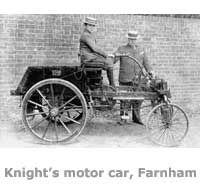
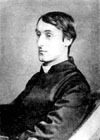
The Jesuit priest and poet is by many regarded as among the finest Victorian poets. He became an original and daring innovator at a time when poetry was firmly entrenched in traditional methodology. Hopkins has memorials in his honour at Westminster Abbey and his home town of Haslemere. Whitaker Wright The wealthy industrialist who made his fortune in mining and railway construction was subject to scandal and ridicule when he was sentenced to prison for fraud for misusing funds in a troubled venture building part of the new London Underground. Wright, who had built an enormous house complete with an underwater billiards room on his estate at Witley near Godalming, had managed to smuggle in a cyanide tablet to the court and died in the presence of his unwitting solicitor. The police later also found a revolver Wright ahd concealed in his clothes. He is buried in the graveyard of All Saints church in Witley. MORE HERE Henry Knight Knight had trained as an engineer and became intent on harnassing steam for powering road-going transport. He established his motor works in West Street, Farnham from where he designed and built a road steam vehicle in 1868. The vehicle was prone to breakdowns so Knight turned to developing a petrol engine, his Trusty. His engine successfully powered a three-wheeled road vehicle, the fourth British vehicle ever to be built, and it was the first petrol driven vehicle ever to be driven on British roads. A later four-wheeled version is preserved in the National Motor Museum, Beaulieu. The Reliance Motor Works building still stands in Farnham, albeit under very different usage today. Read the letter written to Knight Fred Morgan Gomshall artist Morgan lived at Edmond's Farm and enjoyed painting rural landscapes and portraits. Although he struggled to find a market for his paintings during his life, as so often befalls artists Morgan's works now command six figure sums. His 3ft 4in by 5ft 6in (1.01m by 1.68m) painting May which depicts children in a rural setting in Shere was put up for auction (June 2007) by Christie's of London with a broad estimate of £200,000 - £300,000. The painting, which Morgan produced in his late 30s, sold for £300 in 1885. The world record for the price of a Fred Morgan picture is $974,000. May 1 was sold by Christie's in New York in 2000. Canadian born William Pirrie moved with his family to County Down, Northern Ireland where he was educated at the Royal Belfast Academical Institution. From there he joined Harland & Wolff the builders of The Titanic and became an influential shipbuilder rising eventually to become chairman of the company. Pirrie was elected Lord Mayor of Belfast in 1896. Pirrie had a home at Whitley Park in Godalming and in the 1900s built the Temple of the Four Winds at the Devil's Punchbowl near Hindhead. Little remains of this folly today.
A prolific Victorian artist, Allingham specialised in idealised rural watercolours many of which featured local scenes. She moved to the Sandhills area of Wormley near Witley in the 1880s and through her husband, the Irish poet William Allingham (1824 - 1889) acquired a large circle of artistic and literary friends. These included the poet Tennyson (who lived near Haslemere) and Gertrude Jekyll the renowned Godalming garden landscaper. Allingham returned to London in 1888 shortly before the death of her husband and sold her house to the artist and writer W Graham Robertson. Her obituary published in The Times makes note that she died at the home of an old friend, one Mrs Daffurn, in Valewood, Haslemere and provided this description:
Much respected local historian Woods was born in Brook House in Mint Street Godalming. Much of his correspondence and all of his research documents, writings and lecture notes were bequeathed to the town upon his death and are kept at Godalming Museum. Woods' works cover more than 18,000 pages and are bound into 59 volumes, and were recently digitally scanned to allow wider access to his work. He dedicated his free time to researching the history of the area from the 14th to the 19th century covering the people and places from Compton to Haslemere. Both of Woods' parents were Godalming solicitors which provided him access to local property deeds, and his position as a civil servant working at the Treasury (1863 - 1902) provided access to the records of ancient legal disputes held at the Public Records Office, both sources enabling him to compile a comprehensive record of the area. A plaque commemorating his contribution to the town was unveiled by the mayor at Brook House in 2007. Devised and built the world's first purpose-built motor racing circuit at Brooklands near Byfleet. Himself a successful racing driver, Locke-King had been frustrated by the difficulties in practising on English roads, especially after the first speed restrictions imposed heavy fines on the fledgling motorists. As the story goes, over the table at a dinner party in the summer of 1906 with some influential friends he volunteered at his own expense and on his own land to build the track. He was also to donate the whole of the Vigo House Estate in Church Street for the building of a new hospital constructed by public subscription in 1927. SEE ALSO DAME LOCKE-KING George Bernard Shaw
Lived near Haslemere. Shaw was active in socialist politics throughout his life and wrote several plays with political themes including Man and Superman (1902), John Bull's Other Island (1904) and Major Barbara (1905). He was awarded the Nobel prize for literature in 1925. William Willett Born in Farnham, Willett is credited with being the inventor of Daylight Saving Time (DST) in Britain. Using his own financial resources Willett published a pamphlet in 1907 titled The Waste of Daylight in which he proposed that clocks should be advanced by 80 minutes in the summer in order to ensure that the evenings remain in daylight for longer thus increasing daylight recreation time, and by his calculation saving £2.5m in lighting costs nationwide. He proposed that the clocks should be advanced by 20 minutes at 2 am on successive Sundays in April, and then retarded by the same amount on Sundays in September. Despite getting the backing of a number of politicians including a young Winston Churchill, the idea did not make it to the statute books until 1916, the year after his death. It was the outbreak of the First World War that saw the need to conserve coal stocks that became the catalyst for change, although his complicated regime was replaced with a simple one hour change. A sundial memorial has been erected in Petts Wood in Bromley, London near to Chiselhurst where he was to live for much of his life.
Lived at Pax Hill in Bentley near Alton and also at Chapel Farm near Ripley. Robert Baden-Powell was a professional soldier and a veteran of the Siege of Mafeking in the Boer War. He founded the Scout Movement. He joined Charterhouse School having won a scholarship when the school was still located in London, and moved with the school when it relocated to Godalming. Arnold Dolmetsch Eugène Arnold Dolmetsch was a french-born musician and instrument maker who lived for most of his life in England. A graduate of the Royal College of Music Dolmetsch established a workshop in Haslemere where he became renowned for his ability to produce quality copies of almost every kind of instrument dating from the 15th to 18th centuries. In 1925 he founded an annual chamber music festival. The International Dolmetsch Early Music Festival continues to this day and is held every July in the Haslemere Hall in the town. Dolmetsch was also primarily responsible for reviving the popularity of the recorder and it was through his efforts that the recorder to this day is still used as an instrument for teaching music in British schools. In 1937 he was awarded with a British Civil List pension and the following year was created a chevalier of the Legion d'honneur by the French government. Tobias Matthay
The pianist, teacher and composer studied at the Royal Academy of Music and as Professor of Advanced Piano taught there from 1876 to 1925. Matthay, who lived near Haslemere, became renowned for his teaching that stressed 'proper piano touch' and employed an analysis of arm movements, and that was brought to international recognition through his publishing of several books on his techniques. He also founded a piano school in 1900 with many of his pupils going on to define a distinct school of 20th century pianism. these included York Bowen, Myra Hess, Clifford Curzon and Eunice Norton. Matthay in 1907 built a grand house, High Marley, in the Surrey Hills near Haslemere where he would hold many of his classes, and where was to eventully die at the grand age of 87. Fanny Adams We have included this poor eight-year-old murder victim within our listing on the grounds that she unwittingly touched the nation's heart in the 19th century and become immortalised in the language of English slang. Adams was murdered by a solicitors clerk near her home in Alton when he persuaded her to accept a halfpenny to buy some sweets but after refusing to accompany him was abducted and murdered in a nearby hop field. The jury only took fifteen minutes to reach a unanimous guilty verdict and 24-year-old Frederick Baker was hanged on Christmas Eve just four months after the murder. The poor girl became immortalised when in 1869 the Royal Navy introduced new rations of tinned mutton which singularly unimpressed the service's ratings and they macabrely referred to the contents as the butchered remains of Fanny Adams. The slang term of 'Fanny Adams' or 'Sweet Fanny Adams' ('Sweet FA') quickly became popular to mean 'nothing at all'. The large tins the new mutton rations were contained in also doubled as mess tins - which to this day are still referred to as 'Fannys'. MORE HERE Entry suggested by Richard Allen. Sir Arthur Conan Doyle
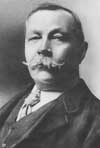
Creator of the character Sherlock Holmes lived at Hindhead near Haslemere. His short stories about Holmes' adventures were originally published in The Strand Magazine and featured the countryside around Haslemere and the Devils' Punchbowl nearby. Conan Doyle's house, Undershaw, nestling in a hollow by the busy A3 at Hindhead, is now derelict and the subject of a campaign to save it. MORE HERE Sidney & Beatrice Webb Founders of the socialist think-tank the Fabian Society in 1884, they built Passfield Corners near Liphook. Both were members of the Labour party and took an active interest in politics throughout their lives. Having entered the House as an MP in 1923 Sidney was created Baron Passfield in 1929. He served as Secretary of State to Ramsay MacDonald. Beatrice was the granddaughter of Radical (1) MP Richard Potter and was an active partner in all of her husband's political and professional activities including the establishment of the London School of Economics. Archibald Thorburn Distinguished artist acclaimed for his paintings of birds, Thorborn lived at High Leybourne in Hascombe near Godalming. Frequently exhibited at the Royal Academy he enjoyed the patronage of King George V in particular. He provided illustrations for The Birds of The British Isles (1920 - 1925) and Coloured Figures of the Birds of The British Isles (1895), the latter publishing 268 watercolours of his. Some of his original work can be seen at Godalming Museum. MORE ON THE ARTIST J. M. Barrie
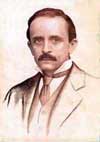
A resident in Tilford near Farnham at the confluence of the north north and south branches of the Wey, novelist Barrie created Peter Pan and wrote many novels including Dear Brutus here. Peter Pan first appeared in The Little White Bird in 1901. MORE HERE David Lloyd George
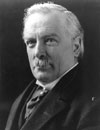
The Liberal politician and Prime Minister (1916 - 1922) lived for most of the between war years in Churt near Hindhead with his erstwhile lover and later to be wife, Frances Stevenson. His long tenure in office, much of the time as Chancellor of the Exchequer, providing the opportunity for him to play the role as a key figure in the introduction of many reforms including laying the foundations for the modern welfare state. He was the last Liberal to be Prime Minister, a responsibility he excelled at in having guided Britain through the First World War to victory. He was also instrumental in negotiating a new world order after the Great War at the Paris Peace Conference of 1919. Lloyd George owned the farm Bron-y-de at Churt where he lived for twenty years after his stint as the Liberal Prime Minister. Footage from a news feature filmed for Fox News in 1928 has been preserved by the National Screen and Sound Archive of Wales. In the clip he is shown with his family and pets in the garden. The 1868-built 16-room hotel The Pride of the Valley at Churt is a mausoleum to Lloyd George and has remarkable decor of decorative ceilings, oak paneling and sculptures. George Sturt Author who also wrote under the pseudonym George Bourne and who immortalised the family business in The Wheelwright's Shop (1923) lived in Farnham and The Lower Bourne all his life. He also wrote about rural crafts and affairs. The family wheelwright business founded in 1706 was located in East Street, Farnham but fell to the coming of the motor car. Sturt is celebrated in a permanent exhibition at Farnham Museum. Dame Ethel Locke-King The wife of racing driver Hugh Locke-King, Dame Locke-King was a motor-racing promoter and hospital patron living in Weybridge. Her husband created the first permanent motor race-track in the world at Brooklands, and in 1907 she led the inaugural procession of cars on to the track in her open Itala in effect becoming the first woman to drive on the circuit. Dame Locke-King, (née Gore-Browne), purchased a plot of land in Balfour Road to create Weybridge’s cottage hospital in 1889 which was donated to the trustees of the hospital. SEE ALSO HUGH LOCKE-KING Philip Snowden
Snowden l ived at Woodlarks in Tilford near Farnham whilst working closely with Ramsey MacDonald to develop the Labour Party into a major political movement. As the Labour party's first Chancellor of the Exchequer his debating skills were legendary. Snowden married a leading suffragette, Ethel Annakin, and became a prominent supporter of the movement. He was created Viscount Snowden. The painter and illustrator lived in Wormely, near Witley having bought a house from the artist Helen Allingham in 1888. Born into a wealthy family he was able to experiment with a wide range of styles and media but favoured the Pre-Raphaelite style, and indeed became a major collector of Pre-Raphaelite paintings. Robertson also for a period became greatly interested in the theatre and created portraits of many of the leading actresses of the time. Robertson is remembered locally for putting on a pageant play in a meadow near Chiddingfold parish hall in 1921 with 150 villagers in the cast. He also staged a play he'd written about Guildford, The Town of the Ford at the now defunct Theatre Royal in North Street in the town in 1925. H G Wells
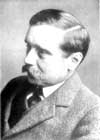
The author wrote The War of the Worlds (1898) whilst living at Woking. His inspiration for the novel came from Woking Heath, then a vast and desolate heathland. Other novels included The Invisible Man (1897) and The Time Machine (1895). Maud Gonne
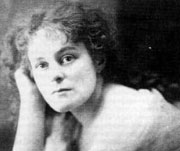
Maud Gonne MacBride was born near Farnham and although best remembered for her turbulent relationship with the Irish poet W. B. Yeats became an Irish revolutionary, spurred on by the plight of evicted people during the Irish 'Land Wars' (1870s - 1890s). Gonne had fallen in love with a right wing politician, Lucien Millevoye, and she became enbroilled in campaigns to have Irish Political prisoners released from jail. During the 1890s Gonne toured extensively throughout Britain and the US campaigning for the nationalist cause. Yeats enshrined Gonne in much of his work, and she became The Rose, Helen of Troy, the Ledaean Body, Cathleen Ni Houlihan, Pallas Athene and Deirdre in his lyrical verses. Sidney Sime The gifted illustrator, cartoonist and caricaturist left behind a wealth of paintings and drawings. Liverpool-born Sime lived in Worplesdon, on the outskirts of Guildford, in the later years of his life and after the death of his widow all of his remaining works were bequeathed to the people of the village. Towards the end of his life he shunned publicity and became something of a recluse hiding away in his country house in the village. He was best known to the public through his illustrations which were widely published in magazines including Strand, Pall Mall and The Idler. The fact that he retains a significant profile today is largely thanks to the gallery created as condition of the donation to the trustees of Worplesdon Memorial Hall. The Sidney Sime Gallery is largely funded by the endowment following the sale of his widow's home Crown Cottage. Viewings by appointment only. A public exhibition of his work was held at the Guildford House Gallery in September 2010. Edwin Lutyens Although not a Wey Valley long-term resident, renowned architect Edwin Lutyens formed a life-long working relationship with Godalming's Gertrude Jekyll, the garden designer and horticulturalist. Following his first commission in 1888 for a private house in Crooksbury near Farnham he forged a partnership with Jekyll after he began work on a house for her at Munstead Wood in Godalming. Their 'Lutyens-Jekyll' style was to become very popular as it a more informal 'natural' style of landscaping. Lutyens house designs captured the public imagination once the new lifestyle magazine Country Life started to feature his work. His more famous works included the Cenotaph in London, Tower Hill memorial, Queen Mary's Dolls' House (a four storey Palladian villa built on 1/12th scale at Windsor Castle) and the India Gate landmark in Delhi. Hilaire Belloc
French born poet, essayist and historian grew up in England and died in Guildford. Belloc's style and personality were perfectly encompassed by his childhood nickname 'old thunder'. He was best remembered for his light verse for children and for his considerable essays. His best known were Verses and Sonnets (1895), The Bad Child's Book of Beasts (1896), The Modern Traveller (1898), Mr. Burden (1904), and Cautionary Tales (1907). He also wrote the four-volume History of England (1925-31). Sir Edward Farquhar Buzzard Bart Educated at Charterhouse in Godalming Sir Edward went on to become a leading physician who attended King George V and King George VI. He and Lady Farquhar later settled at Munstead Grange in Godalming. Brigadier General
The career soldier was born in Guildford and lived at The Grange. He was awarded the Victoria Cross (VC) as a 28-year-old Lieutenant in the Boer War for saving the guns at Sanna's Post under heavy fire. He repeatedly went out from under cover to retrieve the artillery having to give up on the last gun after five sorties. Three years previously Maxwell had received the Distinguished Service Order (DSO) with a second DSO awarded to him posthumously in 1917. He was killed in action by a German sniper at Ypres, Belgium while commanding the 27th Brigade of the 9th (Scottish) Division. Lord Ashcroft, the deputy chairman of the Conservative Party, owns Maxwells' VC which he bought at auction in 1998 for £78,000. Bertrand Russell
The long-living academic was best known as a philosopher and prolific writer but he also made his mark in many other disciplines including mathematics, history and as a logician. Credited with being a joint-founder of analytic philosophy Russell also led the British revolt against ‘idealism’ and wrote Principia Mathematica in an attempt to anchor mathematics to the laws of logic. He was also very active as an anti-war activist and a champion of free trade and anti-imperialism. Russell was imprisoned for his peace campaigning and opposition to conscription during the First World War. He was awarded the Nobel Prize in Literature ‘in recognition of his varied and significant writings in which he champions humanitarian ideals and freedom of thought’. Russell developed his studies in philosophy whilst living near Haslemere as a newlywed from 1894. Ralph Vaughan Williams The composer, who wrote symphonies, chamber music, operas, choral music and film scores, was a pupil at Charterhouse School in Godalming. His great-uncle was Charles Darwin. His early musical developments were interrupted by the First World War during which his hearing was damaged eventually resulting in deafness in his latter years. Williams became a central figure in British music through his long career as teacher to many young composers and conductors and he was respected also for his writings on music and composing. He was buried in Westminster Abbey. Flora Thompson The novelist wrote The Peverel Papers as a Liphook resident in 1916. Her father was the postmaster in the town. Her other works included Lark Rise (1939), Candleford Green (1943) and Still Glides the Stream (published posthumously 1948). Whilst in nearby Grayshott as assistant sub-postmistress she came into regular contact with Sir Arthur Conan Doyle and George Bernard Shaw. The New Farnham Repertory Company dramatised (2000) Lark Rise and two other productions have been community play projects (late 1990s) on the Surrey - Hampshire border. A walk 'Flora's Trail' has been established following a route through the countryside, from Grayshott to Giggs Green, that Thompson had so enjoyed. Dr Wilfrid Fox The tree lover that founded what was to develop into the Winkworth Arboretum near Godalming. His project started in 1938 was to plant exotic trees on a hilly landscape of 100 acres. The Arboretum is now owned by the National Trust. He was awarded the highest honour of the Royal Horticultural Society, the Victoria Medal of Honour in 1948. Fox was also a leading dermatologist at St George's Hospital, London and a founder of the Roads Beautifying Association in 1928. Warwick Deeping The prolific novelist and short story writer who concentrated on historical romances and stories associated with the Edwardian age. Deeping, whose most popular novel was Sorrell and Sons (1925), lived at his house Eastlands in Weybridge from 1919 until his death. E. M. Forster
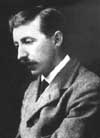
Writing from his home at Monument Green, Weybridge, author Forster wrote a succession of highly successful novels including A Passage to India (1924), Howard’s End (1910) and A Room with a View (1908). Freeman Wills Crofts Irish born Crofts moved to Blackheath near Guildford in 1929 from where he wrote 37 books and 70 short stories. The popular crime novelist, whose principal character was Detective Inspector French, wrote his books in a summer house in the garden. Two of his books, Crime at Guildford (The Crime at Nornes) 1935 and The Hog's Back Mystery (The Strange Case of Dr Earle) 1933, featured local settings. Ernest Shepard London born Ernest Howard Shepard was the artist who brought the characters of A. A. Milne to life through his book illustrations. His association with Winnie the Pooh and Christopher Robin began in the 1920s when he was working on the satirical magazine Punch where he was given the opportunity to sketch Milne's characters for the magazine, and was to continue illustrating Milne's stories in a long association between the two. He also created illustrations for Kenneth Grahame's The Wind in the Willows. Shepard based his drawings of Pooh on Growler, his son's teddy bear. His drawings are keenly sought after by collectors worldwide with two of his pictures breaking world auction records in 2004 when they were sold as a pair for £69,310. A small unpublished watercolour and pen and ink picture Teddy Bear by the illustrator was expected to fetch up to £30,000 when it was auctioned by Sotheby's in 2006, and in 2007 a complete set of signed first edition copies of Winnie the Pooh books, which cost seven shillings and sixpence (38p today) each were auctioned for £7,800. A retired steward from the cruise ship company P&O announced (February 2008) that he is to auction a pen and ink drawing the artist quickly sketched for him as a keepsake on a menu card in 1968 whilst Shepard was on a cruise. The drawing, of Pooh followed by Piglet carrying a pile of plates, is expected to fetch £800. Shepard fell in love with the Wey Valley when he stayed with his family in the vicarage in Shalford near Guildford. ABOUT SHALFORD HERE In 1904 he moved to Shamley Green living from 1909 in Red Cottage in the village, and remained in the Guildford area for over 50 years. He was appointed a captain in the local Home Guard in 1939 when he was 60 years old. Shepard bequeathed his papers to the University of Surrey in 1974. Captain Lawrence Oates
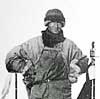
Explorer on Scott's perilous expedition to the South Pole who uttered the immortal words before leaving the party to face his death: "I am just going outside and may be some time." Oates lived in Selborne near Alton in Hampshire and his house is now a museum owned by the Oates Memorial Trust. P G Wodehouse
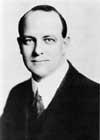
Born in Guildford whilst his mother was home from Hong Kong, author and playwright Wodehouse was the creator of Bertie Wooster and his faithful manservant Jeeves with his stories providing a quintessential picture of English upper class society. Wodehouse also wrote for film, collaborated with Jerome Kern and George Gershwin and worked with Cole Porter on the musical Anything Goes. His birthplace, then 1 Vale Place, still stands. The detached Victorian house today has the address of 59 Epsom Road and has been subdivided into flats. A wall plaque on the entrance porch records the fact. Sean O'Casey, an Irish dramatist whose plays highlighted the plight of Ireland's poor classes, famously jibed him as being "English literature's performing flea.", a description that Wodehouse cherished so much he adopted it as the title of his autobiography. Malcolm Campbell
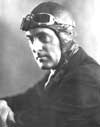
The world speed record holder built his record breaking Bluebirds at Brooklands near Byfleet. He was the first to break the 300 mph (489 kph) on land in 1935. It was his son Donald who was to die trying to break the 300 mph water speed record on Coniston Water in the Bluebird K7 in 1967. George Leigh Mallory Assistant Master at the public school Charterhouse in Godalming from 1910 until 1915, was best known for being a mountaineer and member of the team that attempted to conquer Everest. He lost his life on the mountain in 1924, and the mountain peak wasn't conquered for another 29 years. John George (Jack) Phillips
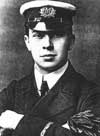
The wireless operator on the doomed luxury liner RMS Titanic went down with the ship whilst broadcasting distress signals in a bid to summon help. Phillips was born in Farncombe near Godalming. MORE ABOUT JACK PHILLIPS & THE TITANIC
The scientist, inventor and engineer worked at the Brooklands airfield in Weybridge for 58 years. Best known for being the inventor of the bouncing bomb, which was successfully used by the RAF during WWII in their Dambuster raids in the Ruhr area of Germany, Wallis also had a great many other achievements. Initially working on airships with Vickers at Weybridge he pioneered geodetic engineering which resulted in the largest airship ever built. When Vickers abandoned airship manufacture he turned his skills to aircraft design and in the pre-war years designed the Vickers Wellington and Vickers Wellesley. Ever the eccentric-inventor, Wallis was often to be seen cycling around Brooklands with a greenhouse-like structure around his bicycle he had created to keep himself dry. As well as designing ground-breaking bombs during the war Wallis invented swing-wing technology, large cargo submarines, rocket-propelled torpedoes and pioneered the remote control of aircraft. He also undertook early work on the Concorde. Wallis was knighted in 1968. Entry suggested by Professor Brian T. Butcher Tom Sopwith Built his much admired Sopwith Camel and Sopwith Pup at Brooklands near Byfleet. His aircraft are credited with gaining the upper hand against the German airforce in the First World War. Harry Hawker The Australian aviation designer was architect of the Hawker Hurricane which proved to be a highly manoeuvrable fighter aircraft that contributed considerably to the defeat of the Luftwaffe in the Battle of Britain. The Hurricane was designed and built at Brooklands near Byfleet, continuing a long tradition of aeronautical innovation at the airfield. Alan Patrick Herbert The author A.P.Herbert as he was more commonly known was born in Elstead and originally started out to follow a legal career. He was called to the bar in 1918 but never practised. Instead he was to follow a path in politics serving as the Member of Parliament for Oxford University for 16 years and was committed to reforming laws that he felt were outdated including those on obscenity and divorce. Herbert was also a prolific writer writing satirical pieces for Punch Magazine including his celebrated series of Misleading Cases in the Common Law which was to eventually be adapted by the BBC as three TV series of A P Herbert's Misleading Cases (1967 - 1971) starring Alastair Sim and Roy Doltrice. He also published eight novels and 15 plays. Angela Thirkell A cousin of Rudyard Kipling author Thirkell for a time lived and eventually died at Birtley House in Bramley near Guildford. She wrote popular light comedy novels, often under the pseudonym Leslie Parker, using Anthony Trollope's fictional Barsetshire as a setting in many. Alfred Smith
Alfred Victor Smith, a second lieutenant in the East Lancashire Regiment during WWI, was posthumously awarded the Victoria Cross (VC) for gallantry in the face of the enemy. Guildford-born Smith threw himself on top of a live grenade saving the lives of a group of fellow soldiers and officers whilst in the trenches in Gallipoli, Turkey. Yvonne Arnaud The French born actress lived for many years in Guildford and she is buried in St Martha's churchyard on St Martha's Hill near Chilworth. Starting her careeer as a singer and pianist Arnaud performed with leading orchestras throughout Europe and America from 1905 until 1911. Her first step to her acting career was securing the lead role in the musical The Girl in The Taxi in 1911 but fate also took a hand as a throat operation damaged her vocal chords to such a degree that she had to give up singing. Her stage career lasted for many years and Arnaud also starred in several films during the 1930s. A theatre opening in Guildford in 1965 was named in her honour and today The Yvonne Arnaud Theatre is the only surviing production theatre in Surrey. George Harry Marples was born in Yorkshire where, having taken up ice skating at thirteen, became a professional skater by the time he was fifteen years old. Marples moved to Farncombe in 1921 and was employed as an instructor initially at Holland Park and later at The London Ice Rink. He was skilled in both ice and roller skating, and was instructor to Princess Elizabeth before she took to the throne and the Duke of Windsor. Marples established an ice rink in Farncombe at the Northbourne Hall (now the Farncombe Working Men’s Club) in Station Road and applied to open an open-air rink in King’s Road in 1927 although failed to get permission from the local magistrate to do so. Marples served with the Dragoon Guards for 12 years which included action in the First World War in France and a tour of duty in India, where he set up the first roller skating rink in Kasauli near Simla. During the summer months when skating rinks were not in operation Marples turned his hand to a number of other pursuits including working as a labourer and steeplejack. He worked on the construction of the Farncombe Cinema in Meadrow. Marples is buried in Eashing Cemetery in Franklyn Road, Ockford Ridge. Author of Brave New World (1932) warning of dehumanisation in the rush for scientific and material progress, and Eyeless in Gaza (1936) was born in Godalming. Eton and Oxford educated Huxley became a friend of writer DH Lawrence and philosopher Bertrand Russell who both influenced his portrait of a future London in Brave New World. Huxley's mother Julia Arnold, who died when he was just fourteen, founded the girl's school Prior's Field in Godalming and his father, a writer and professional herbalist, taught at Charterhouse School. Huxley was the grandson of Thomas Henry Huxley who acquired the moniker Darwin's Bulldog for his research as one of the 19th century's most prominent naturalists. Huxley, who suffered from poor vision after he almost lost his sight whilst seriously ill in 1911, taught for a while at Eton where one of his pupils was Eric Blair, better known under his writing name George Orwell. Huxley was a keen cyclist and used to visit the Surrey Hills especially around Hindhead and the Devil's Punchbowl regularly. Huxley's ashes were interred in the family grave at Compton. Robert Graves
The son of the Anglo-Irish writer Alfred Graves and Amalie von Ranke, the niece of the famous German historian Leopold von Ranke, Graves was destined to be a man of letters. Educated at Charterhouse School in Godalming the writer and poet produced over 140 works with his poems Good-bye to All That, a memoir of the First World War, and The White Goddess, his historical study of poetic inspiration being the most noted. His most successful work in terms of commercial success was the novel I, Cladius published in 1934. A close friend of the comedian, actor and writer Spike Milligan the two exchanged frequent letters with many featured in their joint collaboration Dear Robert. Dear Spike. Memorably when Graves left Charterhouse in 1914 the headmaster wrote the following in his report: ‘Well, goodbye, Graves and remember that your best friend is the wastepaper basket.’ One of Britain's oldest women Brown lives at Eastlake Residential Home in Godalming. In September 2007 she celebrated her 110th birthday surrounded by four generations of her family including five grandchildren, 12 great-grandchildren and her 78-year-old son George. Newly married Brown moved to Artington Manor farm in Guildford in 1923 and took up teaching. She was instrumental in setting up the Artington and Littleton Pie Scheme which in the harsh post-war years ensured that poor families in rural areas would receive at least one nutritious pie a week. Brown attributes her longevity to never driving, having plenty of salt in her food and being positive with a sense of humour. When asked what biggest changes have most affected her during her long life she highlighted electricity and labour-saving devices as being the most influential. Martin Lloyd-Jones The Welsh-born Protestant Christian minister, who was influential in reforming the British evangelical movement in the 20th century, lived in Haslemere. Graduating from medical school at St Bartholomew's Hospital in London in 1921 he became an assistant to the Royal Physician, Sir Thomas Holder. However by 1927 he had taking up his religious calling and returned to Wales to become a minister. In 1939 he was appointed co-pastor of Westminster Chapel in London and it was at this time that he and his family moved to Haslemere. Retiring from his ministry at Westminster Chapel in 1968 he dedicated the rest of his life to scholarly work for the church. Orde Wingate
Leader of the highly effective Chindits in the Second World War was a pupil at Charterhouse School in Godalming. Wingate was killed on active service in Burma. Christopher Isherwood
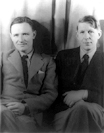
Born into the family of a British Lieutenant-Colonel the novelist, who was later (1946) to become an American citizen, was educated at St Edmund’s School in Hindhead. It was at St Edmund’s that he met fellow boarder the poet WH Auden, a friendship that was to last for his lifetime. Isherwood published his first novel All the Conspirators in 1928 after which many more were to follow including The Memorial (1932), Mr Norris Changes Trains (1935) and a short story series Goodbye to Berlin (1939) which was to inspire the play I Am a Camera and the musical Cabaret. The author’s most acclaimed work was his 1964 novel A Single Man.
Often cited as one of the greatest writers of the 20th century the poet Wystan Hugh Auden grew up in Birmingham and was educated as a boarder at St Edmund’s School in Hindhead. He quickly established himself as a left-wing political poet during the 1930s but was to abandon this stance after he emigrated to America in 1939 taking up instead a less dramatic tone to follow religious and ethical themes. As well as writing poetry Auden was a prolific writer of essays and reviews on a wide range of topics including religion, psychology, politics and literary subjects. His first published book Poems (1930) was released by Faber and Faber, who were to continue to exclusively publish all of his works. Auden was a teacher and lecturer whilst living in Britain and Europe and was to be appointed Professor of Poetry at Oxford University a chair he held from 1956 - 61. Over his lifetime he was to publish over 400 poems, seven of which were expansive book-length pieces. Auden was to befriend Christopher Isherwood at St Edmund’s leading to a lifelong friendship between the two writers. Graham Stuart Thomas The horticultural artist, author and garden designer was Gardens Advisor to the National Trust for thirty years and it was whilst working for the Trust that supervised the restoration of some of the most famous gardens in Great Britain. In his lifetime he published 20 books, several illustrated with his own botanical works. Thomas also reintroduced and rediscovered many garden plants that without his intervention might have been lost to cultivation. After studying at Cambridge University’s Botanic Garden he went to work at T. Hilling & Co nursery near Woking, and it was after meeting with Gertrude Jekyll at her home in Godalming that Thomas became driven to preserve famous gardens for posterity. His guidance led to the conservation of gardens as wide ranging as the small 17th century garden at Moseley Old Hall in Staffordshire, Clivedon in Buckinghamshire, Mount Stewart in Northern Ireland and Westbury Court in Gloucestershire. Thomas was awarded an OBE (1975), the Victoria Medal of Honour, the Royal Horticultural Society’s Veitch Memorial Medal and a Lifetime Achievement Award (1966) by the Garden Writer’s Guild. A rose was named after him in 1983. Peter Pears An outstanding tenor, Sir Peter Nevillee Luard Pears was born in Farnham and became the life-long partner of the composer Benjamin Britten. Many of Britten's works contain a main tenor role written specifically for Pears. His voice was deemed controversial in that its vocal quality was quite unusual and it was cruelly suggested that he only had one good note, E-natural a third above middle C - which is why the aria of Peter Grimes, 'Now the Great Bear and Pleiades' is mainly written in that note. Pears was knighted in 1978. Charles Gocher A long-standing businessman and member of the community in Godalming and Farncombe Gocher founded a firm of master builders just after the Second World War and which continues to successfully trade today as Jackson and Gocher, specialists in plant hire. The building arm survives as a joinery company in Suffolk. Gocher's father was a Farncombe greengrocer which was where he gained his first work experience undertaking deliveries in a horse and cart. Having left school he trained at Weyburn Engineering in Elstead and after work each day cycled to Guildford Technical College to gain further qualifications. Having undertaken an apprentice as a carpenter at the outbreak of war he worked at Vickers in Weybridge helping build and repair aircraft. Gocher founded his business with friend Freddy Jackson in the 1940s to provide specialist joinery skills. Two of their projects included the construction of a Methodist church in Guildford and Ladywell Chapel in Godalming. Elsa Megson Godalming Museum has a permanent exhibition of the photography of Elsa Megson who moved to Godalming after WWII to assist the photographer Chaplin Jones. Having opened her own studio in Hare Lane in Farncombe, Megson rapidly built up a reputation as a society photographer and included the royal family, and especially the Queen Mother, amongst her clientele. By the mid 60s she had specialised as a horticultural photographer and many of her botanical images were used to illustrate books including Blind Jack (1960) by Stephanie Ryde. George Reindorp Anglican clergyman Reindorp was appointed the fifth Bishop of Guildford in 1961 and held the post for 12 years before taking the Bishopric of Salisbury. When married to his first wife, a South African doctor, the couple who both undertook numerous appointments in the British lecture circuit were nicknamed 'Body and Soul'. Reindorp retired to Bramley where he died aged 79. Memorial services were held at both Guildford and Salisbury cathedrals, and Guildford's Bishop Reindorp School was named in his honour. Terry-Thomas The much-loved comic actor was famous for his portrayal of disreputable members of the upper classes in the 1960s. His catchphrase "you're an absolute shower" originated with his performance in Private's Progress (1956). He made his name as a cad, bounder and absolute rotter in a series of films including Those Magnificent Men in their Flying Machines (1965), Monte Carlo or Bust (1969) and Jules Verne's Rocket to the Moon (1967). Terry-Thomas, who was born as Thomas Terry Hoar-Stevens, was diagnosed with Parkinson's disease in 1971 and died at the age of 78 in Busbridge Hall nursing home in Godalming. Alan Turing Popularly considered to be the father of modern computer science, Turing was a mathematician, logician and cryptographer. During the Second World War Turing was a member of the code-breaking team at Bletchley Park and was instrumental in devising techniques for breaking German ciphers which including devising the method of the Bombe, an electromechanical machine, that could detect the settings on the German's Enigma code machine. After a conviction for 'acts of gross indecency' Turing is said to have committed suicide by eating an apple laced with cyanide. Turing lived in Guildford. Mollie Penycate Public servant Penycate was Guildford Borough’s first female chief officer, and first chief librarian until it was taken over by the county. She contributed to many local causes including serving on the board of the Yvonne Arnaud Theatre from its inception, acted as secretary of the local Worker’s Education Association , chaired the Surrey Division of the South East Gas Consultative Council for which she was awarded an MBE in 1984, and in retirement chaired the Guildford retired Local Government Officers’ Association. She was widow of former Surrey Advertiser editor Jack Penycate with whom she founded the nationwide federation of Playgoers’ Societies (since renamed Audience for Regional Theatre). The amateur swimmer and record breaker continues to amaze his competitors. At the age of 95 in February 2009 Harrison not only broke the world record for his 200m backstroke time by a staggering 43.76 seconds, he also set two freestyle and three backstroke records on the same day in the Amateur Swimming Association Masters group for 95 to 99 year olds. The Elstead resident achieved his record breaking swims at the Isle of Wight Masters competition despite having undergone two spinal operations in the last four years. Harrison has established swimming excellence it seems in all the groups he joins, with records made during his time spent previously in both the masters 85 to 89 and 90 to 94 age groups.
A leading amateur swimmer during his time with the Royal Navy, he continues to be a member of the Navy Swimming Club as well as the Godalming swimming Club and puts down his determination to having been beaten by an 84-year-old when he started competing at the age of 79. Harrison is the only Briton in the Amateur Swimming Association's Masters group aged 95 to 99 and is proven to be the world’s fastest competitor. Source: Surrey Advertiser 13th March 2009 Sister Angela McBrien Undertaking her vows as a Roman Catholic sister in the Franciscan Missionaries of the Divine Motherhood (FMDM) in 1933 McBrien, following training as a midwife in London, worked at the Mount Alvernia Hospital nursing homes in Guildford and Godalming from 1940 to 1947. In 1947 she joined what was to be an aborted attempt to establish a mission in China when the Communists undertook their offensive to take control of the country. At the close of WWII McBrien was instrumental in establishing a mission in Singapore to help in the treatment of tuberculosis patients left behind after the Japanese retreat. She was to remain in Singapore for 22 years and oversaw the construction of a Mount Alvernia hospital in the enclave. Professor Elfyn Richards Welsh-born aircraft designer Richards, having spent the war years working at the National Physical Laboratory in charge of aerofoil research, joined the Weybridge aircraft manufacturer Vickers-Armstrong where in 1945 he was appointed Chief Aerodynamicist. Responsible for the aerodynamic design of the Viking, Viscount and Valiant aircraft he developed an interest in aircraft noise that would lead him to become one of the country’s leading exponents of aircraft design and a world authority on noise acoustics. In 1950 he took the new Chair of Aeronautical Engineering at Southampton University and as Professor of Applied Acoustics set up the Institute of Sound and Vibration Research in 1963. London-born Wood left school at 15 to join the merchant navy where he developed an interest in electrical engineering. Funding himself through night school to provide himself with the necessary expertise he founded Dickson & Wood a company that sold and installed radios and televisions until his call-up in WWII. These early beginnings were to see the entrepreneur and businessman achieve millionaire status by the age of 38 principally through the outstanding success of the Kenwood Chef food mixer he had invented and patented in 1950. His company Kenwood sold eight million units before he was ousted in a hostile takeover by Thorn Electrical Industries in 1968, and the appliance is on permanent display in the Science Museum endorsing it as a significant invention. In the latter part of his life Wood lived in Liphook and took a close interest in local opportunities which included founding the Old Thorns Golf & Country Estate and Forest Mere Health Farm, both near the town. He was also chairman of Wispers girls school in Haslemere for many years and was instrumental in the school relocating to the town. Wilfrid Noyce The mountaineer was part of the successful ascent of Mount Everest in 1953. Noyce, who was educated at Charterhouse in Godalming, lost his life on the British-Soviet climb of Mount Garmo in the Parmirs. Ray Grayston One of the last survivors of the Dambusters raid died at the age of 92. Grayson was a flying officer in 617 Squadron and was the flight engineer on the Lancaster bomber which successfully breached the Eder Dam with a bouncing bomb designed by Barnes Wallace in 1943. The aircraft was brought down during the raid and Grayson was captured to spend the rest of the war in a prisoner of war camp. He was born in Dunsfold and was an automobile engineer before he joined the RAF in 1940. After the war he joined Hawker Siddeley at Dunsfold and worked on the Hunter, Harrier and Hawk aircraft as a quality inspector.
Hoggart is an academic who lives in Farnham. His long career has embraced sociology, English literature and cultural studies with a focus on popular culture. His work The Uses of Literacy (1957), published whilst he was a university lecturer, propelled him into the forefront of the debate over the dramatic social changes that swept Britain over the 1950s and 60s. The book studied working-class culture (Hoggart was orphaned when he was eight-years-old and was brought up in very poor surroundings) and critically appraised the changes being imposed by the commercial forces of ‘publications and entertainments’. He is credited with having influenced the remaking of the British cultural landscape and played a major role in the Pilkington Committee which was to lead to the founding of BBC2. Hoggart was also the star defence witness at the Lady Chatterley obscenity trial in 1960 which was won by the publishers Penguin Books.
Hoggart retired from formal academic life in 1984 having served for eight years as Warden of Goldsmiths, University of London. The college re-named their ‘Main Building’ as the Richard Hoggart Building in tribute to him. He provides a detailed look at Farnham's history, its people and institutions in his book Townscapes with Figures - Farnham: Portrait of an English Town (Chatto and Windus 1994). Entry suggested by Helena Adams Elsie Denningberg was a founder member of Waverley Borough Council and served as a Godalming town councillor for 38 years from 1965 to 2003. She had also served as town Mayor for Godalming. Denninberg died in hospital of natural causes, although her death occurred three weeks after she and her husband were allegedly seriously assaulted during a burglary at their home in Godalming. SEE ALSO Bruce 'Jack' Weatherill Lord Weatherill in the early part of his life lived in Nightingale Road in Guildford. Elected to parliament in 1964 he became deputy Speaker in the House of Commons in 1979 at the time of the accession of Margaret Thatcher to the premiership. He took on the role of Speaker for The House from 1983 to 1992. Ann Dent The journalist and a chief reporter for the Surrey Advertiser worked on the paper from the 1960s until her retirement in 2001. Unusually for a local hack Dent attracted national acclaim for her work and was awarded an MBE for her services to journalism in 1996. After her retirement she was clerk to Normandy Parish Council and edited her village's newsletter. Harry Secombe The high profile Welsh entertainer Sir Harry Donald Secombe died whilst a resident of Guildford. He was a member of the Goons trio alongside Spike Milligan and Peter Sellers and later appeared in stage musicals and films. Secombe also presented the religious programmes Songs of Praise and Highway. Major Ken Crockford The last surviving member of The Rifles who served during the Second World War still represents the regiment overseas in his 85th year (2008). Crockford, who lives in Godalming, annually visits war graves in both France and Holland to lay wreaths in memory of his colleagues who died in action with the Herefordshire Regiment. In the 2008 ceremony for the laying-up of the colours of the 3rd Battalion, The Light Infantry in Hereford he said: "In 1974 for the 50th anniversary of our action in France, 180 former soldiers attended these ceremonies. In 2004 there were just five of us, but this year, it was just me. There is no-one left now." (Hereford Times 19th July 2008) Having dedicated his working life to public service in the Borough of Waverley, Denninberg, who lives in Godalming, was presented with the highest award that the council can bestow in recognition of his loyalty to the local community. The former mayor received the Freedom of the Borough (2007) in recognition of his 40 years as Labour councillor. His work in the charity sector, which included setting up the Denningberg Centre in Godalming and the Farncombe Centre for the elderly and his support for the Meath Home in Godalming. SEE ALSO Pauline Grundy Guildford-born Grundy who attended Guildford County School for Girls was one of the first women in Britain to be trained to use radar during the Second World War. A high-ranking army officer she had a distinguished career and was awarded an MBE in 1953. As a major Grundy served during the Suez Crisis and was was among the last to leave the region after Egypt nationalised the canal and spent her last few hours on base shredding documents. After retiring from service she was closely involved in fundraising for the Army Benevolent Fund and also served with the Red Cross in South America. The highly regarded educationalist, who was renowned for instilling excitement into quite often unpredictable teaching sessions, dedicated his entire life to providing the best possible start to his young charges. After the death of his father in 1952 Hill took over as headmaster of Aldro School in Shackleford near Godalming aged just 28. However he was soon to prove what an exceptional teacher he was as the school attained high standards and good popularity. This extract from an obituary published in the Guardian illustrates well his style:
After his retirement in 1984 he was instrumental in the setting up of the Godalming-based charity Skillway which provides vocational training to 14 and 15-year-olds who have been largely neglected by mainstream education, effectively giving them a new start in life. He'll was to spend 11 years at Skillway providing teaching in wood, metal and glass work, motor mechanics, stone engraving and ceramics. MORE HERE Peter Adams The footballer turned club and league administrator, referee, county official and since 1999 the president of Surrey Football Association has been nominated (2008) for the 46th annual Torch Trophy Awards (1). Adams who lives in Guildford has served football in Surrey for over 50 years. (1) Torch Tropy Awards were established after the 1948 London Olympics to recognise the efforts of volunteers in sport. The awards are administered by the Torch Trophy Trust which itself is run by volunteers incluiding some of the best known names in sport. James Dickinson Jimmy Dickinson holds the record for the highest number of league appearances made by a Portsmouth FC football player having played 764 for the club. Only one other player (John Trollope, Swindon FC) has made more appearances (77) for a single club. Dickinson also won 48 caps playing for England, making him Portsmouth's most capped English player of all time. During his career he was never once booked or sent off, earning him the nickname Gentleman Jim. He was awarded an MBE in 1964 and in 1998 was included in the list of 100 Legends produced to mark the centenary of the Football League.. In his home town of Alton is a pub in Raven Square, Wooteys Way commemorating his nickname in his honour. Charlie Drake The hugely popular comedian, actor, writer and singer is included here with just a little poetic licence. Drake was born in London and sadly passed away his latter years in Brinsworth House, the retirement home for actors and performers in Twickenham. Remembered particularly for The Charlie Drake Show on television in the 1960s when his catchphrase 'Hello My Darlings' touched the populace and The Worker, the diminutive Drake (he was only 5ft 1in (1.6m) in stature) had family connections in Weybridge and his funeral was held at St James' Church in the town. However perhaps an even more popular connection with the town was 'The Worker' Drake's comic pronouncement to Weybridge as an upmarket town in his many visits to his show's Labour Exchange (today's Job Centre) interviews: "Charles Drake from Weybridge." Tony Hart Artist and television presenter Hart, who lived in Shamley Green near Guildford is best known for his BBC children's programmes Vision On, Smart Hart and Hartbeat. His TV career spans an incredible 50 years, with his first appearance as an artist and illustrator on the children's programme Saturday Special in 1952. Hart was awarded the BAFTA Lifetime Achievement Award in 1998 and retired from regular TV work in 2002 although he did make occasional guest appeances in his retirement. Peter Sellers The actor and comedian, best remembered for his Inspector Clouseau role in the Pink Panther films, lived for a time with his wife Britt Eckland in Elstead. The couple were married at Guildford Registry Office in 1964. He sold Brookfield House, which Seller's had bought from American actor Spencer Tracy, in 1968 to Ringo Starr, and it later was bought by Stephen Stills of the 80s band Crosby, Stills, Nash & Young. Sellers had been born into a family of entertainers, and having honed his comedy skills with the Entertainments National Service Association (ENSA) whilst an NCO in the RAF during WWII he went on to act with Spike Milligan, Harry Secombe and Michael Bentine in the Goon Show. The Guildford Four campaigner spent 16 years campaigning to have the names of her husband and son cleared following the IRA pub bombings in the town in 1974. Guiseppe and Gerry Conlon were wrongly jailed for life the following year along with two others but Conlon's commitment to prove their innocence resulted in the Court of Appeal quashing their sentences in 1989. The case is considered to be the biggest miscarriage of justice in Britain. Conlon's husband Giuseppe had already died in prison in 1980 and the family had to wait until 1991 before his sentence was posthumously overturned. Conlon's tireless campaigning didn't cease until Prime Minister Tony Blair issued a public apology in 2005. MORE HERE Denis Forbes Forbes was the first Bevin Boy in Guildford to be conscripted during the Second World War and received (March 2008) his official badge as part of a very belated nationwide recognition of the invaluable service they provided for their country in dangerous conditions. In 1943 the Government Minister for Labour and National Service, Ernest Bevin, launched a scheme to divert conscripts from national service in the forces to the mines, as at the time this crucial industry was almost on its knees through a severe shortage of miners. Bevin Boys, who were not volunteers, endured great discomfort working in dangerous conditions often deep underground that wouldn't be tolerated today. Many Bevin Boys were maimed or died during their three-year service down the mines, and often had to suffer the indignation of members of the public who accused them of being conscientious objectors. Sheila Mitchell Having first exhibited at the Royal Academy at the young age of eighteen Mitchell, the Puttenham-based sculptor, was to sculpt over 300 bronzes for public and private display all around the world. She was president of the Society of Portrait Sculptors from 1978-1983 and a Fellow of the Royal British Sculptors. Mitchell, who was born in Farnham and studied at the Farnham School of Art and later the Guildford School of Art, had a long list of the great and the good sit for her with sitters including the Duchess of Kent, the athlete Lord Coe and the playwright Robert Bolt. She married the painter Charles Bowden in 1951 and they made their home in Winters Farm in Puttenham where the farm buildings provided them with studios for the next 55 years.
In 2009 a major exhibition of her work was on show in the University of Surrey's Lewis Elton Gallery, which as well as sculptures included photographs of the artist at work, charcoal sketches and preparatory drawings. Bill Pertwee The actor who played ARP warden William Hodges in the hit BBC series Dad's Army lives in West Horsley near Guildford. Pertwee first appeared alongside the likes of Kenneth Horne and Kenneth Williams in the radio comedy series Round The Horne in the late 1960s. He also acted for the silver screen and appeared in three Carry On films, although for some reason he was cut from the final version of Carry On At Your Convenience. Pertwee, who is the cousin of Jon Pertwee of Doctor Who fame, was awarded an MBE in the Queen's 2007 Birthday Honours list for his services to charity. One charity he actively supports is the Guildford-based children's charity CHASE. John Schlesinger The Academy Award-winning film director went to school at St Edmund’s in Hindhead. Schlesinger started his career as an actor before honing his skills at directing documentaries and films. One of his first films, Terminus (1961), a documentary about a day at Waterloo Station in London, was nominated for a British academy Award and a Venice Film festival Gold Lion. Thereafter Schlesinger’s films attracted much critical acclaim and included Billy Liar (1963); Far From the Madding Crowd (1967); Midnight Cowboy (1969) (Best Director and Best Picture Oscars); Sunday Bloody Sunday (1971); Marathon Man (1976); and the Next Best Thing (2000). Thetis Blacker Ann Thetis Blacker was a painter and singer who became best-known for her dyed-fabric technique batik helping to popularise the technique at a time when it was uncommon. Her pictures were commissioned for cathedrals across the UK, Europe and the USA. Born in Holmbury St Mary, Blacker's grandfather was a close friend of Oscar Wilde. Her singing career made a promising start and in the 1950s had started to appear in operatic productions including an appearance at Glyndebourne. However the visual arts proved to be her true calling and after graduating from the Chelsea School of Art Blacker visited the Far East in the early 1970s to study the art of batik and worked for a period at the Batik Research Institute in Yogyakarta, Indonesia. Her commissions include a phoenix rising from the ashes as an altar frontal in St George's Chapel Windsor (1997), banners of St Cuthbert and St Oswald for Durham Cathedral (2001) as well is significan pieces in St Albans Abbey and Grey College, Durham. The artist worked from a studio in Shamley Green and died in Bramley. An auction (June 2008) in Ripley of Blacker's art and possessions is expected to raise £150,000 which will be equally donated to Guildford Cathedral and the Temenos Academy (1) of which Blacker was a fellow. (1) The Temenos Academy was founded in 1990 as a teaching organisation dedicated to encouraging poets, artists, writers and thinkers to subscribe to the belief that man is firstly a spiritual creature with spiritual needs. Professor Paddy Boulter A pioneering surgeon who was appointed the first surgical tutor in Guildford Hospital's postgraduate centre in 1964 went on to save thousands of women worldwide when he and Dr. John Price develop the use of mammography to detect early breast cancers. His time hearing units in Surrey was established in 1978 and was to service outlying clinics with 100 volunteers enabling early treatment of the disease which had previously relied on patients detecting a lump. Within 10 years research has shown that 25% reduction in death rates which stimulated screening techniques being adopted throughout the world. Scottish-born Boulter had decided to become a surgeon after you been invited into an operating theatre, with his skills developed at Guy's Hospital in London where he won a series of prizes and scholarships. He was president of the Royal College of Surgeons of Edinburgh from 1991 to 1994. Billy Dainty Dudley's famous comedian and pantomime dame spent his final years in Godalming, finally passing away at his home 'Cobblers' in the town. Dainty started out his career as a Betty Fox Babe and from the early 1940s starred alongside Morecambe and Wise, Cliff Richard and Rod Hull. Terry Scott
The veteran actor and comedian appeared in no less than seven Carry On Films and starred with June Whitfield in the long-running BBC sitcom Terry and June. Scott died in Godalming after suffering from ill-health for many years. Faith Winter The Puttenham (near Guildford) based sculptor Winter is highly regarded for her busts and statues and has been commissioned to produce pieces which are on display throughout the world. This includes the statue of Archbishop George Abbot that stands at the top end of Guildford High Street. Winter took up sculpture at an early age and having come to Guildford with her mother at the outbreak of WWII attended Guildford School of Art at the age of 16. Her first sculpture to be accepted at the Royal Academy was a stone carving. Winter's long list of commissions include: 8ft (2.4m) high soldier group for Catterick Camp unveiled by HM the Queeen; Portrait bust of HRH The Princess Royal at Buckingham Palace; Lord Chief Marshal Lord Dowding in the Strand, London; President Daniel Arap Moi in Kenya; and Kamel Jumblatt in Lebanon. Winter also created the Falkland Memorial in Port Stanley and the Mulberry Harbour Memorial in Normandy, France. Coventry Town Council awarded Winter the commission to create a 9ft tall statue of Sir Frank Whittle, the inventor of the jet engine, to be erected in the town's Millenium Park. The statue was unveiled in June 2007. Winter has published (2009) an autobiography Life of a Sculptor in which she has revealed her shock at encountering her first male nude in classes at Guildford Art School in 1944.
Ron Croucher A founding member of the West Surrey Natural History Society Croucher, who lived in Send for nearly 40 years, was passionate about wildlife much to the benefit of the Wey Valley. As well as founding the natural history society in 1979 the naturalist also established the West Surrey Badger Group in 1984. Croucher campigned tirelessly on environmental and wildlife issues and spent much of his time giving talks to local groups, all of which was conducted in his spare time away from running his own businesses. Bruce Forsyth
Showman and entertainer Forsyth initially achieved celebrity with Sunday Night at the London Palladium and soon became a household name presenting shows The Generation Game, Play Your Cards Right and more recently Strictly Come Dancing. Today living in Weybridge he celebrated his 60th year in showbusiness with the BAFTA Tribute to Bruce Forsyth broadcast by the BBC in February 2005. A bronze of the entertainer, created by his son-in-law, was unveiled in the same year in the London Palladium's Cinderella Bar. The 2006 New Year's Honours List saw Forsyth honoured with an OBE and in February 2008 the BBC broadcast a programme to celebrate his 80th birthday, Happy Birthday Brucie. His catchphrase 'Nice to see you, to see you nice' was voted by the British public in 2007 as their most popular. The Olympic hurdler who lives in Farnham has at the age of 80 (2008) been banned from running the wrong way up the escalator at Elphicks department store in the town. Asked why he was risking injury he said that he wanted to prove to his friends that he was still fit. In an interview in 2006 he proved his agility by clearing a chair and a table with one hurdling step. Hildreth represented Great Britain in the Games of 1952, 1956 and 1960 and had won nine GB internationals and six England internationals in the 1950s. He also ran in four Europan internationals and a Commonwealth Games with his achievements being recognised in 1956 when he was admitted to the Freedom of the City of London. Hildreth is also an accomplished writer having written many books about athletics and was an editor of sports books. During the 1960s and 1970s he commentated for the BBC and was the Sunday Telegraph athletics correspondent from 1961 to 1994. Hildreth's father was also an athlete and competed in 200m heats with Eric Liddell and Harold Abrahams who featured in Chariots of Fire.
A Farnham motor racing ace, Hawthorn won the British Grand Prix at Goodwood in 1952 driving a Cooper-Bristol. He tragically lost his life in a road traffic accident when his Jaguar car, which in the inquest was described by a witness as travelling at up to 100 mph, came off the road in high winds. The accident, which occurred on the northbound carriageway of the A3 just after the junction from the A31 Hogs Back, shocked the motor racing world at the time. He made his Formula One debut in 1952 and won his first in 1953 at Reims. Hawthorn won Le Mans in 1955 despite being tangled up in the accident that killed 82 spectators and a fellow driver. The Formula One Championship was his in 1958. A memorial service was held at St Andrew's Church in Farnham on January 25th 2009 to mark the 50th anniversary of the tragic death of a racing driver. Edward Kelsey Petersfield-born Kelsey lives in Guildford and is best known as the voice of Joe Grundy on the long-running BBC radio soap opera The Archers. He has also appeared on popular TV programmes including The Avengers, Softly Softly, The Saint, Z-Cars, Doctor Who, Minder, The Vicar of Dibley and EastEnders. Ray Drinkwater The former Guildford City footballer, who played his debut for the club against Chelmsford in 1951, was bought by Portsmouth for £2,000 before switching to Queen's Park Rangers in 1958. The goalkeeper also turned his hand to cricket and proved to be an invaluable all-rounder for Ripley Cricket Club for over 20 years.
David Shepherd The acclaimed wildlife artist and conservationist lived in Hascombe near Godalming for 32 years prior to moving to West Sussex. Shepherd was spurred into action on conservation when he came across 255 dead zebra lying by a poisoned Tanzanian waterhole when he was a young man. He worked as an aviation artist with the RAF when they commissioned him in 1960 to paint a rhino in Kenya.
So started Shepherd's long and eventful career as a wildlife painter. He established the David Shepherd Wildlife Foundation in 1984 andwhich is today based at the Smithbrook Kilns in Cranleigh and has raised over £4m (2009) for projects targeted at saving endangered animals. He also funds projects to benefit rural communities. The Foundation's longest running project is based in Zambia where it supports a range of projects from a highly successful education club to the establishment of the country's first elephant orphanage. Shepherd's other passion is steam locomotives and he owns several including two British built ones rescued from decay on the Mulobezi Railway in Zambia, one in South Africa and his Black Prince that is based on the Gloucestershire Warwickshire Railway. Shepherd helped found the East Somerset Heritage Steam Railway on tracks originally built in 1855. Shepherd was awarded the CBE in the 2008 Queen's Birthday Honours for services to conservation. Previously he had received an OBE in 1979 for his work to save endangered wildlife. Martin Woodhouse The author and scriptwriter who is better known for writing for the TV series The Avengers lives in Haslemere. As an author he has written 11 novels and he is widely accredited with having created the techno-thriller genre of writing when his first novel The Tree Frog was published in 1966. Other authors including Michael Crichton (The Andromeda Strain) followed in Woodhouse's footsteps. As a screenwriter he wrote seven episodes of The Avengers between 1962 and 1965, and wrote episodes of other TV series including The Hidden Truth (1964); The Protectors (1964); The Man in Room 17 (1965) and Supercar (1961). Woodhouse penned a total of 77 screenplays in his career. Michael Aspel London-born Aspel made his name as a television presenter through a host of programmes starting in the 1960s. Crackerjack, Aspel and Company, This is Your Life and the Antiques Roadshow are amongst the shows he has presented and he became one of the country's most familiar faces during the 60s and 70s as a newsreader on national television. Aspel, who lives in Oatlands in Weybridge, has also hosted Miss World, A Song for Europe, Give Us a Clue and Child's Play. He was honoured with an OBE in 1993 and was voted into the Royal television Society Hall of Fame. Sir Peter Kemp The reformist senior civil servant Haslemere-born Kemp is best remembered for overseeing the most radical changes introduced to Whitehall in over a century. Appointed by Margaret Thatcher in the 1980s he introduced the concept of civil servants having to work to clearly defined targets and to accept personal responsibility for their work. He also introduced systems that were to make Whitehall a leaner service run on business-like lines in order to improve efficiency. Under the John Major regime he was to clash with the then Minister for Public Services, William Waldergrave, and in so doing was forced to take early retirement. Guy Bellamy Although born in Bristol, Bellamy was to spend his childhood in Farnham where he attended Farnham Grammar School. The novelist, who has to date (2008) published 13 books, started a career on local newspapers in Surrey and Hampshire before joining Fleet Street to become the youngest sub-editor on the Daily Express. After a stint at The Sun, Bellamy’s first novel The Secret Lemonade Drinker (1977) was to prove to be so successful that he took up writing full-time. His novel The Mystery of Men was made into a film by the BBC. Bellamy’s latest novel is A Year in Suburbia (2007). The Rt Hon The Lord Howell of Guildford won the seat of Guildford in 1966 and remained Conservative MP of the town until standing down to Nick St Aubyn, also a Conservative, in the 1997 General Election. He was appointed as Margaret Thatcher's first Secretary of State for Energy and later of Transport. In 1987 he became chairman of the Select Committee on Foreign Affairs. Howell was made a life peer in 1997 where in the Upper House he is today (2008) the Shadow Deputy Leader of the Lords and Shadow Minister for Foreign and Commonwealth Affairs. He is also the author of several books including The Edge of Now (2000) and a columnist for The Japan Times, the International Herald Tribune and the Wall Street Journal. Michael Nicholson Living in Grayswood near Haslemere the television foreign correspondent and journalist became a household name through his courageous coverage for ITN of trouble hotspots throughout the world. As war reporter he covered wars, terrorist attacks and civil uprisings in countries scattered around the globe including Nigeria, Vietnam, Cambodia, Northern Ireland, the Falklands, Jordan, India, Pakistan, Rhodesia, Beirut and Angola reporting on 15 conflicts in his 25-year career. Nicholson joined Trevor McDonald's investigative programme Tonight with Trevor McDonald in 1999. Despite being a war-hardened hack Nicholson adopted two orphan's during his time in global trouble spots. The first was nine-year-old Natasha from Bosnia and the second Ana from the slums of Brazil at the age of eight. Ana was educated from the age of 11 at the Royal Grammar School in Guildford and later at Guildford College. Sallie Thornberry The former teacher and Labour councillor for Stoke Ward in Guildford Borough Council lived most of her life in the Bellfields estate. Thornberry's 20 years (1983 - 2003) representing her Ward earned her respect from her peers and constituents as a "fighter with a tremendous sense of justice" (1), and as a single mother living on a council estate could identify with the day-to-day difficulties being experienced by people around her. Thornberry was Mayor of Guildford from 2000 - 2001. (1) Surrey Advertiser 10th April 2008 Bill Wallis Farnham-born actor and comedian Wallis attended Farnham Grammar School from 1948 to 1955 from where he won a State Scholarship and a place at Cambridge University. He was head boy in his final year at Farnham. It was at Cambridge where he met Peter Cook and joined the Beyond the Fringe team, and was later to take over the roles played by Alan Bennet when the show went to Broadway. Wallis has appeared frequently on BBC Radio 4 The Afternoon Play and the Classic Serial, and the long-running sketch show Week Ending. He also appeared in the TV series The Hitchhiker’s Guide to the Galaxy, in various parts across the full Blackadder series and in Yes Prime Minister.
Russia's highest-ranking KGB defector lives in an unnamed location near Godalming (2008). A member of the much-feared KGB from 1963, he was recruited by the British Secret Intelligence Service MI6 as a double agent after he became disillusioned following the Soviet invasion of Czechoslovakia in 1968. Gordievsky was arrested in 1985 after his cover was blown by a CIA double agent working for the Russians, but later that year managed to evade his KGB shadows and with the help of MI6 escaped to Finland. Gordievsky was rushed unconscious to the Royal Surrey hospital in Guildford in November 2007 after a poisoning incident which is being investigated by the police. He claims he was poisoned by the Russian secret service (FPS) using the highly toxic metal thallium that is used in the manufacture of insecticides. Although he has since recovered he still has no feeling in his fingers. Gordievsky was the focus of international media attention when the ex-Russian spy Alexander Litvinenko was murdered by polonium-210 poisoning in 2006. He had made visits to Gordievsky in his Godalming home seeking advice. The artist and sculptor lives in his childhood home at Cutmill, Elstead and is famous for his use of metal, stone and water. His fascination for water originated in his childhood as water is a major feature of the area around the family home and he captured the reflections on local ponds and pools with his camera as a child. He learnt to swim at Cutmill Ponds and spent most of his school holidays playing in the stream by Cutmill Cottage. The Slip Stream and Jet Stream water sculptures (1987) at Gatwick Airport’s North Terminal are his, as are Tetra Trellis, a tetrahedron-shaped stainless steel water sculpture at Tetra Pak UK Headquarters (1993); and Derby Cascade in Market Square, Derby (1995). He also created a 43ft by 230ft (13m by 70m) water wall which formed the entrance feature to the British Pavilion at Expo 92 in Seville. Recent commissions include a 28ft (8.5m) sculpture in King’s Cross and a 26ft (8m) water sculpture on Mount Parnitha near Athens. Pye was elected Honorary Fellow of the Royal Institute of British Architects in 1993. The stainless steel sculpture Narcissus Pye created in 1969 has been loaned (March 2009) to Surrey University by the artist. Geoffrey Robinson The Labour MP has held the Coventry North West seat since 1976 but lives and is registered on the electoral roll in Godalming. Robinson was the Paymaster General for the Treasury from 1997 - 1998. Prior to entering Parliament he worked at board level for British Leyland and Jaguar. At the last General Election (2005) Robinson held a 21% majority. Patrick Dowling A distinguished civil engineer, Professor Dowling established himself as a leading authority on steel structures whilst head of the prestigious civil engineering department at Imperial College, London. Irish-born Dowling was appointed the vice-chancellor of Surrey University in Guildford in 1994, a post he held for 11 years and during which time he is credited with guiding the university to become one of the leading scientific institutions in Britain. He was awarded a CBE in 2001 in recognition of his contribution to higher education and industry. Dowling’s wife Grace was appointed in 2004 to be the first High Sherriff of Surrey to come from an ethic minority. Terry Keane Born of Irish parents in Guildford the newspaper columnist wrote for a number of papers, however it was her long-running column in the Sunday Independent (Ireland) that resulted in the journalist hitting the limelight. Always arguing strongly against the removal of prohibition of divorce in Ireland it transpired after dropping hints in her Sunday Independent column that she had been having a 27-year affair with Taoiseach (Irish prime minister) Charles Haughey, who had appointed her husband as a judge. Keane later sold her story to The Sunday Times (UK). Terry Keane was born Ann Teresa O'Donnell. Tom Jones
The son of a Welsh coal miner singer Jones owned in the late 1960s and early 1970s a house in the prestigious St George's Hill, Weybridge. Reportedly worth £175m (2005) and with his chest-hair insured for £3.5m he became famous during the 1960s with his exuberant acts, tight trousers and billowing shirts. Jones, born Thomas Jones Woodward, had a string of hits including It's Not Unusual (1965), the Bond film's Thunderball (1965), Green Green Grass of Home (1965) and A Boy from Nowhere (1987). He was awarded an OBE in 1999 for his services to music and was knighted in 2006. A mahogany Burroughes & Watts 'Sheraton Revival' English billiard table owned by Tom Jones from 1967 until 1974 whilst he lived in Weybridge went under the auctioneer's hammer in 2008 for an estimate of £50-75,000. An original record sleeve of Jones' album She's a Lady (1971) formed part of the table's provenance for the auction depicting the singer posing by the table in St George's Hill. Penelope Keith Actress Keith has lived in Milford near Godalming for 29 years (2007). She made her name in popular television sitcoms including The Good Life starring alongside Richard Briers, Felicity Kendall and Paul Eddington, and To The Manor Born with Peter Bowles. Keith was appointed as the president of the national charity the Actors Benevolent Fund, and became the third female High Sheriff of Surrey (1) in 2002. Her charitable work, which includes being the patron various of a resettlement training scheme at Coldingley Prison; Guildford's Oakleaf scheme to help adults with mental health problems; Surrey Hills AONB Partnership: and Milford and Villages Day Centre, resulted in Keith being awarded a CBE in the New Year Honours List (2007). (1) The High Sheriff of Surrey is appointed by The Queen to hold office for one year. The office of Sheriff dates back to Saxon times and is the oldest secular office in England and Wales other than the Crown. Although today largely ceremonial the Sheriff is involved in the execution of High Court writs, receives Her Majesty's Judges and makes awards to young people for crime prevention projects. The appointment process is quaint in that three names are submitted for the position each year and the name for the following year is pricked at random with a silver bodkin by the Queen. John Lennon
The singer, songwriter and musician gained worldwide fame as one of the founding members of The Beatles. Lennon, who wrote the majority of the band's output with Paul McCartney, lived at Kenwood in St Georges Hill, Weybridge from 1964 - 68 with his wife Cynthia and young son Julian. Lennon was to later marry the avant-garde artist Yoko Ono with Cynthia receiving Kenwood, where a number of the band's songs had been written, as part of the divorce settlement. After a self-imposed retirement from 1976 until 1980 he was to make a comeback but was tragically murdered one month later in New York City. A 100 Greatest Britons poll by the BBC in 2002 voted Lennon into eighth place. Entry suggested by Sonia Batson Neville Sanders Mann The Surrey Advertiser reported on August 31st 1963 that Mann had been reported missing, presumed dead, after being reported lost in a blizzard whilst on expedition with the British Antarctic Survey at Halley Bay on the continent. He had joined the expedition 11 months earlier to survey a mountain range whilst only 22 years of age. The newspaper, as part of a campaign to raise funds for a monument (1) to honour the lives of those lost whilst taking part in the British Survey in Antarctica, in 2009 published an appeal to track down family and friends of the Antarctic scientist from Godalming. His brother David and neighbours and school friends have since made contact providing details about his life. His brother revealed that the two shared common interests in climbing and vintage cars and that his brother was a member of the local Busbridge Youth Club, played clarinet in a jazz band and was a singer in a male harmony choir. Mann lived at Byre Field, Tuesley Lane in Godalming. (1) The British Antarctic Monument Trust are intending to place a memorial tablet in the crypt of St Paul’s Cathedral and construct a monumental sculpture of two parts, one of which will be erected in the UK and the other at the South Pole, to commemorate the lives of the 27 people to have lost their lives whilst working with the British Antarctic Survey. Ringo Starr Born Richard Starkey, Starr is best known as the drummer for The Beatles (1962 - 1970) and lives near Cranleigh. His name Ringo is said to mark the many rings he wore and his stagename Starr originated to allow his drum solos to be billed as Starr Time when in an early band Raving Texans (1959). Since the Beatles Starr has continued to be a performer and songwriter having released a series of his own albums, fronted his own Ringo Starr and His All-Starr Band, and played with the Plastic Ono Band. He also has undertaken high profile voice-overs and narrations including Thomas The Tank Engine. He was awarded the MBE in 1965. Geoffrey Burgon Hampshire-born Burgon started his music career by teaching himself how to play the trumpet so that he could join the jazz band at Pewley Grammar School in Guildford. At the Guildhall School of Music and Drama he found he had a natural ability as a composer, with his Requiem performed at the Three Choirs Festival in 1976 launching his career. Composing in the style established by Benjamin Britten, well suited for voice, Burgon has written extensively for film and television and has been rewarded with BAFTA and Ivor Novello Awards. Amongst many films and TV series his music has featured in Doctor Who (1975 / 1976), Tinker, Tailor,Soldier Spy (1979), Monty Python's Life of Brian (1979), Brideshead Revisited (1981), Bewitched (1985), The Chronicles of Narnia (1988 - 1990), Silent Witness (1996), Cider with Rosie (1998), and The Forsyte Saga (2002 / 2003). Entry suggested by Professor Brian T. Butcher Gerald Seymour The son of literary parents, Seymour, who went on to write Harry's Game in 1975, was born in Guildford. The novelist, who has written a host of successful suspense stories, had worked as a journalist for Independent Television News (ITN) from 1963 covering many of the key stories of the time including the Great Train Robbery, Vietnam, Ireland, and the massacre at the Munich Olympics. As well as Harry's Game six of his other novels have also been adapted for TV. Terry Jones Welsh-born comedian, screenwriter and actor Terence Jones was educated at the Royal Grammar School in Guildford where he was head boy of the school 1960-61. In 2006 it was reported that Jones had undergone surgery for bowel cancer. Best known for his writing and performance in Monty Python's Flying Circus, Jones is also an accomplished film director, children's author, historian, political commentator and TV documentary host. Richard O'Brien English writer, actor and television presenter is best known for writing the cult musical The Rocky Horror Show and as presenter of the TV show The Crystal Maze for Channel 4. Born one Richard Timothy Smith, he lives in Cranleigh. The high-profile publicist who represents a wide variety of often controversial clients lives in a £3.5m mansion Burwood Park in Weybridge. Born into a poor family in south London, Clifford having left school at 15 with no qualifications got his first real break when he was entrusted by the record label EMI to handle the launch of The Beatles in the sixties. He was to amanage Engelbert Humperdinck, the Bee Gees and Cream, and handled European tours for American stars including Frank Sinatra, Judy Garland and Ella Fitzgerald. By the time he was 27 Clifford had launched his own PR company, Max Clifford Associates, which continues to flourish today. Clifford has been behind some of the most sensational stories including the Sun's 'Freddie Starr ate my hamster (1986); the Pamela Bordes and MPs brothel scandal (1989); and the farmer Tony Martin who fatally shot a burglar (1999). He is also a patron for Guildford's CHASE hospice care for children (2010). Clifford married his former PA Jo Westwood in April 2010. Pauline Dean An internationally renowned botanical artist, Dean won her first Royal Horticultural Society gold medal in 1989, going on to win seven more during her career. A new plant genus discovered by German botanists was named after her. Crocus x paulineae was chosen in recognition of the support that Dean had given the botanists in their work on a new classification for the flora of Turkey. Dean, who lived in Guildford for 30 years until her death, had been an active member of the Guildford Art Society since 1986, the year she set up home in the town. The artist was awarded eight gold medals by the Royal Horticultural Society, for whom she tutored art classes at their gardens in Wisley for 10 years. The last two medals were awarded to her after she had been diagnosed with canver in 2000. An exhibition majored her work at the Guildford House Gallery in March 2009. Dean's husband, George, published a 180 page lavishly illustrated biography Flowering Legacy in 2009. The foreword to the book was written by a leading British art collector Dr Shirley Sherwood who owns four of Dean's paintings and which are exhibited in her gallery of botanical art at Kew Gardens. Wendy McAdam The actress from Guildford first appeared on cinema screens around the country when as an 11-year-old she played one of the rebellious schoolgirls in The Belles of St Trinian's (1954). McAdam has appeared in stage productions including the understudy to Maggie Smith in a West End production of The Importance of Being Earnest and on television with Richard Dimbleby on Panorama. Jeffrey Tate Life-long sufferer of spina bifida (1) the conductor lived with his family in Farnham and attended Farnham Grammar School from 1954 - 1961 from where he gained a State Scholarship to Cambridge University. Initially starting a career in eye surgery at St Thomas's Hospital in London he switched to studying music at the London Opera Centre. The Grammar School's music master Alan Fluck is credited with encouraging Tate's early interest in music, with Tate showing great aptitude as a pianist. In 1961 Tate took part in the first Farnham Music Festival organised by Fluck. Tate's international conducting debut was with the Metropolitan Opera in New York in 1979. He undertook the role of principal conductor with a number of orchestras including the English Chamber Orchestra (1985), the Royal Opera House (1986) and the Rotterdam Philharmonic Orchestra (1991 - 1995). Tate took up the position of chief conductor for the Hamburg Symphony Orchestra in 2008. He has been president of UK spina bifida charity ASBAH since 1989. (1) Spina bifida is from the Latin 'split spine' and is a birth defect resulting in an incompletey formed spinal cord. Jacqueline Bisset
Acclaimed actress Bisset was born in Weybridge. Appearing in a long list of films she quickly became a household name for her acting in the 1967 Bond film Casino Royale as character Miss Goodthighs, in the 1968 film The Detective replacing Mia Farrow who had dropped out, and with Steve McQueen in Bullitt which was screened the same year. Bisset earned her first Golden Globe nomination for the comedy Who is Killing the great Chefs of Europe? She is still acting with recent appearances on made-for-TV films including America's Prince: The John F Kennedy Jr. (2003) and the US TV medical drama series Nip/Tuck (2003 - 2006). Singer Al Stewart names the actress by name in his song Clifton in the Rain. Bisset's mother French-born Arlette escaped from the Germans in the last war by cycling all the way from Paris to the coast and managed to board a British troop ship embarking for England. Jonathan Dimbleby Educated at St Edmund’s School in Hindhead and at Charterhouse in Godalming, Dimbleby has established himself as an outstanding television presenter, political commentator and writer. His career began in ITV where he presented documentaries and the current affairs show This Week for Yorkshire Television. He is credited with contributing to the downfall of Haile Selassie’s oppressive regime in Ethiopia when his report on the Wollo Famine was broadcast in 1973 and instilled a sense of international urgency to stop the deaths of hundreds of thousands of Ethiopians. Dimbleby has chaired BBC Radio 4’s topical debating programme Any Questions? and the phone-in programme Any Answers? for over twenty years. He presented BBC1’s On the Record and had his own weekly political programme Jonathan Dimbleby on ITV until 2006. Dimbleby’s The Prince of Wales: A Biography (1994) attracted a great deal of international attention as did his TV documentary Charles, The Private Man, the Public Role (1994) in which the prince admitted adultery whilst married to Diana. The music producer, singer and songwriter Kenneth George King (who preferred the moniker 'Jonathan') first came to public notice with his hit Everyone's Gone to the Moon in 1965. Educated at Charterhouse School in Godalming he went on to become a leading executive in the music industry and for a time ran Decca, a leading pop music label. His own music label UK Records produced dozens of hits with bands including 10cc. King was instrumental in bringing the band Genesis, also from Charterhouse, to fame in the 1970s. In 2001 King was convicted for sexual offences committed against boys but he continues to protest his innocence and has applied for a review from the European Court of Human Rights (2008). Eric Clapton
A famous son of Ripley, Clapton is the legendary guitarist and songwriter that started his long career with the likes of the Yardbirds and founded Cream in 1966. His teenage mother gave birth to Clapton after a brief affair with a Canadian serviceman in England during the war. He was brought up by his grandparents, a fact that he didn't know until he was much older. His own son, Conor, who died in a tragic accident is buried in the church graveyard in Ripley. MORE HERE Pete Townshend
A forty year career with the rock band The Who found fame and fortune for the guitarist, singer and songwriter, for whom he has written over 100 songs. Townshend, who lived for 2-3 years in Churt near Hindhead, developed a distinct windmill style when playing and was renowned for his guitar-wrecking acts on stage, which culminated in an incident whilst touring in Germany when a police officer walked up to the stage gun in hand and ordered him to cease. Townshend wrote both of the band's rock operas Tommy and Quadrophenia. Entry suggested by Richard Allen. The Russian businessman and billionaire who made his money mainly from oil during the presidency of Boris Yeltsin in the 1990s bought Grade II protected Hascombe Court in Hascombe near Godalming from the radio DJ Chris Evans in 2004 after he had been granted asylum in Britain the previous year. The property cost him a coll £10m.He made his fortune by importing Mercedes cars into Russia and also distributed Russian-made Avtovaz vehicles. Berezovsky also took ownership of oil company Sibneft and became majority shareholder of Russian TV station ORT which he used as a propaganda vehicle for Boris Yeltsin in the 1996 presidential election. Despite initially helping Vladimir Putin take power he decided to go into opposition and fleeing to Britain was granted asylum. There are Russian arrest warrants in place after Berezovsky was sentenced to six years imprisonment in his absence for fraud, money laundering and embezzlement. Berezovsky changed his name to Platon Elenin in 2003. He publically accused Putin of ordering the poisoning of associate and ex-Russian spy Alexander Litvinenko in 2006. Litvinenko had reportedly unearthed a plot by a Russian agent to assassinate Berezovsky using a chemical weapon in 2003. In 2007 Berezovsky fled Britain on the advice of Scotland Yard who had reports of another planned assassination attempt. The oligarch was in the news (July 2010) with reports that he may be facing a divorce settlement of close on £100 million, which would set a UK record. Compatriot and fellow exiled Russian oligarch Yevgeny Chichvarkin bought neighbouring Dunsfold estate Barbins Grange from TV celebrity Anthea Turner in 2009. Brenda Blethyn Born Brenda Ann Bottle, the actress is a Golden Globe winner (1996) with a huge list of screen and stage appearances behind her. Blethyn started her acting career aftyer studying at the Guildford School of Acting. Her well-known appearances include Secrets & Lies (1996), Little Voice (1998) and Saving Grace (2002). She was awarded the OBE for services to drama in the 2003 New Year Honours List. Michael Buerk Long-time Guildford resident Michael Buerk is a BBC journalist and newsreader. It was his reporting, alongside the images of photographer Mohamed Amin, of the Ethiopian famine in October 1984 that inspired the Band Aid charity movement. Buerk started his working life as a journalist on regional newspapers before moving into local radio. He joined BBC News in 1973 and stayed with the corporation until his retirement. He anchored on all of the BBC's national news programmes over the years including the Nine O'Clock, Ten O'Clock and One O'Clock transmissions. Buerk retired from domestic broadcasting in 2002 although he does undertake occasional projects which included presenting Moral Maze on Radio 4 (2008). One of his sons, Roland, survived the South Asian tsunami on Boxing Day 2004. Buerk himself had to be rescued by a RNLI lifeboat crew when the yacht he was helping crew ran into difficulties off the Hampshire coast in June 2008. Kelvin Mackenzie Kelvin Calder Mackenzie is described as an 'English media executive' in his wikipedia entry and was editor of The Sun newspaper between 1981 and 1993. The Weybridge resident is no stranger to controversy with his infamous headline during the Falklands War of 'Gotcha' when the Argentinian battleship General Belgrano was sunk with the loss of 323 lives and his handling of the paper's controversial coverage of the 1989 Hillsborough disaster when 96 Liverpool Football Club fans were killed in crowd crushing. He was also responsible for the infamous 'Freddie Starr Ate my Hamster' headline (1986) which ran with a story that was reportedly a publicity stunt devised by publicist Max Clifford (also a Weybridge resident). As a columnist with the same paper Mackenzie has continued to remain in the limelight with his controversial opinions resulting in him being branded as 'racist and prejudiced'. Locally in 2008, Mackenzie briefly stole the headlines with his announcement that he was going to stand for election as an Elmbridge councillor to "protect local voters from the corporate machine". This was in response to the council's decision to increase railway station car parking fees by 42% (apparently Mackenzie lives within a mile of Weybridge station) and of whom he wrote in his Sun newspaper column: “If you were wondering what happened to the village idiot, I will direct you to the town hall of Elmbridge council.” Local resident publicist Max Clifford was quoted by the Weybridge News & Mail as saying: "If he gets in, I am moving out." Professor Gordon Murray
South African born car designer Murray designed his first car at the age of 18 in order to enter his native Domestic Series in 1964. Five years later he moved to the UK to pursue his dream of a career in racing car design and he was to spend 17 years with Brabham Formula One and 18 years with McLaren in both Formula One and Road Car Design. Between 1973 and 1985 Murray’s Brabhams scored 22 Grand Prix wins and enabled driver Nelson Piquet to win the Drivers’ Championships in 1981 and 1983. At McLaren his cars won 15 of the 16 Grand Prix and gave Ayrton Senna his first Drivers’ Championship. He launched his own company in July 2007 at Broadford Park by the River Wey at Shalford, near Guildford which is involved in designing advanced road cars to meet the demands of a greener more economical motoring. His lightweight and economical supercar prototype, the T25 (being the 25th vehicle he has designed) was unveiled in 2009. Murray won the prestigious Idea of the Year in 2008 awarded by Autocar magazine for the T25. MORE HERE Gilbert O'Sullivan Irish born singer songwriter Raymond Edward O'Sullivan, to give him his legal name, lived in the early 1970s in a small bungalow in the grounds of his music producer and manager Gordon Mills' house in Weybridge. The palatial estate included a private zoo maintained by Mills with seven gorillas, three Bengal tigers and other wildcats. His hits Alone Again (Naturally), Clair and Get Down brought him fame but not immediate wealth. Mills had taken O'Sullivan under his wing and reputedly paid the singer only £10 per week, the same wage he'd earned working as a postal clerk, whilst also awarding him with a small percentage of the royalties on his songs which ended up accruing £17m. O'Sullivan eventually took Mills to court and won £5m in back-paid royalties, £2m costs and control of the master tapes and copywright to his sons. O'Sullivan is still writing and recoding music with his latest album A Scruff at Heart released in 2007. Stuart Wilson The prolific English actor was born in Guildford and has appeared in many films and TV productions. Films include Lethal Weapon 3, The Age of Innocence, Teenage Mutant Ninja Turtles 3 and The Mask of Zorro. Wilson's TV credits include Space: 1999, I, Claudius, The Sweeney, Return of the Saint, The Professionals, The Jewel in The Crown and Prime Suspect. Ian Bone A student at Eggar's school in Alton, Bone became an anarchist devoting his life from the 1960s to 1990s to various causes. His confrontational style quickly put him in the public spotlight which included an invitation to the Jonathan Ross television show in the 1980s, at which time the tabloid paper The Sunday People had dubbed him 'the most dangerous man in Britain'. He was involved in launching a number of anarchist papers including Alarm (1970s) and Class War (1980s). Ever disillusioned with the British political system Bone started the Vote Nobody campaign in local elections in Bristol at which time he launched The Bristolian, a scandal-sheet that earned him a runner-up position in the influential Paul Foot Award for investigative journalism (2005). He sold the rights in 2007 for his bestselling book Bash the Rich for a nominal amount to cult British film maker Greg Hall who intends to have it hit the silver screen and a wider audience. Ron Dennis
Formula One racing entrepreneur Dennis nurtured his interest in motor cars when he joined the Thomson & Taylor garage in Weybridge as a 16-year-old apprentice mechanic. Two years later he joined the Cooper Formula One team as a mechanic and never looked back. From 1981 he was the team principal of McLaren selling half of his 30 per cent holding in 2007. Dennis had the unenviable task of steering the team through a major storm in 2007 when McLaren’s chief designer was accused of obtaining confidential technical data from the chief engineer of Ferrari. In 2009 he stepped down as the team’s principal. The Times put his personal wealth in 2009 at £200m. Dennis was bestowed a Commander of the British Empire (CBE) in 2000. Evans' music career took off when he was spotted by Welsh band The Iveys in 1967 just before they were to move to London and fame and fortune. The singer-songwriter provided a great boost to the band by contributing heavily to their output of highly original material and provided their distinctive harmonies. A year later, having been signed to The Beatles Apple record label, the band was reformed as Badfinger which was to release six albums and record four hit singles. Unfortunately following bandmate Peter Ham's suicide in 1975 Badfinger folded and Evans failed to match his earlier success although he did continue to make Badfinger 'comebacks'. As co-writer with Ham he enjoyed success with the song Without You hitting the charts under the cover of Harry Nilsson in 1971. The song, which was also later to be covered by both Paul Anka and Mariah Carey, ultimately contrived to the death of Evans as he was also to commit suicide at his Weybridge home after an argument over a copyright deal which had followed on top of a $5m lawsuit after a failed American tour. Entry suggested by Sonia Batson Virginia Fiennes Lady Twisleton-Wykeham-Fiennes, more popularly known as Ginny, was married to the polar explorer Ranulph Fiennes for over thirty years and was born in Godalming. In her own right Ginny was a remarkable woman and explorer. She was the first woman to receive The Polar Medal in recognition of her research work for the British Antarctic Survey, and the first woman ever to be voted into the former all-male Antarctic Club. She was involved in 10 of her husband's expeditions and had the idea for his 1982 transglobe expedition in which Ginny ran the Arctic and Antarctic bases and was responsible for all the communications. Other remarkable achievements included the first navigation of the Nile (1968), the world's longest river, by a prototype Hovercraft, and the first transnavigation of British Columbia entirely by river (1971), a journey that took four months. Peter Ham Swansea-born Ham moved to Weybridge after his band, originally The Iveys, was renamed Badfinger after they were signed to the Beatle's Apple record label in 1968. Musician and songwriter Ham was also to play guitar and provide vocals for George Harrison and Ringo Starr after the Beatles split up. Badfinger released six albums and four hit singles during their career but was plunged into financial difficulties aggravated by managerial disputes. Fraught with financial problems and smothered by a restrictive contract Ham hanged himself in the garage of his Weybridge home just before his 28th birthday. He left behind his girlfriend who was carrying his daughter, who was to be born one month later. His bandmate Tom Evans, with whom Ham had written the hit Without You, was also to commit suicide some eight years later. Entry suggested by Sonia Batson Doughty lives in Shalford and was the Liberal Democrat MP for Guildford from 2001 to 2005. Her election made headlines as Doughty became the first non-Conservative MP to take the seat since 1906 and was also its first female MP. She was the Liberal Democrat Shadow Environment Minister for her full term. Doughty, who is a Quaker, again made history when she lost her seat to Anne Milton leaving Parliament without any Quaker MPs for the first time in 150 years. Nick Clarke The BBC radio presenter was born in Godalming and became the voice of Radio 4's The World at One programme which he presented for 14 years. Clarke also worked on the BBC's The World This Weekend and chaired the station's radio programme Any Questions? Prime minister Tony Blair called him an "outstanding presenter who for many years represented the best elements of public broadcasting in this country", while foreign secretary Margaret Beckett paid tribute to his "very ready smile and a very laid-back approach". Michael Mills Michael 'Mick' Denis Mills was born in Godalming and was a football full-back who achieved Ipswich Town's record for the most appearances and capatained England at the World Cup after squad captain Kevin Keegan was injured. Mills was awarded an MBE for services to football and now works as a technical director for a sports management company. Bill Nighy One of Britain's leading character actors, Nighy, who studied drama at the Guildford School of Acting, has starred in TV films including State of Play (2003 Best Actor BAFTA), Canterbury Tales and The Lost Prince (2003). On the big screen he has appeared in a great many films including Underworld (2003), The Hitch-Hiker's Guide to The Galaxy (2005) and Still Crazy (1998). He also co-starred in the BBC series Grumpy Old Men. Nighy was awarded a Golden Globe award for Best Actor in a Mini-Series or TV Movie in 2007. Rick Wakeman The classically trained pianist made his name as the keyboard player for rock band Yes in the 1970s. Wakeman, who lived for a time in Godalming, also played with the Strawbs, David Bowie, Cat Stevens and Al Stewart before undertaking a solo career which has won him worldwide recognition for his electronic and keyboard skills. He has appeared on the BBC Two series Grumpy Old Men (2003 – 2006), Countdown, Have I Got News For You and presents (2008) a weekly Saturday programme Rick’s Place on radio station Planet Rock, and on the BBC’s motoring programme Top Gear undertook their celebrity test track securing a lap time of 1:55:26. Thaksin Shinawatra The former prime minister of Thailand (2001 - 2006) went into exile making Weybridge his home. Thaksin was the focus of accusations of corruption whilst in power and was deposed by a bloodless coup in September 2006 by the military junta Council for National Security. Thaksin bought football club Manchester City in 2007 for £81.6m. He has not returned to Thailand for fear of his safety. Thaksin lives in Weybridge with his wife Potjaman and three children. Their home is reported to be a £4.5m five bedroom mansion despite assets of almost £1 billion being frozen in Thailand. In August 2008 an arrest warrant was issued in Thailand for Thaksin by the supreme court which also stated that he now forfeits bail of £195,000. Thaksin, who denys wrongdoing, also now faces a decision by the Premier League as to whether he still passes its 'fit and proper person's test' to own a club. Shinawatra and his wife had their British visas revoked (November 2008) whilst they were travelling in East Asia so it seems likely that the people of Weybridge have lost their controversial residents. Roger Taylor The drummer, vocalist and songwriter from the band Queen, whose full surname is Meddows-Taylor, lives in Puttenham Priory, Puttenham. Taylor wrote five of the band's hits including Radio Ga Ga and A Kind of Magic. In 2005 he was voted the 8th greatest drummer in rock music history in a poll by the British broadcaster Planet Rock Radio. Alan Titchmarsh
The prolific broadcaster and author is best known for his TV gardening programmes especially Gardener's World and the garden make-over show Ground Force with Charlie Dimmock and Tommy Walsh. Titchmarsh broadcast Gardener's World from his home Barleywood near Alton. His broadcasting career, which has spanned 25 years, also includes hosting BBC coverage of the Chelsea Flower Show, Pebble Mill at One (1991 - 96), How to be a Gardener, Songs of Praise and has his own radio show (2007) Melodies for You on BBC Radio 2. In 2007 Titchmarsh is hosting shows The Great British Village Show and Nature of Britain, and began his ITV chat show The Alan Titchmarsh Show. Titchmarsh has written over 40 gardening books, including the best selling How to be a Gardener: The Basics, which topped bestseller lists for nearly a year, and six novels all of which became Sunday Times top 10 bestsellers. He received an honorary degree from Winchester University in October 2007. Mike Rutherford Michael John Cleote Crawford Rutherford was born in Guildford and as a bassist was a founding member of the rock band Genesis whilst a pupil at Charterhouse School in Godalming. Later taking over as lead guitarist for the band Rutherford became renowned for his skill with a 12 string guitar. Rutherford founded the band Mike and the Mechanics in 1985. He was instrumental in establishing a recording studio for the band at Fisher Lane Farm in Chiddingfold near Godalming in 1981 Maxwell Aitken Educated at Charterhouse School in Godalming, Maxwell William Humphrey Aitken succeeded to the title of Third Baron Beaverbrook in 1985 and held the office of Government Whip at the House of Lords between 1986 and 1988. A Conservative politician and peer he was treasurer of the party from 1990 - 1992 and held the same position in the same period with the Euorpean Democratic Union. Aitken is the grandson of the First Baron Beaverbrook aka The First Baron of Fleet Street due to his ownership of a number of papers including the London Evening Standard, Daily Express and Sunday Express in the first half of the twentieth century. Kathryn Harries Soprano Kathryn Harries, who lives near Guildford, made her opera debut in a Welsh National Opera production in 1983. Her acclaim is truly international and she is renowned for the extraordinary breadth of her repertoire and dramatic intensity of her performances. Harries has appeared with all the UK companies including Covent Garden, ENO and Glyndebourne, and has appeared in all of the major houses throughout the USA and Europe. Harries is a patron of the Surrey charity Cardiac Risk in the Young (CRY). Jean-Jacques Burnel
J J Burnel, the Anglo-French musician and songwriter was educated at the Royal Grammar School in Guildford having moved to Godalming at the age of twelve. Burnel is probably best known as the bass guitarist for The Stranglers and has been with the band since their inception in 1974.
Celie Imrie The long career for actress Imrie started at the Guildford School of Acting in the town of her birth. Since the early 1970's she has appeared on stage, TV and the big screen culminating in winning the Olivier Award in 2006 for Acorn Antiques - The Musical. Her film appearances include The Borrowers, Bridget Jones's Diary, Calendar Girls, Highlanders and Star Wars Episode I : The Phantom. She has worked frequently with Victoria Wood including the sitcom Dinner Ladies and the TV sketch show Victoria Wood. Other TV appearances include Bergerac, Absolutely Fabulous, The Darling Buds of May, Upstairs Downstairs and the BBC's mini series Gormenghast, as well as more recently co-starring with Nicholas Lyndhurst in the BBC sitcom After You've Gone and the ITV drama Kingdom with Stephen Fry (in which her son also appears - as her on-screen son). Her most recent film appearance was as the Matron in St Trinian's (2007). Wasim Hasan Raja The Pakistani cricketer, who played in 57 Test matches and 54 one-day internationals, later settled in Britain and was senior master at Haslemere Preparatory School where he coached the 1st XI cricket team. Raja died of a heart attack whilst playing cricket for the Surrey over-50s side. Alistair Stewart Stewart has had a long career on television with his first appearance on screen in 1976 for independent channel Southern Television. The journalist and presenter joined Independent Television News (ITN) in 1980 taking up the anchor on ITN's flagship News at Ten in 1989. Memorable milestones for the broadcaster, who lives in the Farnham area, were his last interview with Lord Mountbatten before he was assassinated by the IRA in 1979 and his coverage of the Gulf War from Saudi Arabia and being the first British journalist to be broadcast live from the liberated Kuwait City. Stewart more recently has co-presented London Tonight and anchored ITV1's Lunchtime News. Entry suggested by Richard Allen. Bernardus Verwaayan Dutch-born businessman is currently (2008) the CEO of British telecoms giant BT and resides in Haslemere. Verwaayan has been a member of the People's Party for Freedom and Democracy (1) for many years which included a ten year stint on the Dutch political party's executive. He was also responsible for writing its election programme for the 2006 Dutch elections. Verwaayen founded the Algemene Vereniging Nederlandse Militairen (General Association of Dutch Soldiers) after his military service. He has been made an Honorary Knight of the British Empire (KBE), a Chevalier de la Legion d H'Honneur (France) and Officier in de Orde van Oranje Nassau (Netherlands). (1) People's Party for Freedom and Democracy or Volkspartj voor Vrijheid en Democratie (VVD) is described as a Dutch liberal political party and is a vociferous supporter of private enterprise in the Netherlands and is the second largest opposition party in parliament. Benazir Bhutto
The daughter of Zulfikar Ali Bhutto, prime minister of Pakistan in the 1970s and who herself became prime minister for two terms in the late 80s and early 90s, kept a rambling mansion at Brook near Haslemere. After years in exile in Britain Bhutto had returned to Pakistan to work to bring democracy back to the country only to be assassinated. She was the first woman ever to be elected to lead a Muslim state and on both occasions was removed from office on charges of alleged corruption. Her £4.5m mansion at Brook, Rockwood Estate, became a focus for Pakistani prosecutors who launched legal proceedings in the UK to try and recover some £750m they allege were obtained illegally. Bruce Foxton The Bramley, near Guildford, born Foxton is a founding member and bass guitarist of The Jam. Having been given a toy guitar at the age of four he went on to play in a series of Woking bands. The Jam was formed whilst Foxton was at printing college and the band went on to achieve four Number One hit singles and released six albums before they split up in 1982. The Jam is reforming (2007) for a UK reunion tour with Foxton and drummer Rick Buckler. Singer-songwriter Paul Weller from Woking has declined the opportunity. Sussex-born Milton was elected as the Conservative MP for Guildford in 2005 beating the sitting Liberal Democrat MP Sue Doughty in a rare contest between two women candidates. She won by a narrow margin of 347 votes following two recounts. Milton's earlier working life saw her working for the NHS for 25 years as a district nurse and in nursing cancer patients. Eton educated St Aubyn stood for election for the Guildford constituency in the 1997 General Election after the retirement of former minister David Howell. He held the seat for the Conservatives by a slim margin over the Liberal Democrats but was only retained as MP for the town for one term losing in 2001 to Liberal Democrat Sue Doughty. St Aubyn has had a long professional life in the financial sector. Lucy Voice The self-made music and property millionaire, who at the last count (2007) is worth around £30m, started her path to riches in Godalming. One-time girlfriend of 50s rock star Billy Fury, Voice started work when she left school at 15 at which point her father, a local businessman, gave her a shop in the town worth £6,000 to rent out. This gave her the motivation to start to build what is now a considerable commercial and residential property empire. Sue Barker The English professional tennis player and television presenter lives near Godalming. Barker started her tennis career in 1973 when she won her first singles title at Eastbourne going on to win 15 singles titles including two Australian Opens, and French, Wimbledon and US Opens, and 16 doubles titles. On television Barker has commentated for Australia's Channel 7, BSkyB and the BBC. She currently presents the popular sports quiz show A Question of Sport for the BBC. British Airways first female pilot had the honour of flying the first aircraft into Heathrow's new Terminal Five on its ill-fated opening day when the baggage system broke down along with lifts and escalators. Captain Barton from Alton landed her Boeing 747 - flight number BA026 from Hong Kong - with 350 passengers at the £4.3 billion terminal on the 27th March 2008. Barton became the airline's first woman pilot in 1987 to be followed by another 174 women to bolster its roster of 3,200 pilots. Her husband Mike, also a pilot, is currently building a two-seater aircraft in their garage. Geoff Stanton Guildford-born aeronautical memorabilia collector Stanton spent much of his life collecting and preserving aircraft and motorcycles. An auction at a salesroom in Burnt Common near Guildford (March 2010) was dedicated to disposing of what had become known as the Geoff Stanton Collection and included countless models of aircraft of all periods, medals, mascots, logbooks, badges and pins, books and postcards. The collection included three original paintings in oil on canvas by the acclaimed aviation artist Ivan Berryman and a collection of RAF 'sweetheart badges', aircraft manuals, parts and tools, brochures and hundreds of period photographs. One item of local interest was a pilot's ejection seat from a Gloster Meteor jet parts of which were manufactured by GQ Parachute Company of Woking in 1952.
Kate Bush
Often regarded as one of England's most successful solo female performers the singer, songwriter and record producer spent part of her childhood in Farnham where her father was a GP. Signed by a major record label at the age of 16 within three years she was topping the UK charts with Wuthering Heights, also becoming the first woman to have a UK Number One with a self-written song. Bush, who only ever made one tour (1979) in her career, achieved another first when her 1980 album Never for Ever secured her the recognition of being the first solo female British singer to top the UK album charts. With three albums topping the UK charts and 10 top ten hit singles under her belt she was awarded the Novello Award for Outstanding Contribution to British Music in 2002 and a BRIT Award nominations for Best Album (Aerial) and Best Solo Female Artist. Bush has also been nominated for three Grammy Awards. Entry suggested by Richard Allen. Isabelle Dethier The Weybridge-born sculptor works mainly with wood taken from fallen or trees due to be felled for environmental reasons and has attracted international acclaim for her work. One art critic described Dethier's work thus:
Rupert Emerson The erstwhile adventurer, sailor and writer who lives in Gomshall near Guildford circumnavigated Britain in a small yacht in 2007. His book about his adventures, Skippering Kippa, a virgin voyage around Britain (2008) tells the story of how he decided to sell his business and despite having no sea-going experience set off on his 2,000 mile trip. He did however tap into the experience of the Royal National Lifeboat Institution (RNLI) before setting off and whilst on his trip which took in over 100 harbours. Emerson now runs training courses for would-be sailors.
Originally from Haslemere career police officer Sir Hugh Orde, currently the 2nd Chief Constable of the Police Service of Northern Ireland, is regarded as the front runner to take over from Metropolitan Police Commissioner, Sir Ian Blair. Orde started his police career in the Met in 1977 when a Life on Mars police culture ruled, and famously recalled as a rookie at Rochester Row station that "the sergeant would leave a police helmet on the front desk and hide if a member of the public came in, turn the lights on and off and intone, Dalek-like: 'This is an automatic police station, state your business' and then some poor victim would have a conversation with a police helmet."(Guardian 16th August 2008). Paul Weller
The singer-songwriter is a founding member and the lead for bands The Jam and The Style Council. Born in Woking, Weller has shown his ability at producing a wide range of musical styles from pop, to jazz, soul and ballards. In 1989 with The Style Council disbanded he launched his highly successful solo career and in 2006 received the Lifetime Achievement Award at the Brit Awards. John Whitbourn The author has written many fantasy novels including A Dangerous Energy (1992), Popes & Phantoms (1993), The Royal Changeling (1998) and the three-volume Downs-Lord Dawn (1999 - 2002). His many short stories include The Binscombe Tales, a series of supernatural tales, which were set in his ancestral homeland by Farncombe near Godalming. Mike Coughlan Racing car designer Coughlan was hired by John Barnard's Benetton Advanced Research Group in Godalming to build the team's Benetton B191 Formula One racing car in the 1980s. His design set the pace for Benettons successful 1992-1994 breed of cars. After a stint at Tyrrell he returned to work for John Barnard as head of research and development for the Ferrari Design and Development team at Shalford. Sadly Coughlan became embroiled in the 2007 Formula One espionage controversy and was suspended from McLaren for whom he was then working for allegedly being involved in espionage against Ferrari. Christopher Cocksworth The Rev Canon Christopher Cocksworth has been appointed (2008) Bishop of Coventry and at the age of 49 becomes the country's youngest serving Church of England bishop. Cocksworth served his first curacy for the Guildford Diocese from 1988 to 1992 and was made an Honorary Canon of Guildford Cathedral in 1999. He is also an author of religious books. Ben Elton The English comedian and writer studied at Godalming Grammar School (now Godalming College) between 1970 and 1975 prior to going on to the University of Manchester and the launch of his stage career as a stand up comedian on the alternative comedy circuit. Elton went on to co-write the television series The Young Ones and scripted the BBC's comedy-drama series Happy Families and the Blackadder series. His 11 novels have included Stark (1988); Gridlock (1991); This Other Eden (1993) and Popcorn (1996). Elton has also collaborated on stage musicals writing for Andrew Lloyd Webber's The Beautiful Game, We Will Rock You and Rod Stewart's Tonight's The Night. Elton is the chairman of the Godalming Theatre Group, an award winning amateur dramatic group which was founded as The Youth Centre Theatre Group in 1964 and with whom he appeared in a number of productions in his youth including a part as Artful Dodger in Oliver. Eamonn Holmes Holmes is a journalist and broadcaster who studied journalism at the Belfast Institute of Further and Higher Education before joining Ulster Television where he hosted Farming Ulster before becoming a presenter on regional news magazine Good Evening Ulster. He lives in Weybridge (2010) with his fiancee Ruth Langsford and co-presents This Morning on ITV. Early work included a long stint at GMTV with co-host Anthea Turner after which he joined Sky News. Holmes's nickname is reportedly the Pillsbury Dough Boy, as it is said that he resembles the fictional cartoon logo from the 1970s, and he was parodied in the magazine Viz over his apparent love of pies. Douglas Molyneux
Computer game enthusiasts have enjoyed Molyneux’s creations which have included ‘God games’ Dungeon Keeper, Populous (which was to inspire Sid Meier’s Civilisation) and Black & White. The computer game designer and programmer, who was born in Guildford, has also created business simulation games such as Theme Park and adventure role playing games Fable and its sequels. Lauded as one of the world’s most talented game developers Molyneux was inducted into the AIAS (1) Hall of Fame (2004), awarded an OBE (2004), awarded Chevalier de l'Ordre des Arts et des Lettres by the French government (2007) and an honourary Doctor of Science at University of Southampton (2007). Molyneux established (1997) a game development team at Lionhead Studios in Surrey Research Park, Guildford which he sold to Microsoft in 2006. (1) Academy of Interactive Arts & Sciences Theo Paphitis As a six-year-old Greek Cypriot, Paphitus who emigrated to Britain with his parents, had no idea that by the time he reached 48 he would be worth £125m and be worthy of ranking in the Sunday Times Rich List. Business entrepreneur Paphitus, who lives in Weybridge, became well-know to British TV audiences with his appearances as one of the business dragons in BBC 2's Dragon's Den (2005). Away from the TV screen he has a reputation for reviving failing companies including Ryman, Contessa and Partners, and co-owns Red Letter Days with fellow Dragon's Den dragon Peter Jones. Colin Firth The actor achieved acclaim for his role as Mr Darcy in the 1995 BBC television adaptation of Pride and Prejudice and famously became the object of affection for fictional journalist Bridget Jones. Born in Grayshott near Hindhead Firth played his first major part on stage in the award-winning production of Another Country (1983) with his film debut on the screen adaptation of the play the following year. The actor has starred in a good number of films including Fever Pitch (1997), Shakespeare in Love (1998), Bridget Jones's Diary (2001), Love Actually (2003), Nanny McPhee (2005) and Mamma Mia! (2008). In an interview with French magazine Madame Figaro the following exchange took place: "Quelles sont les femmes de votre vie?" Firth replied: "Ma mère, ma femme et Jane Austen". Entry suggested by Richard Allen. Damon Hill
English racing driver Damon Hill is the son of the late Formula One world champion Graham Hill and is the only son of a world champion to win the title, which he did in 1996. Hill lives in Hambledon near Godalming and drove in Formula One from 1992 - 1999 for various teams including Brabham, Williams, Arrows and Jordan. Hill had a total of 22 race wins. In 2006 Hill took over from Jackie Stewart as president of the British Racing Drivers' Club.
The television presenter lives with her fiance and co-presenter Eamonn Holmes in Weybridge. Both present This Morning on ITV (2010). Langsford began her career as a continuity announcer and newscaster with ITV regional station CSW in the south-west of England. She moved on to present on programmes including TV Travel Shop, Loose Women, Langsford Late, Gardens of the Millennium and The Really Useful Show. Peter Molyneux Lauded as one of the world's most talented computer game developers, Guildford-born Molyneux is the brains behind many of the most successful games including Theme Park, The Movies, Populous and Black & White. Bernadette Nolan The Irish born singer and actress lives in Weybridge. Bernie, as she is better known, first hit the public eye as singer with the Nolan Sisters. She left the group in 1994 to concentrate on her acting career. Her first professional performance was in the stage play The Devil Rides Out. Nolan since appeared in Channel 4's soap opera Brookside (2000), The Bill (2002-2005), and various stage performances. She also participated in the celebrity reality television programme Popstar to Operastar (2010). Nolan released a debut solo album All By Myself in 2005. Rachel Portman The much applauded composer who has written many scores for film and theatre was born in Haslemere. Portman studied music at Charterhouse School in Godalming and it was here that she started to compose, a skill she enhanced whilst at Oxford University. Film maker David Puttenham provided her with her first break when she was commissioned to rescore a Channel Four film, Experience. Portman has penned the scores for scores of films including Shoot to Kill (winner of Best TV Theme for Movie of the Week), Oranges Are Not The Only Fruit (BAFTA award winner), Ratcatcher (winner Flanders International Film Festival) and Chocolat (nominated Golden Globe Award for Best Original Score and nominated for an Academy Award).
A television presenter who is as much remembered for coverage of her private life as she is of her professional on-screen appearances. Turner lived in Barbins Grange, a luxury farmhouse with 57 acres, a library, wine cellar, stables, polo field, swimming pool and cinema near Dunsfold(update below) and has a long TV career which started with Sky in 1986. Over the years she has fronted many shows including Up2U, Best of Magic, Blue Peter, National Lottery, Wish You Were Here and Anthea Turner, The Perfect Housewife. Her current show (2007) is BBC's Help Me Anthea - I'm Infested. Turner, with her husband Grant Bovey, raised half a million pounds for local charities CHASE and DebRA in a star-studded fund raising event (2007) at their home, an annual event that has provided over £1.5m since its inception. She was in the local spotlight (February 2008) for having a retrospective planning application turned down at the home she shares with her husband. The council served notice for the £500,000 tennis court and pavilion the couple had built without permission to be removed. It was reported (July 2009) that Turner with her husband Grant Bovey had sold their Dunsfold property after the alleged collapse of all five of his business interests in December 2008 as a conscious decision to ‘downsize’. Russian billionaire Yevgeny Chichvarkin has purchased Barbins Grange which was on the market for £11m. They have decided to stay in the area and are reported (July 2009) as having bought Hascombe Court Farm in Hascombe near Godalming for £6m from Radio 2 DJ Chris Evans. Evans had also owned the neighbouring Hascombe Court Estate which he sold to a Russian billionaire in 2004. MORE HERE Abdullah II of Jordan
The King of Jordan, Abdullah II bin al-Hussein, was crowned in 1999 following the death of his father King Hussein. His mother Princess Muna al-Hussein was British by birth. Abdullah, who is listed as the 43rd- generation direct descendent of prophet Muhammad, was educated at St Edmund’s School in Hindhead. He retains close links with the British Army and retains the rank of Colonel-in-Chief of The Light Dragoons. Abdullah is credited with having introduced substantial reforms in Jordan bringing greater democracy to the country. Jim Al-Khalili
An Iraqi immigrant who fled Saddam Hussein's brutal dictatorship with his family has just been rewarded (2008) with an OBE for his services to physics. Al-Khalili graduated from Surrey University in 1986 but stayed on to complete a PhD in nuclear reaction theory. After undertaking a Science and Engineering Research Council postdoctoral fellowship at University College, London he returned to Guildford in 1991 to lecture at the university where he has remained. Now one of the world's leading experts on neutron science Al-Khalili is professor of physics at the University of Surrey where he holds a chair in Public Engagement in Science. The National Portrait Gallery in London selected him (2004) as one of their 'Twenty One Faces of UK Science' and in 2007 was awarded the Royal Society Michael Faraday Prize for science communication and elected an Honorary Fellow of the British Association for the Advancement of Science. Al-Khalili frequently appears on television contributing to programmes including Tomorrow's World, Mind Games, Horizon and The South Bank Show and has presented on science documentaries. He is a regular guest on Melvyn Bragg's In Our Time aired on Radio 4. Michael Ball
After graduating for the Guildford School of Acting in 1984 the actor and singer's first part was in Godspell at the Aberystwyth Arts Centre with his first major break coming having beaten 600 other hopefulls to secure the start role in the Pirates of Penzance at the Opera House in Manchester. Ball appeared in the original London cast of Les Miserables and took over from Michael Crawford in Phantom of the Opera. A long list of other performances precedes his latest West End appearance in Hairspray (2007-08). He is also a concert artist and requently tours the UK and abroad. His singing of One Step Out of Time secured second place for Britain at the 1992 Eurovision Song Contest in Sweden and his rendition of Love Changes Everything from the stage show Aspects of Love reached Number 2 in the UK Singles Chart. Ball is said to have regular raised money when at the Guildford School of Acting by busking in the town with a fellow student on Saturdays. Anita Wardell With her style described as an amalgam of the best aspects of the Holiday-Fitzgerald-Vaughan tradition of jazz, Guildford-born jazz vocalist Wardell tours internationally with her jazz trio and has been recording since 1995. She emigrated to Australia when 11-years-old and attended Adelaide University graduating after a four-year Performance in Jazz course. Wardell's first album Why do you Cry? was released to great acclaim and was followed with other recordings including Straight Ahead (1998), Until the Stars Fade (2001), If You Never Come to Me (2004) and Kinda Blue (2008). She won the prestigious BBC Jazz Award for Best of Jazz in 2006. Wardell now lives in London. Sean Lock The popular comedian and writer, Woking-born Lock began his career as a stand up comedian working the club circuit. His rise to fame came with winning the British Comedy award in 2000 for Best Live Comic, and he was nominated for the Perrier Comedy Award. Lock had worked on television prior to the award supporting Rob Newman and David Baddiel in their show Newman and Baddiel in Pieces. He has also written material for comics including Bill Bailey, Lee Evans and Mark Lamarr. His own BBC radio show 15 Minutes of Misery ran for a series of six programmes in 1998, and was transferred to television as 15 Storey High for two series in 2002 and 2004. Lock hosted TV Heaven, TV Hell on Channel 4 in 2006. Albert Jack Not many people can recount how a chance conversation in a Guildford pub resulted in fame and fortune but author Jack had just that experience. Whilst sitting in the Kings Head enjoying a drink a man stumbled in and complained to him of suffering from a hangover. Jack said he should have a hair of the dog but the Columbian barmaid had no idea of what he was talking about. This triggered the idea of a book explaining the meaning behind everyday phrases and so Red Herrings and White Elephants was the result. The Guildford-born writer, whose real name is Graham Willmott, has had a string of successes focused on the theme of bizarre information including Shaggy Dogs and Black Sheep, and Ten-Minute Mysteries. His latest book (2008) Pop Goes The Weasel explores the historical facts behind nursery rhymes, which include the fact the Lucy Lockett rhyme is a story about two brawling prostitutes and Humpty Dumpty was actually Charles I's idea for a weapon of mass destruction . . . Gaby Roslin The television personality and actress, who was educated at the Guildford School of Acting, has spent much of her career presenting British television programmes. Her debut on television was presenting Hippo on the Superchannel (1989) followed by Motormouth on ITV until 1992. She made her name when she presented the TV launch of The Big Breakfast (1992) alongside Chris Evans working on the show until 1996. Other presenting roles include Children in Need (1994-04), Watchdog Healthcheck, Whatever You Want and A Question of TV. She teamed up with Terry Wogan for a TV morning programme The Terry and Gaby Show (2003-04) and co-hosted the first edition of Eurovision - Making Your Mind Up (2004) with Wogan. Gaby is patron of the children's cancer charity CLIC Sargent.
Graham Willmott Guildford author Willmott, who writes under the pseudonym Albert Jack, has put himself firmly on top of the non-fiction bestseller lists with his intriguing books that investigate popular facts. Red Herrings and White Elephants investigates everyday sayings and has been in the UK top 10 for 18 months (2006/07). Other titles in the same genre include Shaggy Dogs and Black Sheep and That's B*ll*cks. His latest book Ten Minute Mysteries (2007) explores well-known mysteries in bite-sized chunks, one of which is the mystery over what happened to Agatha Christie when she disappeared at Newlands Corner near Guildford in December 1926 to be 'found' after a lengthy police search in a Harrogate hotel some weeks later. The author claims he has the answer (sorry - we won't reveal the answer here : you'll have to buy the book to find out!). Bonnie Langford The English actress and entertainer lives in the Guildford area and first achieved fame as a child actor in the television series Just William and the film Bugsy Malone. She played the doctor's companion Mel in the cult British TV series Doctor Who from 1986 to 1987. Now better known for her stage work Langford has appeared in many productions in regional theatres and the West End. Robson Green The actor, who lives near Guildford, is best known for his part as Fusilier Dave Tucker in the BBC TV series Soldier Soldier. He first became noticed on TV when he appeared in 1989 as a hospital porter in the long-running BBC drama Casualty. Other notable performances have been in dramas including Trust, The Student Prince, Touching Evil, Reckless and Grafters. His part in Rocket Man as George Stevenson, a widower who vowed to send his wife's ashes into space in a rocket, obviously influenced him as he now builds and launches model rockets as a hobby, often to be seen blazing flames into the sky at Newlands Corner near Guildford. MORE HERE Robson Golightly Green's unusual name is because of his family's tradition involving the eldest son being given a surname for his first name. 'Robson' was his grandmother's maiden name and his middle name 'Golightly' his great uncle's surname. Julia Ormond Voted as one of the World's 50 Most Beautiful People (People Magazine) in 1995 the English actress attended Guildford High School before going on to Cranleigh School and the Webber-Douglas Academy of Dramatic Art. Ormond has won many awards for her stage performances including Faith, Hope and Charity and My Zinc Bed, and has starred in films including First Knight; Legends of the Fall with Brad Pitt and Anthony Hopkins; and three Sydney Pollack films including Sabrina. TV appearances include Stalin; Traffick; Varian's War and Animal Farm, and now runs her own US based production company, Indican Productions. Matthew Wright The journalist and television presenter lives in Godalming. After a period as a showbiz journalist with The Sun, Wright joined The Daily Mirror in the 1990s where he made his name writing his own column for the paper. In 1998 he gave a negative personal review in his column of the West End play The Dead Monkey starring David Soul despite the fact that he had never been to the play, and was subsequentially successfully sued for libel by Soul. In 2000 he moved on to host his own daytime talk show The Wright Stuff for Channel Five, and it was during one of his programmes that allegedly he inadvertently outed John Leslie as the celebrity that had allegedly raped Ulrika Jonsson, an accusation that was never proven by the police. Wright presented BBC Radio Two's arts and culture show The Weekender until 2008 and currently (2008) presents the BBC1 current affairs programme Inside Out London. Zola Budd The former Olympic athlete, who twice broke the world record for the women’s 5,000 metres and twice was the winner of the World Cross Country Championships, lived in Guildford for a period in the 1980s. South African-born Budd (her maiden name) unwittingly found herself at the centre of a political storm when she was hurredly granted UK citizenship in a campaign backed by the Daily Mail against a backdrop of debate about sports and the apartheid regime in South Africa. In competing as a British athlete Budd was to face anti-apartheid demonstrations as well as finding herself adrift in a foreign country speaking a tongue not familiar to her, as her natural language was Afrikaans. She was to compete for Britain internationally during 1985 and 1986. The radio and television presenter lived in Grade II listed Hascombe Court, Hascombe near Godalming for around ten years. Best known for his highly successful live TV show The Big Breakfast and later TFI Friday, both with Channel Four television, Evans later returned to radio and after a stormy time at Virgin Radio was fired for breach of contract having allegedly repeatedly failed to turn up for work. Evans now presents daytime shows for Radio Two. Evans was married (August 2007) to professional golfer Natasha Shishmanian in Guildford Registry Office, his third marriage. Previous marriages were to radio host Carol McGiffin and actress of Dr Who fame Billie Piper. Evans bought the Ram's Nest Inn, an 18th century pub on the Petworth road outside Chiddingfold, for £1.5m in 2005 and after a refurbishment reopened it as The Mulberry Tree. Evans moved to Shoreham-by-Sea, Sussex in 2008. He had sold Hascombe Court Estate to a Russian billionaire in 2004 for £10m, and after moving out of neighbouring Hascombe Court Farm sold that property to TV presenter Anthea Turner for £6m in 2009. Stephanie Hazejager-Sng The Singapore-born artist was educated at the Guildford College of Further Education where she studied fine art between 2002 and 2004. Despite starting her career as an artist relatively late in life she has already secured solo exhibitions around the world, the latest of which was in Kuala Lumpur, Malaysia (2008). Jeremy Hunt Raised in the Godalming area and educated at Charterhouse School in the town Hunt, who worked in public relations before being elected as the Conservative MP for South West Surrey, is currently (2008) the Shadow Secretary of State for Culture, Media and Sport. He won his parliamentary seat in 2005 after the previous incumbent Virginia Bottomley became a life peer. Hunt has also founded an education charity to support AIDS orphans in Africa. He currently (2008) lives in Farnham. Anthony Loyd The respected journalist and war correspondent grew up in Churt and attended St Edmunds School in Hindhead. Having served with the Royal Green Jackets and experienced action in Northern Ireland and the First Gulf War, Loyd took up journalism and decided to cover the Bosnian war where he inadvertently found success initially as a war photographer. It was while he was covering for a Daily Telegraph correspondent who had been injured that his writing got noticed and he secured a post with The Times. Feted for his lack of fear in taking personal risks to secure a story Loyd has covered conflicts in Bosnia, Kosovo, Afghanistan, Chechnya, Sierra Leone - and most recently Iraq. Entry suggested by Richard Allen. Simon Friend The singer, songwriter and guitarist who joined the British rock band The Levellers in 1990, in preference for his other choice The New Model Army for whom he was a roadie, lives in Guildford. The Levellers, which were formed in 1988, are headlining the 2008 Guilfest Music Festival which is held annually in Stoke Park, Guildford. Genesis The Grammy Award winning progressive rock band Genesis was formed in 1967 by three Charterhouse School (Godalming) pupils, Mike Rutherford, Peter Gabriel and Tony Banks. The band was joined by outsider Phil Collins as drummer, and who eventually took over as lead singer when Peter Gabriel left the band in 1975. The band is ranked as one of the top 30 highest selling music acts of all time with over 150 million albums sold worldwide. * October 2006 Collins, Rutherford and Banks announced plans for a world tour and new material (BBC) David Howells Former footballer who spent much of his career with Tottenham Hotspur made his debut as an 18-year-old in 1986. The Guildford-born midfielder made over 250 appearances with the club and secured a Winners' Medal in the 1991 FA Cup Final. After then playing for Southampton and Bristol City he retired and now runs football schools in a number of European countries. Howells, who still lives in the Guildford area, was the guest of honour at the opening ceremony (2008) of the new £400,000 sports pavilion at the Memorial Ground in Worplesdon, Guildford. Katherine Higgins The television presenter has worked on the BBC’s Antiques Roadshow and is an expert in antiques and collectibles, with other TV credits including ITVs Christmas Show, the BBC’s 20th Century Roadshow and BBC1’s Put Your Money Where Your Mouth Is. In July 2009 Higgins presented the final programme of a new series of Put Your Money filming the grand finale of a charity auction at Chalk Hill, a modernist family home that also operates as an art gallery, in Chantry Hill Road in Guildford. Higgins lives in the town. She also writes for the national press, and is a columnist for Homes Magazine and Women and Home. Alison Goldfrapp
The singer-songwriter was raised in Alton and having studied fine art at Middlesex University was discovered by English techno duo Orbital when she was appearing in a show milking a cow whilst yodeling. Having toured extensively with the British rapper Tricky she formed the band Goldfrapp in collaboration with film composer Will Gregory. Their debut album Felt Mountain was released in 2000 to be followed by a string of new albums including The Seventh Tree in 2008. Shaun Attwood A self-confessed ex-drugs dealer and former millionaire stockbroker has turned his back on crime and is spearheading a campaign to advise young people about the dangers of taking drugs. Attwood, who lives in Guildford, emigrated to the USA to work in finance and by the late 1990s he headed up an organisation involved in throwing raves and distributing club drugs, including ecstasy. He was jailed for nine years in Arizona for money-laundering and drugs offences and is now dedicating his time to help others not follow his mistakes. "I have gone from one extreme to another," said Attwood. "Now I am a yoga practising vegetarian. I'm glad that my talks are having a huge impact. I say to the pupils I'm just here to tell my story and I seem to be connecting with them." Source Surrey Advertiser 5th March 2010 Adele Parks The author, who lives in Guildford (2007), has written seven best selling novels including Playing Away (2000), cited as the debut best seller of the millennium, and The Other Woman's Shoes (2003). Her latest novel is Young Wives' Tales (2007) and Parks has another in the pipeline to be published in 2008. Parks spent many years working in the advertising industry before taking up writing, initially writing in her spare time. Graham Thorpe
The English cricketer who played for Surrey and England was born in Farnham. Thorpe made his debut for Surrey in 1988 and for the national team in 1993. He scored a century (114 not out) in the second innings of his debut Test match against Australia and developed into a highly regarded player. He was named as one of the Wisden Cricketers of the Year in 1998. Thorpe received an MBE in 2006. Adele Parks Author and Guildford resident Adele Parks has to date (2007) sold more than a million copies of her novels in the UK. With seven novels published over eight years Parks has a loyal readership which has put her in the top list of UK authors and has had her books translated into 15 languages. Her novel Husbands sold over a quarter of a million copies and her first novel Playing Away won the accolade of being the debut bestseller of the millenium. James Purnell One of incoming Labour prime minister Gordon Brown's new cabinet appointments, Purnell took his place as Secretary of State for Culture, Media and Sport in 2007. Popularly referred to as the 'side-burned schmoozer' by the press, Purnell in 2008 replaced Peter Hain as Secretary of state for Work and Pensions after Hain's high profile resignation. Brought up in Guildford and educated at the Royal Grammar School he became an MP in 2001. Martin Freeman Making his name as the character Tim in the popular TV series The Office, Freeman was educated in the Weybridge area including Brooklands Technical College. Freeman became a professional actor in 1995 and has also had lead roles in the filmed version of The Hitchhikers Guide to The Galaxy and the BBC TV drama The Robinsons. Guthrie Govan
Described as a 'guitar icon' in the music press, musician Govan is known through his work with bands including Asia, GPS, Young Punx and The Fellowship is also a noted guitar teacher and has benefited students at Guildford's Academy of Contemporary Music for many years. Awarded the accolade of Guitarist of the Year in 1993 by Guitarist magazine he also has his own band Erotic Cakes to provide an outlet for his own music. Holly Samos Guildford-born radio researcher and presenter Samos is also known as 'Holly Hotlips' in recognition of her smouldering style and worked with Chris Evans in Zoo Squad on Virgin Radio in the late 90's. Following Evan's demise at Virgin Radio Samos has gone on to present for a variety of shows on TV and radio including TalkSPORT TV, Century FM and London's Heart 106.2. In 2006 she is presenting with the BBC Radio Five's Formula One team. Victoria Sharp Better known by her stage name, actress Victoria Hamilton is from Compton near Godalming. Married actor Mark Bazeley (The Queen; Spooks; The Bourne Ultimatum) in St Nicholas Church in Compton in January 2008. Sharp is often cast in period dramas and appeared in Pride and Prejudice (1995), Mansfield Park (1999) and as Queen Victoria in the BBC's Victoria & Albert (2001). Catherine McCormack First coming to the public's attention as Murron in the film Braveheart (1995), the actress has since gone on to star in a large number of films including The Land Girls (1998), The Tailor of Panama (2001) and 28 Weeks Later (2007). McCormack has also starred on stage with a number of appearances including in the acclaimed The 39 Steps (2006) and on TV with Deacon Brodie (1997) and Midnight Man (2008). Born in Alton, McCormack was brought up by her steelworker father after her mother died when she was only six-years-old. Keith Tenniswood Born the Weybridge end of Chertsey Tenniswood is a renowned music studio engineer (producing for David Holmes, The Aloof and Red Snapper) who evolved a career both as a club dance DJ specialising in electro music under the moniker 'Radioactive Man' and one half of the electronic act Two Lone Swordsmen alongside Andrew Weatherall. He also owns and runs the electro music label Control Tower.
The Russian billionaire, who made his fortune in the mobile phone market in its home country, took exile in Britain in 2009 after the Russian authorities issued an arrest warrant for him on charges of kidnapping and extortion. Chichvarkin denies all charges. He settled in London and has since bought a large country estate outside Dunsfold. Barbins Grange was purchased in 2009 from TV personality Anthea Turner and her husband Grant Bovey after his property empire collapsed. Chichvarkin has since encountered British bureaucracy with an ongoing process of trying to obtain planning permission for improvements to the 102 acre estate. Part of the dispute is over an attempt to relocate an equestrian schooland also in the creation of a state of the art play area for the Chichvarkin's children. Daniel 'Swampy' Hooper Hooper, who lived for a time in Haslemere, was the bain of road builders in the 1990s. He first came to the public's attention when as a 22-year-old he was involved in protesting the A30 extension in Fairmile, Devon where he was the last 'eco-warrior' to be evicted from the complex of tunnels dug beneath the route of the new road. In 1996 he became the unwitting spokesman for the protest against the A34 Newbury bypass, again an attempt to stop the destruction of sensitive habitats by disrupting the road builders with tunnels, treehouses and by chaining themselves to construction plant. The softly spoken protestor was elevated to celebrity status for a while with appearances on national television including the BBC panel show Have I Got News for You in 1997. Following further tunneling protests, including those at the A30 near Honiton in Devon and the second runway at Manchester Airport, he vanished from the public radar and is believed to be living with his family in a woodland commune reported variously as being in West Wales or southern England. Christian Bailey Brought up in Godalming of Polish parents businessman Jozefowicz, as was his family name before adopting the surname Bailey, rose to international notice when his Washington-based company the Lincoln Group came under scrutiny (2005) for a scandal associated with the Iraq war. Awarded a $100m five-year Pentagon contract to help to fight the information war in Iraq, Bailey’s company was alleged to have paid Iraqi journalists to plant optimistic ‘news’ stories in Iraqi papers that were reported to have been written by the US military. Educated at the Royal Grammar School in Guildford and Lincoln College, Oxford, Bailey emigrated to America in 1999 and rapidly rose to the centre of attention in Washington quickly securing a reputation for being a socialite with links to influential Republicans. His contemporaries at the Royal Grammar School variously described him as a ‘business-obsessed, “geeky” individual with few friends. “He was a nerd at school,” one told The Times. Another described him as a “school joke” who told everyone he was going to be a millionaire. He was the first at school to have a mobile phone and was interested in early versions of the personal computer.’ (timesonline.co.uk 24th December 2005). David Howell Ranking 10th (2007) in the world, Howell is a high profile English golfer who lives in Weybridge. To date he leads the European Order of Merit, has four European Tour wins and an international win. Howell also won the Ryder Cup (2004) and the Walker Cup (1995). Omid Nooshin Guildford-born and bred film-maker Nooshin is wooing the film industry with his capabilities as a young director. For his debut feature film Foundation which begins casting in 2009 he has secured Michelle Raimo, the renowned producer of Chocolat which he hopes will bring success to the project. His love of film, which started as a child with home-made productions using a hired video camera, has seen him produce successful shorts Rooftop (1996) and Panic (1999) and a series of high-profile commercials. Nooshin has also had forays into theatre having co-directed The Crucible (2001) at the Yvonne Arnaud in Guildford and The Homecoming (2003) at the ADC Theatre in Cambridge. Daniel Rymer A popular actor who made his name in the BBC TV series Casualty (2001 - 2003) Ryman has appeared on TV shows Cathedral and Doctors and in many stage shows including Grease and Chicago. Rymer founded Fresh Face Photography with his wife in 2005 at their home in Milford and has opened a studio providing digital portraiture in Godalming (2007). Major Sean Birchall Career soldier Birchall was killed in Afghanistan after he was caught in an explosion set by the Taliban. He was born in South Africa but moved to the UK as a baby to grow up in Guildford. Birchall was commander of IX Company of the 1st Battalion Welsh Guards and was working with the Afghan security forces to protect and help the people of Basharan during a major operation to clear the Taliban from the central Helmand Province in the run-up to the Afghan elections. Birchall was educated at St Peter’s Catholic Comprehensive School in Guildford. His commanding officer Lieutenant Colonel Thorneloe, who had spoken in glowing terms of Birchall’s professionalism and inspirational leadership after his death, was himself killed a few weeks later. Sophia Mason Mason from Guildford has courageously fought the loss of both of her legs to meningitus when she was only 16 and was awarded the Cosmopolitan Ultimate Survivor award in 2007. She undertakes work for charities including The Diana Princess of Wales Memorial Fund and The Meningitis Trust whilst continuing to work as a makeup artist for TV and film productions. David Sladek Czech-born New Age musician Sladek released his debut album The Secret: Music Inspired By in 2008 having moved to the UK two years previously in order to accomplish his musical ambition which he felt had been stifled in Eastern Europe. Now living in Weybridge, Sladek was inspired to compose for his album by the writings of Rhonda Byrne in her self-help book The Secret having found adapting to life in Britain more difficult than he anticipated. Before he turned to music Sladek was a teacher and news reporter for an online news agency in the Czech Republic. Tim Brabants The Chertsey-born olympic canoeist won his first medal, a bronze, at the 2000 Olympics but wasn't destined to better that Olympic achievement until the Beijing 2008 Olympics when he carried home the gold for the individual K1 (1000m kayak). Brabants, who kindled his love of watersports as a 10-year-old member of the Elmbridge Canoe Club in Weybridge, was European champion in 2002, broke the world record for K1 in 2004 when qualifying for the 2004 Olympics (although he was to miss a medal position in the final), won gold in the European Championships in 2006 and silver in the World Championships the same year. Further golds and silvers were won at the European and World Championships in 2007. Branbants is a doctor by profession. Paul Casey
The American-born professional golfer has lived in Weybridge since the age of six and was educated at Cleves School in the town. He is a member of the world's top two professional golf tours - the US PGA Tour (from 2004) and the European Tour (from 2001) and has eight European Tour victories (to 2007) to his credit. He has featured in the Top 20 of the Official World Golf Rankings and hit the top spot as the highest ranking English player at one point. Casey was the only player in Ryder Cup history to win a foursome match with a hole-in-one playing in Ireland in 2006. Casey, with his win on the European tour of the 2009 PGA Championship, lifted his ranking to a career high of #3 in the Official World Golf Ranking. He had previously in the same year won the Shell Houston Open. He was quoted as having worked in a Weybridge bar when growing up.
Kate Craig-Wood The IT entrepreneur who co-founded Memset, a leading British web and IT hosting company, lives in Guildford. Craig-Wood is at the top of a profession that is dominated by men and so is justifiably proud of her achievements with the award-winning company she set up with her brother in 2002. She is also known for her interest in environmental issues and for her charitable donations, one recipient of which has been Computer Club for Girls which aims to raise the standard of girls’ technology skills and to encourage them to join the IT sector. In 2008 Craig-Wood undertook a skydive from 29,000 feet to land on the side of Mount Everest. Sarah Webb Olympic sailor Webb added another gold medal in the 2008 Beijing Olympics to that secured in the 2004 Olympiad in Athens. One of the team of three dubbed 'three blondes in a boat' along with Sarah Ayton and PippaWilson, she sailed to success in the Yngling regatta beating the team from Netherlands in a two-horse race for gold. The 31-year-old, from Weybridge, Surrey, said: "I'm lost for words, it is such a relief. Our experience was everything, we stayed sure and we got better." (Press Association 17th August 2008) . Webb appeared in the BBC cookery programme Ready Steady Cook in 2007 beating fellow Olympic sailing medallist Nick Rogers. Webb was educated at the Catholic independent girls' school St Maur's in Weybridge. Emma Barton Graduating in 1998 from the Guildford School of Acting the actress honed her skills in over 16 plays including Grease, Loveshack and Thoroughly Modern Millie before appearing in the BBC drama series Spooks followed by her part as Honey Mitchell in the BBC soap opera EastEnders (2008). Andrea Benfield Benfield is a journalist and television newsreader and has secured (2008) the role of presenting ITV's documentary series Tidal Wales providing new opportunities for her flourishing career on television. She was educated in Guildford where she also began broadcasting having secured the position of local radio reporter for County Sound. Her television career started with MyTv in Portsmouth as a news reporter and progressed through other local television stations before before joining ITV. Benfield is also currently co-anchor for the BBC Wales' news programme Wales Tonight. Didier Drogba Ivory Coast born football player who plays for Chelsea in the English Premier League lives (2008) in Weybridge. Drogba, who was the African Footballer of The Year 2007, has played for Chelsea since 2004 when he was signed for £23.8m. Vincent Simone Professional dancer Simone has lived in Guildford since he moved from Italy when he was 17. His professional dancing partner was Flavia Cacace, also from Guildford, with whom he achieved UK champion status in various disciplines including Ten Dance, Showdance, Ballroom and Tango from 2002 - 2006. They were also world champions for Tango Show 2005 - 2006 and world and European Ten Dance and Showdance finalists 2002 - 2006. The partnership ended after the well publicised although alleged affair between Flavia and her partner in the BBC's Strictly Come Dancing competition (MORE HERE). Simone appeared in the fourth and fifth series of the show with different dancing partners. Daniel Boys An actor and singer, Boys studied at the Guildford School of Acting and has since appeared on stage in Grease, West Side Story and pantomimes. Boys was cast as a soloist to sing in the BBC Family Proms in the Park and was an understudy to the role of the character Parson Nathaniel in the 2006 UK tour of Jeff Wayne's The War of the Worlds. Boys took part in the 2007 BBC reality show Any Dream Will Do and was 7th to be eliminated. Paul Burchill English professional wrestler who made his mark with Frontier Wrestling Alliance (FWA) in America and has since wrestled in various international promotions winning matches and the IWP Heavyweight Championship. The 6' 4" Guildford-born wrestler has a variety of finishing and signature moves for which he has earned a fearsome reputation. These include: Royal Mutilation; Argentine Neckbreaker; Air-raid Crash; and the Diving Knee-drop. Hattie Morahan The award-winning actress was brought up in a house that "was detached, in the middle of the Devil's Punchbowl in Surrey, which is about as idyllic as you can get" (1). Living as a child in Hindhead saw Morahan go to nearby Frensham Heights School and it wasn't long before her interest in drama started to attract attention. Her professional debut was at the age of 17 when she played the leading role of Una Gwithian in the BBC's 1996 two-part adaptation of The Peacock Spring. A string of theatre appearances followed which included Iphigenia at Alius (2004) and Power (2005), both at The National Theatre in London. In 2007 Morahan was awarded second prize in the Ian Charleson awards for her performance in Chekhov's The Seagull. ON TV she has appeared in Bodies (2005), BBC1's Outnumbered (2007) and Sense and Sensibility (2008), as well as ITV's comedy drama Bike Squad. In April 2008 Morahan makes her Royal Court debut in The City. (1) Independent 5th April 2008
The immensely popular rugby union player was born in Frimley and educated at Weybourne Infant School in Farnham and Pierrepoint School in Frensham. His interest in the sport influenced by his father started at the age of just four with involvement at Farnham Rugby Football Club. Having a reputation for regular injuries followed by periods of obsessive training for recovery, Wilkinson will be long remembered for his winning drop goal in the last minute of extra time in the nail-biting 2003 final of the Rugby World Cup against Australia. He made his international debut for England at the age of 18 against Ireland and his World Cup debut at the 1999 World Cup. Having, due to injury, been absent from the England squad since 2003 Wilkinson made a stunning comeback in the (February) 2007 Six Nations Championship opening game when he scored 27 points against Scotland and was awarded Man of the Match. Wilkinson has played for Newcastle Falcons since 1997. Wilkinson was awarded an honorary doctorate by the University of Surrey in April 2009. Jenson Button English Formula One racing driver Button had a house in St George's Hill Weybridge. Our last records show that his colonial-style mansion was up for sale at £2.75m in 2002. He won his first Grand Prix in Hungary in 2006 after 113 races and got the racing bug from his Rallycross ace father who encouraged Button to take up karting at the age of eight. In 2007 he was a driver with the Honda Racing F1 team and looked to be signing up with the team for 2008. Flavia Cacace Italian-born Cacace is a professional dancer who partnered Vincent Simone to win a number of UK and world championships including the Argentine Tango on two occasions. However the Guildford-based dancer, who has lived in the town since the age of four, is best known for her appearances on two series of the BBC's Strictly Come Dancing and particularly for the alleged affair with her Eastender's star partner in the fifth series, Matt Di Angelo. Cacace was reported since (2007) to have split from her dancing partner and boyfriend Simone. (MORE ON SIMONE HERE).
The professional English footballer, who lives in Hurtmore House, Elstead Roaf, Shackleford near Godalming (2009) with his wife Cheryl of Girls Aloud fame, started his career as a teenager playing with his local club Arsenal. He signed as a professional player with the team in 2000 and played with them when they won the Premier League in 2002 and 2004, and the FA Cup in 2002, 2003 and 2005. Cole became entangled in a major dispute related to his transfer to Chelsea and was fined £100,000 (later reduced to £75,000) for ‘inappropriate contact with league rivals Chelsea’ which reportedly involved secret meetings. He eventually joined Chelsea in 2006. Cole has achieved 68 caps for England (2008). News that the couple had split (February 2010) shattered this sleepy corner of the Wey Valley as an army of papparazzi descended on the village MORE HERE Katherine Legge A promising young racing driver, Guildford-born Legge is the first woman to win a major open-wheel race in North America and in 2005 received the Toyota Atlantic BBS Rising Star Award. Later in the same year she made history again when she became the first woman to test a Formula One car. Rachel Morris Cyclist Morris won a gold medal at the Beijing Paralympics 2008. The double-amputee, who was born in Guildford and lives in Farnham (2008), rode a hand-bike to win the women's individual time trial. Her local MP Jeremy Hunt highlighted her achievements at the 2008 Conservative party conference with this accolade in his address:
Darius Henderson Professional footballer who currently (2007) plays for Premiership club Watford has a house in Weybridge. Ben Mills The 'gruff-voiced' singer, who rose quickly to stardom following his successful appearance on the British TV talent show The X-Factor, was awarded a diploma in music from the Academy of Contemporary Music in Guildford. He has since released music albums on the back of his TV exposure, the latest being Picture You (March 2007). Lucy Prebble Currently in the limelight (2007) the playwright and screenwriter from Haslemere has been acclaimed for her adaptation of the best-selling diaries of the upmarket London call girl Belle du Jour in the 2007 ITV series Secret Diary of a Call Girl starring Billie Piper. What makes this success even more astounding is that this is the first time Prebble has written for TV. In 2003, the year she left university, her play The Sugar Syndrome was released and led to her reputation at being able to write frankly about the love lives of young women. The Sugar Syndrome won the prestigious George Devine Award and the Theatrical Management Association (TMA) Award for Best New Play, both in 2004. In the same year Prebble won the Critics' Circle Award for Most Promising Playwright and was nominated for the Most Promising Newcomer Award at the Olivier Awards. She is under commission (2007) to the National Theatre and the Royal Court Theatre, has a new BBC TV series Tickled Pink in production, and is adapting Jane Austen's Lady Susan, also for the BBC. Jim Sturgess
London born Sturgess spent his adolescent years in Farnham where at the age of 15 he had formed a band and used to play in any pub or bar that would take them. The actor later went to the University of Salford's School of Media, Music and Performance in Manchester, the home town of many of his rock idols. Best known for his TV roles as Jude in Across the Universe and Charlie in The Quest series. Sturgess appeared in in The Other Boleyn Girl (2008) and 21 (2008) based on the best selling book Bringing Down the House: The Inside Story of Six MIT Students who Took Vegas for Millions (. . . pause for breath . . .), Heartless (2009); Way Back (2010); Upside Down (2010) and Promised Land (2010).
Born in Newcastle upon Tyne, Cole first achieved fame when she joined the all-girl band Girls Aloud in 2002 winning her position on the ITV1 talent show Popstars: The Rivals. Born Tweedy, the singer launched her own solo career in 2009 and joined The X Factor for its fifth series as a judge. Cole has attracted bad press including her conviction in 2003 for assault of a toilet attendant in The Drink nightclub (now Harper’s) in Guildford. She is married to England footballer Ashley Cole and lives at Hurtmore House, Elstead Lane in Shackleford (2009) near Godalming. News that the couple had split (February 2010) shattered this sleepy corner of the Wey Valley as an army of papparazzi descended on the village MORE HERE Charterhouse School in Godalming mourned the loss of a former pupil who was mortally injured whilst on active duty with the 1st Battalion Welsh Guards in Afghanistan. Guardsman Lieutenant Evison had been leading a patrol outside Check Point Haji Alem when he came under fire and was shot by a single round. He was evacuated to Britain but died three days after his injury. Evison won a musc scholarship to Charterhouse in 1998 where he sang, and played the cello and piano. He also represented the school at rugby, hockey and cricket. After graduating from Oxford Brookes University where he read land economy, he attended the Royal Military Academy in Sandhurst and was commissioned into the Welsh Guards in 2007. Robert Kazinsky Sussex-born Robert Appleby is an actor who was trained at the Guildford School of Acting from 2002 to 2005. Under his stage name, Kazinsky performed the part of Sean Slater in the BBC soap opera EastEnders between 2006 and 2008, following which he intends to take up an offer in Hollywood. His acting debut was in The Basil Brush Show (2005) following into the football drama Dream Team (2005-06). Amelle Berrabah
Berrabah, who went to the Academy of Contemporary Music (ACM) in Guildford, joined the English girl band Sugababes in 2005. The singer was working in a chipshop in her home town of Aldershot when she was offered the contract to replace co-founding member of the group Mutya Buena. Berrabah was arrested in 2007 over allegations that she had assaulted an 18-year-old girl on the dance floor of the Bar Med club in Guildford. Newton Faulkner
The singer-songwriter was educated at the Academy of Contemporary Music (ACM) in Guildford from 2001 - 2002 where he was awarded a diploma and higher diploma before launching into a successful music career both as a solo artist and with bands. His debut album Hand Built by Robots was released in 2007 on the Sony BMG record label and his single Dream Catch Me released the same year achieved number 16 in the UK Singles Chart. Faulkner has played at music festivals including Glastonbury, the V Festival and the Connect Music Festival in 2007, and the Isle of Wight Festival in 2008. Faulkner recently (2008) had this to say about his alma mater the ACM:
Frank Hamilton Musician and songwriter Hamilton attended the Academy of Contemporary Music in Guildford and has since released several singles and an EP and has secured airtime and personal appearances on Steve Lamacq's Radio One show and Steve Harris' XFM show. Up and coming Hamilton now lives in Guildford and his singing partner Helen Ruocco is currently (2008) studying at the ACM. Glen Joseph Learning his craft at the Guildford School of Acting (or GSA Conservatoire if you want the posh name) the Geordie actor, whose real surname is Robinson, has seen his career lift off with the casting (2008) of him in the lead role in the touring version of the hit musical Buddy. Having toyed between becoming a musician or a professional rugby player he plumped for musical theatre in which Joseph graduated from the GSA with a first class honours. As well as his role as Buddy Holly he has appeared in other theatrical productions including Titanic The Musical, the Full Monty – The Musical, Sondheim’s Assassins and Ray Cooney’s Time’s Up at the Yvonne Arnaud. Rokhsan Hedari Obsessed with playing music from the age of six, musician and songwriter Rokhsan launched her first single You Look at Me in October 2008 following a management deal and high profile appearances including a stint at Glastonbury Festival in May 2008. She graduated from the Academy of Contemporary Music (ACM) in Guildford in 2008. Rory Hamilton-Brown Rory 'Paddington Bear' Hamilton-Brown is one of England's up and coming cricketers who has made his mark whilst playing for Surrey. He made his debut in 2005 against Bangladesh and is a former England Under-16 captain. Hamilton-Brown currently (2007) also plays for Weybridge. Mikel John Obi
The professional footballer playing as a midfielder for Chelsea (2009) lives in Weybridge. Nigerian born John Michael Nchekwube Obinna first reached global recognition when he starred in the Nigerian team at the 2005 FIFA World Youth Championship with his team reaching the finals. He was quickly snapped up by Chelsea, but not before he suffered claims and counter claims between Chelsea, Manchester United and the Norwegian team Lyn Oslo who all appeared to have contract claims with the young player. Obi made had his inaugural match with Chelsea in the UEFA Champions League in 2006 and his career since has been marred with disciplinary action by his club for various misdemeanors and sendings-off on the field. Portia Freeman The up and coming catwalk model who is tipped by fashion experts as the next Kate Moss grew up in Weybridge. Freeman hit the news (2008) when it was reported she was dating the 28-year-old drug addicted front man of the band Babyshambles, Pete Doherty. Aaron Holmes A soldier with the 2nd battalion of the Mercian Regiment (Worcesters and Foresters), Weybridge-born Holmes was awarded (June 2008) the Military Cross for outstanding bravery during fierce fighting in Afghanistan. A nineteen-year-old Private when he was recognised for his gallantry under fire, the citation issued by his regiment read:
Emily Hooker Classical pianist Hooker was born in West Byfleet and won the Woking Young Musician of the Year award in 2006, and having been awarded a scholarship currently (2007) studies at the Royal Academy of Music. She has also won the prestigious Emmanuel Piano Trophy competition. Rachel Hurd-Wood Young up and coming actress Rachel Hurd-Wood currently (2006) lives in Godalming and has starred in a number of films including Perfume : The Story of a Murderer (2006); An American Haunting (2005) alongside Donald Sutherland and Sissy Spacek; the BBC film Sherlock Holmes and the Case of the Silk Stocking (2004); and Peter Pan with Jeremy Isaacs (2003). Hurd-Wood is still studying at her sixth-form college in Guildford with a view to going on to university to study psychology. Chloe Marshall At the age of 16 model Marshall is the first ever size-16 contestant to make it through to the final round of the 2008 Miss England competition. The Guildford College beauty therapy student said: “I wanted to go through to the Miss England finals to break the stereotype that you have to be tall and skinny to be considered beautiful. I wanted to make a bit of a statement. When I studied the other entrants for the competition I concluded that, pretty as they were, they were all uniformly blonde and Barbie doll-like." Standing at 5ft 10in (177cm), weighing 12st 8lb (80kg) and a size 38DD Marshall has just been signed up by the Bournemouth-based Models Plus agency. Marshall lives in Cranleigh. Sienna Myson-Davies In a championship contested by thirteen countries three-day eventer Myson-Davies aged just 16 secured her place as the Dual Junior European Three-Day Event Gold Medallist. Myson-Davies lives in Gomshall near Guildford and was joined on the podium for the 2008 competition by her team mate Libby Soley who won silver. Charlotte Sullivan The teenager from Hascombe near Godalming looks like being a name to look out for. Artist Sullivan was selected (October 2008) to join five other young artists to open UNICEF’s Paint for the Planet exhibition in New York. Her painting was chosen as an outstanding entry from the United Nations environment programme international children’s painting competition which attracted 200,000 entries worldwide. Sullivan also was a winner in the David Shepherd Wildlife Foundation’s Global Canvas Art Competition 2008 for schools. And of course . . . . Harry Stevens The last son of the Wey Navigation's barge building family who were based at Dapdune Wharf in Guildford. Stevens is best known for donating the Wey Navigation to the nation by handing over ownership to the National Trust in 1964. (315.260910) ARE WE MISSING ANYONE YOU FEEL DESERVES RECOGNITION? A DAY-IN-THE-LIFE : INTRODUCING VALLEY PEOPLE TODAY FIND OUT ABOUT THE LEGENDS OF THE VALLEY © Wey River 2005 - 2012 |