|
HOME |
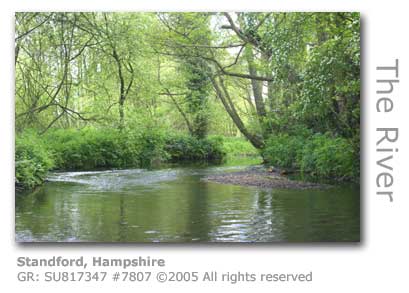
The River Wey South Branch Having risen in West Sussex the Wey county hops between Hampshire and Surrey before heading on to eventually join its twin at Tilford. The stretch from Haslemere to Lindford is a beautiful and historic section of the valley with industrial history going back to Roman times. |
Wey WEY BALLAD WEY LEISURE WEY SWAMPY
"There I was part of a team engaged in developing filters to eliminate the noise that radar signals were causing on ship radios. As fast as we succeeded in developing such a filter there was a more powerful radar system produced and we had to start all over again. "I never knew whether or not we really helped the war effort, but I hoped that we did. I was very fortunate compared to many of my contemporaries who never returned . Two things that were never missed in those days were the weekly episode of ITMA and any speeches by Churchill. If Hitler wanted to catch Britain by surprise he should have attacked during an episode of ITMA." telegraph.co.uk 27th November 2008 WEY ENVIRONMENTAL
WEY BIONIC WEY VALLEY FOOD WEY HILLY WEY RETIRING WEY HASLEMERIANS WEY SHERLOCK WEY STAIRWAY WEY SMART (1) WEY CLOSED WEY SLEEPER WEY FIRST LINES Ellis won with this imaginary opening for a children's novel: "Joanne watched her fellow passengers - a wizened man reading about alchemy; an oversized bearded man-child; a haunted, bespectacled young man with a scar; and a gaggle of private school children who chatted ceaselessly about Latin and flying around the hockey pitch and the two-faced teacher who they thought was a witch - there was a story here, she decided." WEY BEAR WEY WALKERS (1) WEY SMART (2) "When we identified a smart-card scheme used in Haslemere in Surrey and found it worked well in other towns down south, we decided this was what we were looking for," said Huntly Business Association chairman David Sherriffs. Source: pressandjournal.co.uk 29th October 2008 WEY PLINTH WEY WALKERS (2) "The Greensand Way is one of the British countryside's best kept secrets but now more people will be able to discover how truly beautiful it is," said Ian Lake, the council's cabinet member for the environment. "There's an amazing view from Leith Hill. From one spot you can see views stretching as far as London and if you look the other direction you can see the sea on the south coast." Surrey Advertiser 28th October 2011 WEY CULINARY WEY LEAK WEY TRANSITION "It's easy to feel powerless in the face of a huge problem like climate change, but by uniting everyone behind immediate, effective and achievable action, 10:10 enables all of us to make a meaningful difference," said the organisers. (1) Transition Town Haslemere was founded in 2008 and is part of a national initiative to develop practical solutions to climate change and the decline of cheap fuel (Peak Oil) and is driven by groups of local people getting together to tackle issues such as waste, energy, food, transport, and health. There are other groups along the Wey Valley including Farnham, Guildford and Godalming. WEY LADYBIRD WEY CAPSULE WEY SPOOFER The hole, created using Haslemere's world famous Small Hadron Collider, has been a controversial issue for many local residents, with complaints about the millions in funding the local council have endlessly poured into it, and neighbours objecting to planning applications claiming 'it will destroy all the light.' In 2011 a high-speed link between the Haslemere hole and a supermassive black hole being built in Switzerland by CERN is also set to open. However, while people who enter the hole via CERN'S Large Hadron Collider will travel at almost the speed of light, the moment they enter Britain, they will slow down to a mere 40 miles per hour. The Haslemere black hole will be opened next Tuesday, to be followed by wine, canapés and the collapse of spacetime. Ludicity, 9th June 2010 newsbiscuit.com WEY CHERNOBYL WEY DIGITAL WEY BLUELESS Also on this page: HINDHEAD TUNNEL |
|
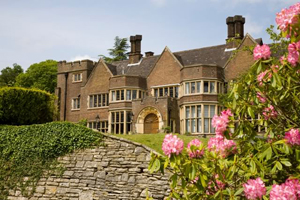
Haslemere Haslemere nestles in rolling hills close to the Devil’s Punch Bowl (see below) in nearby Hindhead, and commands a point where the counties of Surrey, Sussex and Surrey all converge. The town, with a population of around 14,000, is thought to have taken its name from the dense hazel woodland and a lake (mere) that once stood close to the centre of the town. An alternative view is that a Saxon settlement here was named after the tribe occupying it, although again it is likely that the tribe's name reflected its local geographic origins. Local historians believe that based on Haslemere's original street layout that it is an example of a 'planted' town - literally a settlement 'planted' in open countryside to provide market town functionality - and with a characteristic T-shape common in the 12th and 13th centuries. The town was granted a market under the Bishop of Salisbury by Henry III in 1221. In 1393 an annual fair was granted by charter and appears to have flourished until the end of the 16th century when Haslemere was documented as having fallen on hard times. Both the market and fair had been abandoned which would have had a considerable impact on the town as both events generated revenues in the form of market tolls. Elizabeth I granted a new charter in 1596 which gave the borough the right to elect two members of Parliament and also provided for the revival of the market and fair. This borough status was withdrawn in the Reform Bill of 1832. A map created by one William Morley c1722, which is displayed in Haslemere Museum, clearly shows the T-shaped layout of the town with Market House at its focus. A map drawn 50 years after that of Morley's clearly shows the newly established turnpike road linking Haslemere to Godalming and building development in the town suggesting a period of prosperity. When the railway reached Haslemere in 1859 its future prosperity was assured. Every other year the Haslemere Charter Fair revives the atmosphere of the medieval fair and attracts around 10,000 people to the town. The 2008 event had 110 stalls selling all manner of produce and provided entertainment including live music, parades and displays. The broad high street leads into Shepherd’s Hill with its row of picturesque 16th century cottages. A Tennyson memorial window designed by Burne-Jones graces St Bartholomew’s Parish Church. Haslemere Hall in Bridge Road was the brainchild of local benefactor Lewis Barclay Day. The 350 seat auditorium, complete with upper balcony and a large stage equipped to provide flying scenery and lighting, was designed by Guildford architect Annesley Brownrigg after an open competition for best design. Opening in 1914 the Hall was immediately requisitioned by the War Office and used as a drill hall for troops destined for the trenches. With the war at an end Barclay Day presented the Hall to the town. The building's design reflects the influence of the Arts and Crafts Movement of the early 1900s and boasts a fine curved stone staircase serving the upper rotunda. The Hall is run by a board of trustees and is funded largely by private donation. On the Hindhead Road is the Edwardian pile Branksome Place. The listed building set in 32 acres of rolling lawns and woodland has long since been converted into a 60-bedroomed hotel and today (2008) is run by the De Vere luxury hotel group. Carvers, an Elizabethan style house just outside Haslemere and designed by the renowned architect Blunden Shadbolt was built in the 1920s and became a popular venue for hosting performances by bands including Queen and Genesis, and also served as a location for a number of well-known films including the Story of the Rolling Stones, starring David Morrissey and the thriller Cash in Hand starring Richard E Grant. Carvers was built using materials taken from former farm cottages and transported right across the country by horse and cart. Philip Rhodes the current owner (October 2009) bought the house in 1969 for £40,000 and was famous for the parties that he threw for his friends which included famous polo players, actors and musicians.
The eight bedroom property, set in 11.5 acres (4.7 hectares) and surrounded by open countryside includes a swimming pool, paddocks, lakes, and a helipad, was on the market (October 2009) for £4,150,000. A new-build country house of note was on the market for £10m in early 2010. Sparrwood Farm, which is set in 231 acres (93 hectares) seven miles away from Haslemere, was designed by Roderick James who is renowned for his timber frame designs. The house, which was completed in November 2009 has five ensuite bedrooms, an indoor swimming pool, an 8ft (2.4m) screened cinema and an 'integrated sound system'. Haslemere is home to the Dolmetsch family, famous for the musical instruments they continue to make in workshops in the town founded in 1918. Arnold Dolmetsch was credited with the invention of the descant recorder, now a standard instrument used to introduce young children to music making. In the family's honour an annual music festival has been held at Haslemere Hall without a break since 1924. The Dolmetsch Early Music Festival's organisers lay claim to the record of the UK's longest running music festival in one location. Other notable residents of the area have been Sir Arthur Conan Doyle (1859 - 1930) the creator of Sherlock Holmes, George Bernard Shaw (1856 - 1950) the Irish born playwright and essayist, and George Elliot (1819 -1880) the novelist, who as Mary Ann Evans worked under this pseudonym. James Oglethorpe (1696 – 1785) was the member of parliament representing the town prior to leaving for America to found the State of Georgia. In a bid to encourage local residents and visitors to get out into the countryside to explore the Surrey Hills around Haslemere a new initiative has been launched (February 2008) by Natural Discovery. The Lythe Hill Hotel on the outskirts of town is providing electric bicycles for hire by the day or for longer periods. The hire tariff includes loan of cycle helmets, panniers, locks, repair kits and wet weather capes. The Powacycle Salisbury bikes have a small motor that provides a boost to get cyclists up steep hills and has battery range of 25 miles. Shottermill on the western edge of the town and close to the River Wey was the site of a mill that specialised in the manufacture of cannon balls and shot for muskets. Further downstream near Hammer is the site of Pophall Mill (GR: SU874326) which was established by Lord Montague and that also was involved in the production of iron products. Only a set of sluices that controlled the flow of water from Hammer Pond to the mill remain. Hammer had its industrial origins in the early iron smelting industry. Brickworks were active here from the 19th century. SEE MORE BELOW Shottermill has at its heart an old mill and adjacent tavern. Built in the 15th century The Mill Tavern as it is now known also served as a courthouse but today provides a family focus for customers wanting to enjoy the large bar, restaurant and gardens complete with adventure playground. Shottermill was a centre of industry for 700 years with the river providing water and power. By the end of the 19th century six watermills had been in operation here at one time or another. These provided an output for a wide variety of products including fulling, corn milling and iron working. Sickle making was a particular speciality of the area in the early 1800s. The mills also provided for leather dressing, paper and braid making. Local historian Greta Turner has published a history of the area in two volumes with the first providing a history up to the 1700s and the second from 1730 to the early 20th century based on 10 years of detailed research. (1) (1) The River Wey Conservation Area runs alongside the south bank of the river here and the local council has provided boardwalks around some of the area. The Wey was channelled into water meadows here through Hammer Bottom as it flowed through Shottermill as part of the river's water management system. Near to Haslemere is composer Tobias Matthay's house High Marley. Matthay designed his house that sits high in the Surrey Hills overlooking Marley Commons in 1907. The house has its major rooms with dominant south facing vistas and he designed the rooms so that they met at obtuse angles to soften the interior shadows. Matthay used the house as a place to teach his pupils whilst Professor of Advanced Piano for the Royal Academy of Music. Matthay died in the house in 1945. One of his pupils wrote a piano piece titled High Marley Rest in 1933. Wartime Haslemere In common with much of the Wey Valley, Haslemere witnessed the heroics of pilots from both sides during the 1940 Battle of Britain. Research published by renowned aviation historian and valley resident Simon Parry (War-torn Skies - Battle of Britain Surrey 2007 ISBN: 978095547) reveal the dramatic downing of a Luftwaffe aircraft near Haslemere. The Messerscmitt Me109 was attacked from below whilst escorting bombers returning from a raid on London and came down at Holmans Grove at Grayswood. The pilot, one Lieutenant Herbert Schmidt, parachuted to safety ending up over the county border in Fernhurst. The account of his ordeal is one of many in the book.
The Admiralty Signal Establishment, which was established in 1917 to develop signalling technology and later radar direction finding, was relocated from Portsmouth to Lythe Hill House in Haslemere in 1936. In the same year the establishment's production department was set up in Whitwell Hatch Hotel at Haste Hill. The Experimental Section in Lythe Hill House together with the Production and Development Section were commissioned as HMS Mercury in August 1941 to be operated as an independent command. Not long afterwards laboratories and workshops were established at King Edward's School in Witley. Haste Hill was the site of a semaphore station in the nineteenth century. The Admiralty Telegraph was erected in 1821 as part of the 'semaphore line' linking London to Portsmouth. The building, which consisted of a bungalow-style structure with the semaphore standing high above the operations room, was sold in 1849 after the line closed. It was to become the Whitwell Hatch Hotel. Pupils at Haslemere Preparatory School had the chance to meet (October 2011) the war veterans from the Second World War. Bill Bailey was an RAF navigator who flew bombing missions across Germany in a Lancaster bomber. He was shot down and having suffered severe injuries when his parachute didn't deploy fully was eventually able to escape across Europe into Spain with the help of the Resistance. Keith Evans served on HMS Hood, and Norman Rogers was a signalman who fought in North Africa and was part of the successful campaign ensuring the surrender of German forces in Tunis.
Haslemere Museum was founded in 1888 by Sir Jonathan Hutchinson in the grounds of his home at Inval in the town. The surgeon had collected a wide array of objects related to his interests in the fields of geology, biology and social history and he wanted to share these with the local people. The venture became so successful that Hutchinson launched a series of lectures that still continue to this day. The collections were moved to Museum Hill in 1895 before being relocated to their current site at 78 High Street in 1926. Hutchinson also bequeathed land to be used for the town’s recreation ground and tennis courts in the 1920s. The building dates back in part to the sixteenth century and was subjected to alterations during the nineteenth. The facade is little changed from its original appearance in Georgian times. The museum has extensive grounds containing several unusual trees including a gingko tree. There are views across to Lythe Hill and visitors can enjoy a stroll through the woods along a nature trail past the curved Ha-ha (1), gazebo and pond. A new boardwalk was installed by volunteers in the grounds during March 2009 with funds raised by Haslemere Lawn Tennis Club. Further improvements to the grounds using the £7,000 raised in the club’s annual charity auction in 2008 are planned. The geological collection of 15,300 specimens includes 8,190 fossils, 4,203 minerals and 2,907 rocks (2006). Fossils on display include reptilian footprints, dinosaur fragments and the skeleton and egg of the now extinct moa, a flightless bird. The museum has acquired items and full collections from many 19th century collectors. The museum’s natural history collection is extensive with over 240,000 specimens, and there are many surprises with other collections. One for example provides for European ‘peasant art’ from the 16th to 19th centuries and also has over 600 objects including fabrics and embroideries from all over the world. The museum also boasts an Egyptian mummy. The museum is run by volunteers and periodically has undertaken major reorganisations to cater for the growing collections. This account was made by the Haslemere Heritage Volunteers of one such event when a team of 32 HDFAS members (2) cleared the building’s six attic rooms after the roof had been replaced. The overall exercise took six years in total and was completed in 1998.
The Guardian newspaper selected Haslemere Museum as one of the country’s Top 20 family-friendly museums. The museum runs regular events and exhibitions including activities for children and is open weekly from Tuesday through Saturday with admission by donation. Other groups also rate the museum highly for being family friendly.
(1) Ha-ha walls originated in the 17th century and were created as boundaries typically between an estate’s gardens and grounds in such a way as they were invisible from the house. The sunken stone walls were often level with the garden on the house side and exposed in a deep ditch on the far side, with their unusual name deriving from the surprise in stumbling across the structures. The museum reported the theft of a rhinoceros head (May 2011) which was believed to have been stolen for the valuable ivory in its horn. One of the thieves was captured in November but it wasn't until the police appealed through the BBC's Crimewatch programme that his partner in crime was apprehended. Both men from Essex are due in court during March 2012. The horn theft was not a lone one with numerous others throughout the UK which include Ipswich Museum (July 2011), an auctioneer's in Essex (February 2011) and two replica horns fooled thieves in Tring, Hertfordshire (August 2011). A Haslemere man was arrested (January 2012) on suspicion of illegally exporting ivory products. A raid on the man's house discovered tusks and ivory carvings. The police have not publicly stated any connection with the museum theft. This is not the first reported major theft of valuable items being stolen from the museum. A 71-year-old employee, who had worked for 17 years at the museum, was given a three-year prison sentence in October 2009 for stealing books, paintings, antique furniture and various relics. The court heard that between 1990 and 2007 58 items had been removed from the museum and had netted the thief £60,000 through auctions. The Campaign to Protect Rural England (CPRE) launched (May 2009) an appeal for Haslemere residents to join a Mapping Local Food Web project. Their inaugural meeting in the Georgian House Hotel resulted in several people volunteering to research the food purchasing patterns of the local populace in order to map their local food network – their food web – in order to explore the benefits of supplying and buying locally produced produce. CPRE, who devised the project with Sustain (1), hope that the scheme will map out the links locally between farmers and growers, processors, suppliers, local food shops and the end consumer. The project will also identify other local food providers such as farmers markets, box schemes and any community supported agriculture and food cooperatives. The scheme was launched at the beginning of 2009 as pilot projects in six towns across England and has been extended to 24 communities including Haslemere.
The project involves local researchers running an initial public workshop to explore local people’s views about local food. Consumer questionnaires will then be completed through the canvassing of local shoppers within a 2.5 mile radius to gain an understanding of shopping habits and attitudes towards buying locally produced food. The final phase utilises a survey of local businesses within a 30 mile radius of the town involved in local food provision and the supply chain. (1) Sustain was formed to campaign for agricultural and food policies that ‘enhance the health and welfare of people and animals, improve the working and living environment, promote equity and enrich society and culture’. The charity was launched in 1999 with the merging of the National Food Alliance and the Sustainable Agriculture Food and Environment (SAFE) Alliance Sources: Haslemere loses Wispers, a long-established independent school for 11-18 year old girls, in a shock announcement (May 2008) in which the governors stated its closure from the end of the summer term. The school, which was founded in 1947 in Midhurst before relocating to its 26-acre site at Oak Hall in High Lane, Haslemere (GR: SU902335) in 1969, is a casualty of falling pupil numbers and escalating costs. Fourteen full-time and 15 part-time teaching staff will lose their jobs together with 17 members of support staff. The roll of 80 pupils, many of whom are from abroad, are having to find places at other schools. Twenty are boarders.
Alumni include actress Susannah York (1939 - 2011), who was reportedly 'removed' from the school after being caught swimming naked at midnight in the school's pool. Angela Lambert (1940 - 2007) was an author and journalist, her most notable work being A Rather English Marriage published in 1992. The governors will be establishing the Wispers Education Trust providing bursaries for girls from lower income familes from the proceeds of the sale of the site and its buildings. It was expected to raise £4m from the sale. A third of the school's pupils in its last year were funded at the school through bursaries or scholarships, the majority funded by the school itself. Wispers had secured its site in Haslemere thanks to the support of local businessman Ken Wood, the founder of the Kenwood kitchen equipment manufacturer and who was chairman of the school governors until his death in 1997. The school operated under the motto Fortiter, Fideliter, Feliciter which translates as Faithfully, Bravely, Happily, and had found support right up to its demise including a glowing report from the Independent Schools Inspectorate (2007). The school had also consistently announced a 100% pass rate at A level for its pupils. The Grade II listed house (from January 2010) was commissioned by Scottish landscape and portrait artist James Michie (1859 - 1919) and built in 1911. The architect was Theophilus Allen who designed it in sympathy to the Elizabethan Revival style. and was laid out to a typical Elizabethan courtyard plan. A large north-facing room on the first floor served as the artist's studio. After Michie's death his wife leased the house to one Miss Voy and Miss Keyte-Perry who built a large extension and established a girls' school on the site. Their venture appeared to be a success as the ladies bought the freehold in 1938. Oak Hall School later changed hands and remained until Wispers took over the building in 1969. Planning consent was granted (2010) to convert the house into a 'care village' for the elderly. The application, which was for 112 assisted living/close care units to be managed by 55 members of staff, allowed for refurbishment and selected extension of the main house, together with the building of a new two-storey 'supported living centre' to the rear. All other buildings were to be demolished, although 'part' of the old sixth form centre Willow House was to be retained. The following entry was published in the planning application.
BBC Three filmed their ten one-hour TV series Leave Us Kids Alone at Oak Hall over a three week period in the summer of 2007. The series followed 12 teenagers who undergo an experiment to run a school without adult teachers. It was boroadcast in October 2007. 'Garden Grabbing' Concerns Wey Valley residents in Godalming, Haslemere and Farnham have joined forces to protest against what they see as the 'garden grabbing' activities of property developers in the area. The traditional art of broomstick-making fights on in a modern world competing with mass-produced foreign imports. For over 50 years Hammer Vale near Haslemere saw a local ‘squire’, the occupational name for broom-makers, working hard in his shed with all manner of tools to produce hand-crafted brooms and brushes for the local populace and beyond. The squire was George Berry and his widow has donated all of his tools to Amberley Working Museum in West Sussex where squire Harvey Stenning carries on the craft as his father, grandfather and great-uncle had done before him. Hanging in Stenning’s shed at Amberley is a picture of Hammer Vale’s own squire. "When George's widow heard we were starting up here, she let us have his tools," said Stenning. “You can't make a living today selling brooms. Mind you, things pick up at Hallowe'en time, when people get interested in witches flying on broomsticks." (There's a sign in his shed reading: ‘Approved by Witch? magazine.’) The best it's ever got was when the first Harry Potter film came out. We were doing a craft show at Kew Gardens and had queues stretching out of the building. Sold hundreds of brooms, we did, couldn't make the things fast enough. Arthur and I were turning them out at the rate of 10 brooms every 12 minutes." "My father, grandfather and great-uncle were all professional woodsmen who took me with them when they went out working. We'd go into the forest and they'd do the coppicing, mainly thinning out the sweet chestnut trees. During the winter months, they would make the good pieces of wood into fencing and I'd make the twigs into brooms. They taught me everything I know about the woods - such as how silver birch is really just a weed. You won't find it in any timber book. And how sycamore is the rogue of the forest: let it shed its seeds, and it'll take over in no time." Source: Lynchmere Lynchmere (GR:SU868309) in West Sussex, is oft described by local author Michael Tibbs as the ‘North-West Frontier’ lying as it does on the northernmost fringes of Chichester District and ‘dangerous country where inhabitants were always on guard waiting to repel those who dared to raid its borders’. The parish, which prides itself in its historic spelling of Lynchmere with a proud ‘y’ in rebellion to the Ordnance Survey’s more modern ‘i’, has repelled attempts in the past by neighbouring county Surrey to swallow up its territory, and which also rests uncomfortably up against the boundary of Hampshire’s Liphook. The River Wey holds the border to the north and which divides West Sussex and Surrey. Michael and Anne Tibbs have written two books about Lynchmere and are so revered for their knowledge of the village that they are known as Mr and Mrs Lynchmere. They also act as guardians elect. Lynchmere is proud of its ancient cricket pitch believed to be one of the oldest village pitches in the country. Under threat of redevelopment the village successfully campaigned to buy that too, and for added effect also raised enough money to build a brand new pavilio. The church has also benefitted from the villagers’ dedication when parishioners through Friends of St Peters raised £45,000 to pay for vital repairs. And of course you would also expect the high-spirited villagers to do something to protect their northern border with Surrey. Parish councillors created a wildlife walk on both banks of the River Wey providing a buffer against the threat of urban sprawl from the neighbouring town of Haslemere. A quarter of a mile (480m) trail has also been created on Lynchmere Common to allow easy access for visitors of all mobility to the viewpoint overlooking the countryside to the north west towards Selbourne Hanger. After a break of over 40 years Lynchmere has relaunched (2008) its village fete. True to the traditional event that would have been common in 1964, steam engines, vintage cars and tractors gathered around the cricket ground where games including knock the jockey, marble racing and beat the goalie were played alongside tug of war tournaments. Over £3,000 was raised and donated to St Peter’s Church. St Peter’s Church, which stands at one end of Lynchmere Green with its ancient oak trees, has Saxon origins. The building today dates from the 12th century with the local sandstone church gradually being enlarged over ensuing centuries. The East Window dates to the 13th century. A sundial dated 1653 is on the south wall. Shulbrede Priory (GR:SU876299) located at the bottom of the hill below the church and which originally housed Augustinian monks, has been home to the Ponsonby family for over a century who help with its upkeep by holding public open days. Shulbrede monastery (also historically referred to as Woolynchmere Priory) was founded in 1200 during the reign of King John. A document dated 1358 refers to the buildings as ‘by the industry and magnificence of its founder [Sir Ralph de Arderne] were originally sumptuously arranged'. The monastery was dissolved in 1536 with one historical account citing that the King’s Commissioner used a report that ‘26 whores were found at the priory’ as authority. According to A History of the County of Sussex (1953) excavations around the Priory revealed evidence of a church on the northside measuring 140ft (43m) in length and 98ft (30m) across with a chapterhouse and domestic buildings on a similar scale. The exterior walls were 4ft (1.2m) thick and were built with a packed rubble of sandstone. The original priory enclosure covered around four acres and was surrounded by a moat. The Prior’s Chamber in the Priory buildings remaining today sits above a vaulted croft and contains 16th century wall paintings. Illustrator Harriet Russell was brought up at the Priory, which according to her publishers Allison & Busby was ‘populated with various cats, geese and bantams’. Russell published (2008) an unusual and extremely imaginative book inspired by the experiences of her family at Shulbrede where wildly mis-addressed envelopes still managed to reach them at the house against all odds. The book Envelopes (ISBN 978-0749079239) features 75 envelopes Russell designed to provide various challenges to postmen whilst living in Glasgow and London and that still made it through her letterbox. She addressed the envelopes using mazes, anagrams, illustrations, puns and other imaginative foolery proving that the Royal Mail is still worthy of its heritage – 120 of 130 envelopes were delivered despite the fact that some required the postmen to fill out crosswords or join the dots to complete the address. Within the parish of Lynchmere is Hammer (GR:SU876324), the ancient site of Wealden ironworks by the River Wey. The brickworks established here at the end of the 1800s by one John Grover saw the need for accommodation for its rapidly growing workforce. Grover bought land in nearby Camelsdale further upstream on which to build houses for his workers and which acted as a catalyst for the development of the hamlet. The nonconformist church he also built, today as Three Counties Church is an Evangelical Free Church with an active congregation of some 150 churchgoers (2008). The village has its own First School, pub and village shop. Arnold’s Garage has traded in the village for over 70 years. There were two ironworks at Hammer. On private land at North Park the original pit where gun barrels were cast has been restored and the second works at Pophall which is less well-defined has the remains of a sluice still visible. The Pophall ironmill was in operation from circa 1573 until 1730 and North Park from 1620. Lynchmere residents campaigned to buy 307 acres (125 hectares) of common land that Cowdray Estate (owned by Viscount Cowdray) had put up for sale to ensure that they could protect it for posterity. The campaigners successfully raised £400,000 from over 500 donors, including a grant of £220,000 from the Heritage Lottery Fund and a grant from the Sussex Downs Conservation Board, and purchased the land in 1998. The Lynchmere Society founded by Michael Tibbs in 1991 has the responsibility of caring for Lynchmere (GR:SU865316), Marley (GR:SU890315) and Stanley (GR:SU857304) Commons purchased from Cowdray, and from 1999 were classified as a Local Nature Reserve by West Sussex County Council. The commons have been a Site of Nature Conservation Importance (SNCI) since 2004. In the winter of 2008 12 tons (11,000 kg) of birchwood and four tons (3,600 kg) of pine were distributed by Lynchmere Society to local residents as winter fuel. The wood had been gathered from the clearance of excess trees across the three commons as part of the Society’s project to re-establish the lowland heath that had been encroached upon by woodland over many centuries. Eight head of Shetland cattle have also been reintroduced (2005) after fencing had been erected to keep saplings at bay under the Defra Countryside Stewardship Scheme (CSS). The encroachment had been exacerbated by the cessation of common grazing after WWII. The CSS also provides a grant of £10,000 annually to allow the commons to continue to be maintained and restored. The Society has also restored two ponds on Lynchmere Common. Volunteers continue to regularly care for the commons. The following is an account by Sean Hellman, a pole lather and woodsman, who has volunteered since 2000 at Lynchmere.
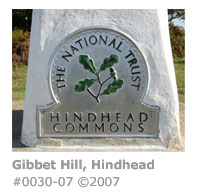
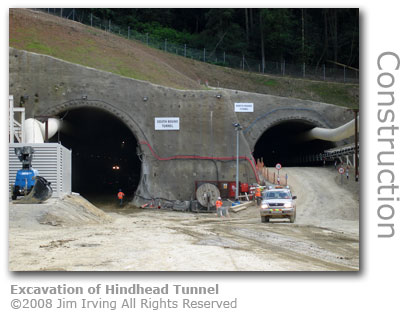
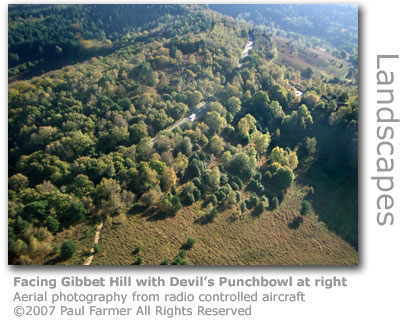
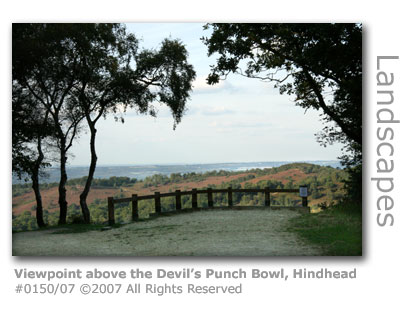
The Devil's Punch Bowl, The Tunnel, Gibbet Hill and Hindhead The Devil's Punch Bowl (GR: SU895363) is a natural ampitheatre of dry sandy heath that lies to the end of a valley between Hindhead and Thursley and is straddled by Hindhead Common. A popular beauty spot now managed by the National Trust, the valley is skirted by the main road artery (A3) linking London to Portsmouth and has been choked for many years by traffic that has been confined to the only remaining single carriageway stretch along the whole 74 mile (119km) route. This bottleneck will be closed once the Hindhead Tunnel bypass road is completed in 2011. Local and national pressure groups had been campaigning for an alternative route to take traffic away from the Devil's Punch Bowl for over 30 years. The Haslemere to Hindhead stretch of the A3 was rated a poor two out of four for safety levels by the Road Safety Foundation (January 2010). The score, which is based on guidelines produced by the European Road Assessment Programme, measures how well their design protects users from death or disabling injury if a crash happens. The single carriageway stretch which climbs a steep hill with a bend will effectively become redundant once the tunnel is open. Although digging a tunnel beneath Gibbet Hill was approved in principle in 1993 it wasn't for another 13 years before funding was finally found to make the project a reality. Due to cost over £370m, clearance work began in January 2007 and the first shovelfull of earth for the twin-bore tunnels was removed in February 2008. The area was one of the earliest major acquisitions (1905) made by the Trust, undoubtedly influenced by the fact that the Trust's first ever chairman, Sir Robert Hunter, lived in nearby Haslemere.
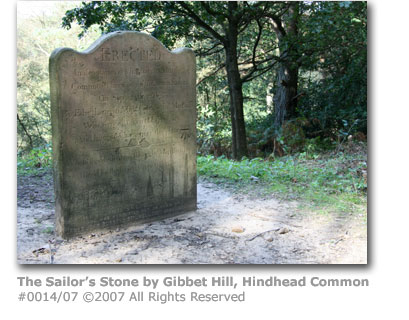
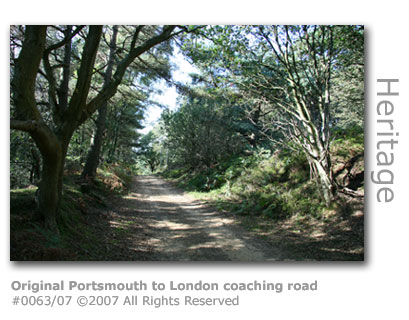
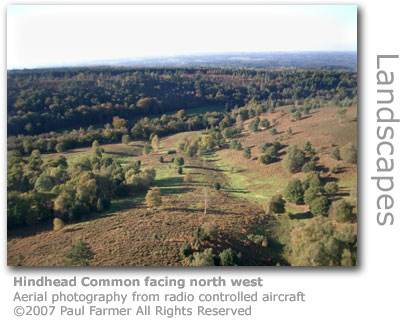
The Devil's Punch Bowl and the adjoining Hindhead Commons cover an area of 1,600 acres and consist of some of the most extensive areas of lowland heath in the country, and as a large expanse of underdeveloped countryside is listed as an Area of Outstanding Natural Beauty (AONB) A dominant prominence of sandstone overlooking the Punch Bowl was named Gibbet Hill (1) in the 18th century marking the hanging of three 'footpads' (2) who in 1786 murdered a sailor travelling alone along the Portsmouth to London road through what was then a wild and remote area, and who they had befriended in an inn in the area. Such was the public outcry at this cold blooded act on a sailor trying to return to his ship at Portsmouth that a memorial stone, which became known as the Sailor's Stone (GR: SU899359), was erected on the site of the murder in the same year. The murderers' bodies were tarred and hung in chains from a gibbet on the hill alongside the old road to serve as a warning. The inscription on the stone reads:
A further inscription added to the base of the stone a hundred years later records that the stone was renovated by one James John Russell Stilwell of Killinghurst, a descendant of James Stilwell who had originally erected the stone in 1786. (1)Gibbet refers to the gallows that was erected on the hill to hang the condemned men. It would have been a simple wooden structure consisting of an upright post with a crosspiece forming a T-shaped structure from which the noose was hung. The Haslemere Initiative (3) organised a ceremony (September 2007) to commemorate the 221st anniversary of the unknown sailor's murder. Accompanied by representatives from the Three Counties National Trust and the Mayor of Haslemere the group raised a toast to mark the erection of a memorial board at the site providing historical information about the killing. A second information board has been erected by the Celtic cross on Gibbet Hill (see below). (3) The Haslemere Initiative is a partnership organisation of local and county government and the Haslemere Chamber of Commerce. Local newspaper The Surrey Advertiser has been instrumental in tracking down (June 2009) five original paintings depicting the Hindhead murder. An unknown 19th century English painter recreated the scenes leading up to the murder and the trial, and these had for many years hung on the walls of The Royal Huts Hotel in the village. Postcards had also been published featuring the pictures. However when local historian Nigel Mee tried to trace them he found that no one knew of their whereabouts. Their last resting place he was told had been The Kings Arms & Royal Hotel in Godalming but they had been removed when the hotel had been taken over in 2008. The paper however traced the missing paintings to an art auction, where they had been submitted for sale by the new owners of the Kings Arms, and tipped off the historian just in time for the Haslemere Museum to successfully bid for them. The paintings, which cost the museum £3,300, are to be restored before being put on display. Part of the original gibbet used in the hangings is also stored at the museum. The gibbet chains had hung around the fireplace at the Kings Arms before its refurbishment, although their whereabouts is still unknown. It is thought that Charles Dickens wove an account of the murder into Nicholas Nickleby. The event also spawned countless ballads and stories. The hills around Hindhead, itself a small village of a few hundred inhabitants and billed as the highest village in Surrey, were noted by contemporary writers, and it's perhaps not surprising that many viewed the area as wild and lawless.
Stories from the mid 19th century were collected and published in Frensham Then and Now (1938 Baker & Minchin) which includes this piece by an unnamed local resident about the infamous 'Hindhead Gang'. As notorious was the 'Blackdown Gang' which operated from Black Down common, the source of the southern branch of the River Wey to the south of Haslemere.
Local Historian John Owen Smith relates the tale that Lord Tennyson, the acclaimed 19th century poet, in 1867 wrote to his friend Francis Palgrave saying that although he had been warned about the local inhabitants he had decided to take up the lease for nearby Grayshott Hall. His time at the house appeared happily to have never involved any encounters with the local ruffians. A few years previously one Mr I'Anson had similarly been warned when he announced his intention to bring his family to the area.
Even the artist J.M.W Turner, who passed through Hindhead in November 1807, seemed to view the area as wild and barren as his sketch later to be engraved Hind Head Hill seemed to depict. However a Victorian 'colony' of well-known writers who lived in the hills around Hindhead and nearby Haslemere towards the tail-end of the 19th century undoubtedly had a different view of the area. One reason may be down to the fact that by the 1870s the coaching trade had all but vanished, their business snatched away by the new railway revolution, and with them the highwayman's prey also disappeared. Additionally the broom squires, who made besoms from heather and birch twigs outside their huts on the heath and who were often blamed for local crime, had by then been put out of business by the competition from factory-made brooms and so also had disappeared from the area. Writers included poet laureate Lord Tennyson, Conan Doyle and Bernard Shaw. A total of 65 other writers have been identified by historian Bob Trotter as being members of the appropriately coined 'The Hilltop Writers', and he details these in his book of the same name. The writers were attracted by the beauty of the area together with its accessibility by the new railway line that opened in 1859 giving them a fast connection to and from London.
Shaw rented Blen Cathra set in 35 acres of gardens and woodland in 1898 having stayed at nearby Pitfold House for his honeymoon the same year with Charlotte Payne-Townshend. St Edmund’s, a co-ed school for 7 – 13-year-olds, took over the property the following year and still occupies the prime site (GR: SU878352) along Portsmouth Road backing to Boundary Road on the outskirts of Grayshott. A blue plaque, designed and made by Grayshott Pottery, was erected (2008) by the front door to commemorate Shaw’s time at the house. Arthur Conan Doyle lived at Undershaws in Hindhead MORE HERE and Flora Thompson, the author of Lark Rise to Candleford, lived at The Ferns whilst assistant postmistress in Grayshott from 1898 to 1901. Grayshott Hall on the Headley Road (GR: SU857356) was built on the site of a 224 acre farm and was home to Alfred Tennyson in 1867 whilst he was looking for land on which to build a family home – this was to be Aldworth near Haslemere MORE HERE. Mrs Glichrist, a friend of the family, at the time wrote:
At the time Tennyson was living there the substantial stone and slate building, that was then Grayshott Farm, comprised three reception rooms and eight bedrooms, along with a coach house, stables, a barn and a cowshed. The manor, which was part of a 1,794 acre estate, was sold the following year at which time it was renamed Grayshott Hall. The property was substantially rebuilt in a ‘Victorian baronial style’ in 1886-7 by one Alexander Ingraham Whitaker, at which time a tower was added and two Latin mottoes were inscribed over the entrance beneath, ‘pax intrantibus’ (peace upon entering) and ‘salus exeuntibus’ (health upon leaving) – which was to be quite fitting given that the building has housed a health spa since 1965. The Century Wing was added in 1971 to provide an accommodation block of 21 bedrooms for the spa. The property today enjoys 47 acres of landscaped grounds. Grayshott was appointed Best Village in East Hampshire in 2007 and was acclaimed Best Village in Hampshire in 2002 and 2005. The first documentation of the village appeared in the Pipe Rolls of 1185 when it was referred to as ‘Gravesetta’. In 1552 ‘Graveshott’ was preferred with the first reference as ‘Grayshott’ recorded in 1773. Commoners by right had access to the heathland for grazing, and it was the presence of their animals that kept Hindhead Commons preserved in its natural state. In the mid-1900s these rights were withdrawn and very quickly birch, pine and bracken encroached and started to dominate over the heather. The National Trust has in place a programme of active reclamation which includes the idea of introducing Exmoor ponies and Highland cattle. The dominant flora across the heath is bell heather (Erica cinerea), cross-leaved heather, also known as bog heather (Erica tetralix) and dwarf gorse (Ulex minor) alongside common gorse (Ulex europaeus), purple moor grass (Molinia caerulea) and the omnipresent bracken fern (Pteridium aquilinum). Older woods and wood pastures include oak, holly and ash with beech coppice in a number of locations including Highcombe Copse. The wet habitat along Highcombe Bottom with its stream by the Youth Hostel (GR: SU894368) has ensured that alder, willow and bog bean (Menyanthes trifoliata) have flourished. The valley bottom also supports healthy insect populations including a rare cranefly specie. Woodpeckers, including green (Picus viridis), great (Dendrocopos major) and lesser-spotted (Dendrocopos minor) frequent the woodland and nightjar (Caprimulgus europaeus), stonechat (Saxicola torquata) and woodlark (Lullula arborea) can be seen on the heath. Hindhead Commons, Boundless Valley (GR: SU905365) to the north-east of Gibbet Hill and Tyndall's Wood (GR: SU887355) by Arthur Conan Doyle's home Undershaw are all popular with walkers, equestrians and cyclists. To reach these from the Devil's Punch Bowl requires a dash of courage when confronted with the endless stream of traffic on the A3 which divides them, although come 2011 this route will be closed when the Hindhead Tunnel opens. Access to the Devil's Punch Bowl from the National Trust car park on the A3 is free although there is a charge for parking for non-members. The now Trust-owned cafe is open daily.
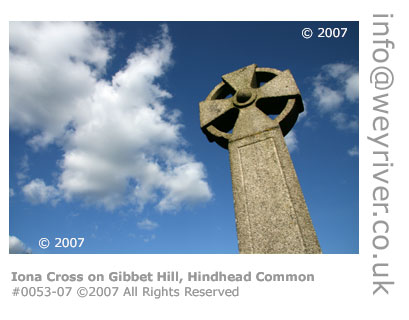
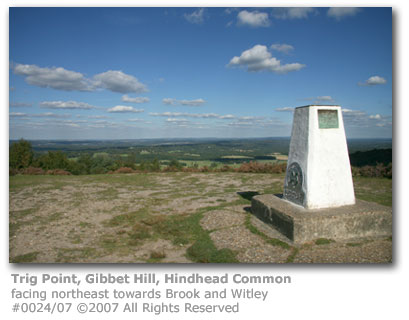
The trig point (3) shown above marks the summit of Gibbet Hill, which at 895 ft (272m) above sea level ranks it as the second highest hill in Surrey. Maintained by the Ordnance Survey as a surveying bench-mark (S1535) and a global positioning system (GPS) point, the pillar has a circular topographical plate fixed to the top providing pointers and distances to regional towns. Nearby is a 15ft (4.6m) granite Celtic cross with the individual inscriptions 'Post Tenebras Lux', 'In Luce Spes', In Obitu Pax' and 'Post Obiter Salus', one on each of the four faces of the column. These translate as 'After Darkness, Light', 'In Light, Hope', 'In Death, Peace', 'After Death, Safety'. There is a date of 1851 inscribed. Local concensus seems to suggest that the cross was erected to reassure travellers that contrary to popular belief Hindhead Common was not beset by spirits and ghosts, and that they were safe to rest there. (3) Trig (trignometrical) points in the days before GPS provided surveyors with a frame of reference enabling an accurately surveyed and documented position. Exact positions could be found by linking trig points. The surveyor would attach his theodolite to the metal disc inserted to the top of the trig point. A trail across Hindhead Commons, initiated in 1995 to mark the centenary of the National Trust, was named after Sir Robert Hunter, the founder who lived locally in Haslemere. Local historian, Lionel Joseph, is campaigning (October 2009) to ensure that historic milestones located along the shortly to be closed section of the A3 are not lost once the Hindhead tunnel is opened in 2011. In the 1920s the Sailor’s Memorial Stone commemorating the cold-blooded murder was sited in the centre of where the A3 currently runs around Gibbet Hill, but was moved when the road was tarred to its present site on the byway which was the former Portsmouth Road. A milestone, the 39th from Hyde Park Corner, was discovered down the bank at the Devils Punchbowl and was re-sited (September 2009) to the north of the memorial stone on the byway. Another milestone, the 38th from Hyde Park Corner, is located just to the south of the minor road that runs from Witley to Brook. Joseph is concerned that once the road is closed that this may be lost as it would appear is the fate of the 37th milestone that was once located at Bedford Farm. The lost milestone was recorded on the Milestone Society's national database in 2005. He is hoping that the 38th, and 37th if found, will be re-sited on the Thursley byway route. He has calculated that the 37th would rest on the verge outside Thursley church and the 38th about 50 yards (46m) north of the National Trust boundary. Joseph approached Waverley Borough Council on the matter which is passed suggestions on to the Surrey County Council’s highway department. October 1995 saw the first performance of a community play written for schools and amateur dramatic societies to dramatise local history. A Balance of Trust celebrating the centenary of The National Trust had an incredibly lengthy list of characters depicted by a cast of thirty players. The 67 characters included Waitress at the ‘Happy Eater,’ Hindhead (4); Landlord of ‘The Huts’ at Hindhead (5); John Tyndall (who had lived in a single-roomed hut on Hindhead Common with his wife); and local resident, the Sherlock Holmes author Arthur Conan Doyle. The National trust is trialling (July 2010) a paperless parking charge system at the Devils Punch Bowl. This will enable visitors to pay by mobile phone. (4) The Happy Eater was a fast food restaurant located by the main crossroads in Hindhead. It was demolished in the 1990s to make way for a new residential development.
VISIT THE TUNNEL CONSTRUCTION PHOTOFILES HERE Why is The Devil's Punch Bowl So Important? The Devil's Punch Bowl was formed over many thousands of years by spring water eroding the upper surface of sandstone until it hit the impervious layer of clay beneath. The spring still runs heathily today and provides a rich natural environment for a wide variety of wildlife. There is a Site of Special Scientific Interest (SSSI) status in place, with this status having been further strengthened by including the SSSI within the internationally important Wealden Heaths Special Protection Area (SPA). As befits a large and impressive natural feature the Devil's Punch Bowl has also had its share of local legends. One such originating in mediaeval times had it that the devil spent much of his time tormenting the god Thor by pelting him with enormous handfuls of earth, one of which left the great bowl that remains today. The ampitheatre was featured in the TV series Seven Natural Wonders broadcast by the BBC in 2005. The programme covered seven natural landscapes of note in each of eight English regions. Other 'wonders' featured in the local region included The Needles, Lulworth Cove and The Ridgeway, an 85 mile (137 km) road dating back to neolithic times.
The National Trust have started (August 2007) a major project to undertake environmental restoration at the Devil's Punch Bowl which will continue to prepare the area in readiness for when the A3 tunnel relinquishes the beauty spot from the traffic that has blighted it for decades. Improved access to Highcombe Edge from the main car park has already been undertaken, aided by a Sustainable Development Fund grant from the Surrey Hills AONB. A report commissioned by the Hindhead Together Partnership (1) has recommended (January 2008) that the National Trust take a pivotal role in developing new facilities at Hindhead to coincide with the opening of the A3 tunnel. The facilities recommended include an eco-friendly visitor centre and management facilities to compliment the improvements that are already planned to the footpath and bridleway network. The consultants, MPCS, have however recommended that the changes to the visitor facilities should be aimed at a moderate increase in visitors rather than expecting to have to cater for a mass influx of tourists. (1) The Hindhead Together Partnership, which is based at the Witley Centre in Witley, Godalming, was launched in November 2006 to provide a framework for development plans in the area associated with the changes that the tunnel will bring. Under the chairmanship of Poul Christensan who is the deputy chair of Natural England and a South East England Development Agency board member, the organisation is aiming to ensure that development is appropriate to the needs of local people and businesses. The Partnership comprises Natural England, Waverley Borough Council, Surrey County Council, The National Trust, Surrey Hills, the South East England Development Agency and the Highways Agency. The Black Down and Hindhead Supporters commissioned Haslemere artist Malcolm Stathers to create a bronze sculpture of Hindhead Common and the Devils Punchbowl to commemorate National Trust 100th anniversary of managing the landmark. The sculpture, which with its raised relief also allows visually impaired visitors to appreciate the landscape around them, was unveiled in July 2009.
The beauty spot has been selected (September 2010) by the National Trust as being one of six to trial a new Pay By Mobile Phone (PBMP) scheme to pay for parking at the carpark located by the cafe. National Trust members will continue to qualify for free parking with non-members incurring a charge of £2.50 a day. Grayshott In the nearby village of Grayshott an historical archive has been established to provide an important source of information on how local people lived from the mid-19th century to the present. The Grayshott Village Archive, which has been supported by National Lottery and local funding, is housed in the village hall. The archive includes interviews with local villagers recording historic memories of the village, and notes key utility milestones including the fact that a public electricity supply was not installed until 1901, mains water in 1904 and gas in 1909. The village's only pub, the Fox and Pelican, has interesting origins. Land for the building of the public house was acquired at a price of £750 by a family member of the Alton Brewery Company in 1898 but the development almost immediately ran into difficulties. Horrified at the idea of a commercially run pub springing up in their village, a group of local residents with the vicar at their head raised private capital through issuing public shares to build a refreshment house based on temperance principles, and were backed by the People's Refreshment House Association. Subsequently the Alton Brewery Company's application for a trading licence was rejected in preference to the vicar's, and so the refreshment house was built at a cost of £1,465. The temperance controls for a 'refreshment house' were that although alcohol was served it was sold to the landlord by the association at retail prices thereby eliminating any profit for the landlord. Conversely non-alcoholic beverage provided large profits through low supply costs. The landlord also was not allowed to advertise alcohol and could only serve it 'upon request'. For the name, The Grayshott and District Refreshment Association, which was formed to run the house, chose 'fox' after Bishop Fox, the 16th century founder of Corpus Christi College, and 'pelican' from the Bishop's coat of arms. The 1899 opening of the house, which had four bedrooms for travellers, attracted the attention of the national media including the Daily Telegraph and the London Morning Star. It was not until the late 1950s that the pub was taken over by Gales Brewery and converted into a fully licensed public house. Gales remain the owners today. The original building, which for a village of Grayshott's size is unusually large and rambling, still remains largely intact. Like neighbouring Hindhead the village keenly awaits the opening of the new A3 tunnel as it will relieve the area of decades of traffic strangulation. There will be other benefits too as debated by an estate agent in the village. Proprietor Andrew Meehan of Keats Mehan reckons on property in the area becoming more sought after as local roads become becalmed. Although he doesn't support the view that prices could increase by as much as twenty percent as held by many homeowners in the village, he does reckon that with the removal of the current Devil's Punchbowl bottleneck commuters will find the area much more accessible and may consider setting up home.
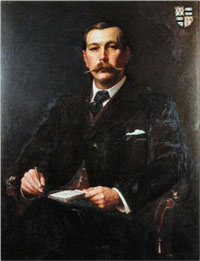
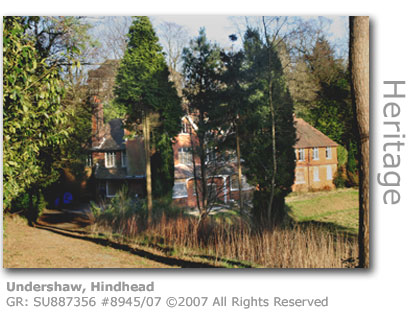
The author of the adventures of Sherlock Holmes, Sir Arthur Conan Doyle (1859 - 1930) lived for 10 years near to the Devil's Punch Bowl at the house (GR: SU 887356) he had had designed for him. The short stories, originally published in The Strand Magazine featured the local countryside. He is said to have written The Hound of the Baskervilles and The Return of Sherlock Homes at the house.
The location was perfect in Doyle's mind for his wife who was a longtime sufferer of tuberculosis would benefit from the unique microclimate of the plot giving a dry sheltered position for the house that he had built in 1896 with her particularly in mind. He paid £1,000 for the four-acre (1.6ha) plot of land overlooking the Nutcombe Valley and drafted the first designs of the house himself before passing them over to architect and friend Joseph Henry Ball to complete.
The build, costing around £5,000, provided 7,500 sq ft (697 sq m) of living space for the couple and their two young children. Conan Doyle moved out of Undershaw in 1907 after the death of his wife the previous year. Doyle let the property in the hope that his children would eventually take ownership, only selling it in 1921 when his son lost his life in the flu epidemic of 1918. Various members of Doyle's family are buried in nearby Grayshott churchyard. Doyle himself, who died at his house in Crowborough in East Sussex in 1930, is buried at Minstead in the New Forest, Hampshire. The new owners added a wing of 2,500 sq ft (232 sq m) in the mid-twenties, selling Undershaw to the Bridger family who took the property on as part of their investment portfolio. In the ensuing 69 years very little was done to the house which ensured that many of Doyle's personal touches remained intact. These included heraldic windows, the low riser staircase that had been installed to help his ill wife, and the billiard room. The underfloor brick-lined water well also remained. Undershaw operated as a private hotel and restaurant from 1924 until 2004, closing when the new owners Fossway Limited took ownership. They bought the property for £1.1m in February 2004. Undershaw sits at the crossroads in Hindhead village alongside what was the busy A3 London to Portsmouth trunk road, and today has benefited from the the opening (2011) of the Hindhead Tunnel. The 36-room house house seemed to have exerted a great influence over the writer and specifically is said to have provided the inspiration for The Adventure of the Norwood Builder (1903). This account by The Sherlock Holmes Society of London highlights the author's productive time there.
Sadly since its sale in 2005 the Grade II listed building has sat empty and is rapidly falling into disrepair. The extent of the problem has come to light with an official works notice issued to the owners to effect an estimated £64,000 worth of remedial work which includes securing and waterproofing the building. If the notice is ignored Waverley Borough Council have the legal right to gain access and undertake the work. The developer, Desmond Moore, has encountered fervent opposition led by The Victorian Society (1) to plans for the property to be subdivided and a planning application to divide the house into four dwellings was withdrawn (2006). Today evidence of the decline include smashed stained glass windows, a leaking roof which has been further worsened by theft of lead from the structure, and general vandalism.
Undershaw at its prime was a fantastic house designed in the 'Arts and Crafts' style of Doyle's time and international efforts have been made (2006) to secure an upgrade of its listed status to Grade I. The house has 36 rooms, and although many of its original features were lost when it was converted into a hotel in the 1920s, it still has the author's initials monogrammed on ground floor doors and some undamaged stained glass windows bearing the the family crest. As recently as 2004 food critics from the national press paid the house a visit when it was a restaurant under the auspices of restaurateur Peter Ilic, and here they gave a glimpse of the sadness of what was once a grand house.
(1) The Victorian Society, which was founded in 1958, is the national society responsible for the study and protection of Victorian and Edwardian architecture and other arts. Sources: The Department for Culture, Media and Sport has rejected (February 2007) an application to have Undershaw upgraded to Grade I status stating that the writer was not judged significant enough to warrant the change.
The fallout has been considerable with writers condemning the move and failing to recognise the literary importance of Conan Doyle. The writer Julian Barnes' (Flaubert's Parrot 1984 Booker shortlisted) novel Arthur & George features the house extensively. The Booker shortlisted story based on the true tale of an early 20th century solicitor who had been accused of maiming cattle and who is saved by the intervention of Sir Arthur Conan Doyle.
The creator of Inspector Rebus, Ian Rankin, has added weight to the criticism calling it 'literary snobbery'.
The Victorian Society, who made the application, have lodged an appeal pointing out anomalies in the department's approach by citing the Grade II* listing of a house that belonged to the grandmother of poet Tennyson simply because he had stayed there.
Source: The fact that the local council has now (May 2007) taken action to secure emergency repairs to the building was highlighted in this piece published by Private Eye in their 'Nooks and Corners' section:
Source: The repairs under an Urgent Repairs Notice (URN) had to address the loss of areas of the lead roof to thieves and to protect the building against further vandalism and damage from the elements. Since the URN was issued by Waverley Council in December 2006 the owners have completed remedial works including making the building secure but did not comply with the requirement to install 'an effective temporary scaffold lid'. The council undertook the installation at a cost of £22,242 and is entitled to reclaim this, plus the ongoing £1,160 monthly rental of the scaffolding' from the owners. The council also fitted an alarm system. The owners have stated that they intend to install a close-fitting temporary felt roof to replace the scaffolding that is now becoming insecure. The council are exploring whether a full repair notice will need to be enforced. If this notice was not complied with the council could start compulsory purchase proceedings.
The building since March 2004 has been in the ownership of Fossway Ltd registered in the British Virgin Islands. The Save Undershaw Appeal, which was launched in 2008, has succeeded in raising public awareness as to the building’s plight and the potential it also has for playing a part in the regeneration of Hindhead. Public consultations carried out in 2008 by local action group Hindhead Together, as part of their survey of 350 local residents and businesses into the re-development of the Hindhead crossroads, revealed the strong opinion that the building should be put to a use that retains public access. A previous attempt to purchase Undershaw and renovate it back to its former glory as a hotel and wedding venue failed in 2008. Alternative plans being explored include converting the building into a visitor and heritage centre and a youth hostel by the Youth Hostel Association (YHA).
A 10-year-old Hindhead schoolboy, who was involved in a project at Shottermill junior school about Conan Doyle and his home, became so angered at the plight of Undershaw that he started his own campaign to raise a petition to present to Waverley Borough Council.
Harry Groves raised a petition of more than 30 names, many of them collected after a presentation he made to his class.
Waverley Borough Council rejected the latest application (March 2010) which was to convert the building into flats. At the centre of the decision was the fact that there were concerns that the plans would be contrary to the Hindhead Together plan to promote the area as a tourist attraction. Previous applications that have all fallen through have included conversion to a hotel, wedding venue and museum.
Stephen Fry, the actor, writer and presenter of TV show QI has joined the 1,500 people objecting to plans of redevelopment. Source: Permission for the redevelopment of Undershaw was granted (June 2010) despite a high-profile campaign, three petitions featuring over 1,100 signatures and 213 letters of objection. The developers can now proceed to convert the building into three flats with a new-build of five three-storey townhouses alongside. Objectors included Stephen Fry, Sir Christopher Frayling and actor William Roache.
Source: Surrey Advertiser 10th June 2010 In the ongoing battle to save Undershaw the Undershaw Preservation Trust announced (March 2012) that a judicial review has been scheduled to take place in May 2012. "We've been working hard to get the hearing as we and our legal team believe the decision to develop was unlawful," said Lynn Gale of the Trust. "We need to remain optimistic that the decision can be overturned. We want to see the house remain as a single unit. All we can do is continue to raise awareness of the house worldwide. In the last year we've been inundated with emails from supporters." Surrey Advertiser 9th March 2012 Speckled Wood The National Trust centre at Swan Barn Farm in Haslemere is having a new 'ecologically-sound' accommodation block for long-term volunteers constructed (2011). The building, named Speckled Wood after the butterfly, is being built from materials sourced from local trust properties. The house, designed and built by Lodsworth woodsman and eco-author Ben Law, has used almost all natural materials with planks and beams sawn on-site. Clay excavated from the foundations has been used on the walls. Douglas fir has been used for roof rafters and larch for the many thousand shingles that make up the roof tiles. A bio-mass heating system has ensured that the building is 'an ultr low carbon emission unit'. The Peasant Arts Movement The Haslemere Peasant Arts Society was founded in 1897 to source and preserve traditional handicraft made in the area, and also to inspire local people to maintain the traditions of craft and weaving. The collections were to be housed in the Peasant Art Handicraft Museum which were eventually moved to the Haslemere Education Museum in 1926. A significant collection of 600 peasant art objects, gathered by Gerald Davies a master at Charterhouse School in Godalming during his travels across Europe between 1885 and 1908, was sold at a 'nominal fee' to the society in 1909. An article, published by The Craftsman in January 1902, describes the location of the Peasant Arts movement in Haslemere. The author was Mary Woolson, President of the American Women's Educational and Industrial Union. The abridged version below was sourced from the Peasant Arts Haslemere blog.
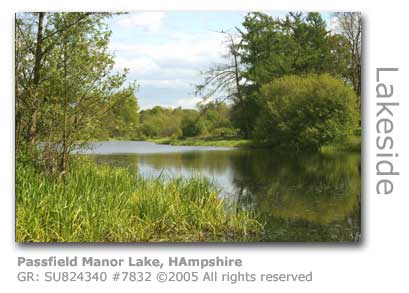
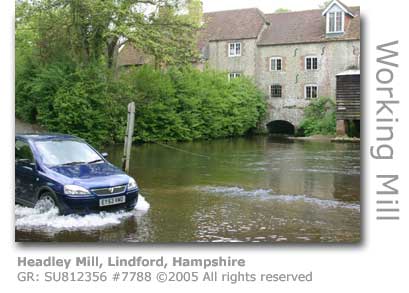
The Peasant Arts movement were active campaigners against the spread of industrialisation. One of their core beliefs is introduced in a brochure Haslemere Weaving Industry published by the group: "... the belief that the production of materials by hand for use in the home and for the clothing of its inmates is a great source of happiness for the worker and has besides an educational value hardly to be measured." The Peasant Arts Guild benefitted from the donation of Foundry Meadow in 1914. The land was the site of weaving houses and workshops that had been erected by politician and Joseph King at his property in Kings Road, Haslemere. He created the Peasant Art Handicraft museum here in 1912. King also supervised the move of the collection to Haslemere Educational Museum, and contributed funding to assist with housing the collection. King lived with his family in the Arts and Crafts inspired Sandhouse country house in Witley, completed by Francis Troup in 1902. The family moved to Hill Farm, Camelsdale near Haslemere in 1922. Another notable resident active in the Peasant Art movement was Greville MacDonald, an eminent ear, nose and throat Harley Street specialist. After his retirement he moved to Wildwood, Weydown Road, Haslemere in 1919. His parents had lived in St Georges Wood, a house he had built for them in 1900. MacDonald provided financial help for the movement. This stretch of the Wey Valley was involved in what is collectively known as the Wealden Iron Industry which became active in Roman Times and continued on into the Middle Ages, and beyond. Iron smelting in the valley used local ironstone, which can be easily found today lying on the ground all around, and burning locally made charcoal as the heat source. Early smelting was in bloomeries, so called because these simple clay furnaces produced a ‘bloom’ or a lump of iron. The adopting of water-powered bellows in the 14th century increased productivity, but the local industry was dramatically transformed at the end of the 15th century when the secrets of blast furnaces were learned from French iron makers who settled just across the Sussex border. The new iron was cast into ingots called ‘sows’ and ‘pigs’ which had a high carbon content making the iron strong enough to be used in guns and cannon balls. The introduction of great waterwheel driven hammers enabled carbonless wrought iron to be shaped into all manner of products bringing considerable wealth to the area. There are good examples of hammer ponds, the reservoirs feeding power to the hammers, and the references remaining in the names of settlements in the valley laying witness to the importance of the industry here. Hence the likes of Hammer, Hammer Hill, Hammer Bottom and Hammer Moor to name but a few. Bramshott, Liphook & Now in the county of Hampshire, the Wey brushes past the small town of Liphook and there veers northwards by the ancient village of Bramshott with its 13th century church (GR: SU843329), the manor there important enough to have been listed in the Domesday Survey, and on towards Lindford. A grand house, Bramshott Place (GR: SU843322), was built by John Hooke, a clothier from Godalming, in the 16th century, and it was here that Balfour masterminded his strategies before the Battle of Cheriton Wood (1644) in the English Civil War. The original house, which took five years to build and was finished in 1580, was intended as a status symbol for Hooke who fraternised with leading Parliamentarians of the day. 17th century Hearth Tax documents listed 15 chimneys in a red brick structure designed along a Dutch style, although no pictures survive of what must have been a grand country residence. Demolished in 1850 all that remains as a memory of the house today is a Tudor gatehouse. This is a small square two-storey brick building circa. 1575 located in the grounds of the 19th-century Bramshott Place, now King George's Hospital. It was one of a pair, and the main house was situated to the south of this remaining gatehouse, with The Great Bowling Green to the left of the drive. In 1610 Hooke bought the manorial rights of Bramshott to provide a further mark of his status, shifting the locakl centre of power from the original manor house situated near the church. Liphook itself developed as a settlement providing services for the Stage Post with coaches travelling from London to Portsmouth. The Royal Anchor Hotel, founded in 1416, regularly provided hospitality for royalty including Queen Victoria, George III and William IV. Samuel Pepys and Lord Nelson were also guests, and an Elizabethan door presented by Queen Victoria bearing the royal arms graces the bar. The novelist Flora Thompson (1874-1947) wrote the Peverel Papers as a Liphook resident in 1916 inspired by the beauty of the area. A plaque identifies her house, once the post office where her husband was Postmaster, and there is a bust of her opposite the new post office. And where does the legendary George Best fit into the history of Liphook? The high-living English veteran footballer, sadly now more renowned for his alcohol fuelled high jinks than his once unbeatable skills on the pitch, was a local man and made front-page news for a drunken brawl in 2004. Reportedly according to Best's account he was seated in The Royal Anchor quietly sipping a white wine spritzer when a resident took a swing at him. The other man told a different story. The remains of an ice house (GR: SU825308), used to preserve food a few centuries ago, lies buried in the grounds of Foley Manor on the outskirts of the town. It consists of a 12 ft (3.7 m) diameter circular brick chamber with a dome supported by an iron pole. The property is not open to the public. There are several examples of ice houses in the Wey Valley with the best preserved at Hatchlands (GR: SU ) a National Trust property near East Clandon. The parish has associations with Sydney and Beatrice Webb, founders of the Fabian Society in 1884, and who built Passfield Corners. The Fabian Society is a socialist think tank dedicated to social reform through political debate, and today has a considerable membership of leading socialist reformers. Bramshott Mill during the early17th century operated as an iron mill known locally as the Bramshott Hammer. In 1690 this was converted to papermilling. The Mill House, then owned by the brother of a Liberal Chancellor of the Exchequer, was burned to the ground by suffragettes in 1913. Only the front steps and a garden wall remain. Another mill, this milling flour, was built in the 18th century at Bramshott and was converted to the Old Mill House (GR: SU837332) as a private residence in the early 20th century. The house has retained some of the machinery, sluices and part of the millpond although the waterwheel was dismantled. Standford Mill is recorded as operating papermilling from 1808 and the building was converted into a private residence in the 1970s. Standford is also documented as having had an iron furnace at some point. The valley here has a long history of iron-making dating back to Roman times and various springs rise here to serve as tributaries to the Wey. Closer to Lindford the river runs through the grounds of Passfield Manor. A public footpath runs alongside the lake which is set in picturesque grounds, and it is possible to have a glimpse of the impressive manor house here (GR: SU828337). Passfield Mill was a paper mill in the late 17th century and built on the site of an iron mill. A series of fires in the late 18th and early 19th centuries resulted in a relatively modern brick replacement, and the Mill and Mill House have now been absorbed into a light industrial park, the Passfield Mill Business Park (GR: SU819345). Although at its peak there were at least a dozen watermills active at one time or another on the six mile stretch of river between Haslemere and Lindford, it is not until Headley Mill (GR:SU812356) that there is any significant example left of industry directly associated with the Wey. This mill is the last commercially working watermill in Hampshire with the firm J. Ellis & Sons working the mill to produce feedstuffs for animal and poultry, running modern machinery from the relatively modern (1927) breast-shot waterwheel. There are four pairs of the original mill stones in situ which, although not used for animal feedstuff production, have been kept in working order and are occasionally run for public demonstration. Each stone is 4ft (1.2m) in diameter and 10ins (25cm) thick weighing in at 15cwt (762kgs) There is a scale model of Headley Mill at the Haslemere Museum. Woolmer Forest (GR: SU800320) alongside Bordon and Liphook has a landscape of rolling hills with partial heather and forestry coverage together with low lying bogs and ponds, and has benefited by being under the control of the army (see Bordon garrison below). The name derives from the ancient 'Wolf Mere' when native species of carnivores roamed the area. Stone Age artifacts, pre-Roman burial mounds and Roman coins have been found across the local area. The forest was under the direct control of the Crown as a Royal Forest until the 14th century and served for centuries beyond this as a source of timber for the naval shipyards. The forest's current size of approximately a square mile can be compared to that recorded by Gilbert White in 1789.
Parts of the original forest still remain as scattered parcels including Broxhead Common and Slab Common in Whitehill, Kingsley Common, Shortheath Common in Worldham and Ludshott Common in Bramshott. An area of heathland within the forest has been designated as a Site of Special Scientific Interest (SSSI) and a Special Protected Area (SPA) covers Longmoor. The Deadwater Valley Walk penetrates a 50 acre area of heath and woodland. The forest boasts 500 species of wild plants with several listed as of national and local rarity. The bogs are especially important habitats and harbour two species of carniverous Sundews (Drosera), 11 species of Sphagnum Moss and Hare's Tail (Lagurus ovatus), Cotton Grass (Eriophorum vaginatum) and White-beaked Sedge (Rhynchospora alba). 70 species of fungi have also been recorded. Fauna species are plentiful too with over 50 species of spiders, 300 moths, 34 butterflies, 25 hover-flies, 12 wasps, 10 bees, 24 dragonfly and damselfly, 71 terrestrial and over 57 aquatic beetle. Many of these insect species are rare with one of the water beetles (Graphoderus zonatus) being unique to the area. Local environmentalists claim that the forest is the only place in Britain where all 12 species of native amphibians and reptiles can be found in one place including the rare Sand Lizards (Lacerta agilis) and Smooth Snakes (Coronella austriaca), and Natterjack Toads (Epidalea calamita). 133 bird species have been recorded including Grey Shrike (Lanius excubitor), Marsh Harrier (Circus aeruginosus), Buzzard (Buteo buteo) and the rare Dartford Warbler (Sylvia undata). Mammals include roe deer, water voles and the ubiquitous foxes, rabbits and grey squirrels, and smaller mammals including several species of bat together with mice, weasels, stoats and shrew. In 1974 the Ministry of Defence established the Woolmer Conservation Group, its first (they now have over 200 worldwide at locations where the British military are based). The group coordinates the combined activities of English Nature, the Hampshire and Isle of Wight Naturalist Trust, the British Herpetological Society, Deer Management and the MOD's Defence Land Agents. A carefully monitored management plan is followed which has included dredging and enlarging Woolmer Pond (GR: SU787318) and clearing many hectares of scrub. The army has implemented a no-firing policy on the ranges in September annually to facilitate conservation efforts. However under a 2007 defence review the MOD are closing the REME garrison at Bordon and fears are being expressed locally as to the future of the forest. SEE BELOW Bordon, which has the origin of its name from a hill fort overlooking Woolmer Forest, and Whitehill are two linked settlements that have rapidly grown over the last century in part due to the army garrison based here. The area with Woolmer Forest at its centre is steeped in ancient history dating back to the Stone Age. The forest is the remnant of a medieval hunting forest that covered much of North East Hampshire, with the heathland rich in natural wildlife habitats. Much of this environment has been preserved due to the fact that 300 hectares was secured by the War Office in the 1860s to be used for military training. The adjoining village of Whitehill, records of which date back to 13th-century maps, prospered from being a stopping post for the new turnpike roads. The first, built in 1826, was cut through the forest to link Farnham and Petersfield with a second constructed in the 1860s connecting Liphook and Greatham. The Army had a garrison at Bordon prior to the Boer War (1899 - 1902) during which camps were built to receive troops returning from the war and celebrated its centenary in 2004. The Royal Electrical and Mechanical Engineers (REME) currently have 4 Battalion, which was formed in 2000, based at Bordon, and has a remit to provide equipment support to mechanised brigades. This support includes the maintenance and repair of vehicles and electronic equipment at barracks and in the field on active duty. The battalion was deployed to Iraq in 2005 and in 2007 is on duty in Afghanistan. The School of Electrical and Mechanical Engineering (SEME) was founded in 1961 from two REME training units based at the Bordon garrison (GR: SU790355) and has a role to train servicemen and women in electro-mechanical skills and as well as units from the Corps of REME it also provides training for foreign and Commonwealth soldiers and civilians. Over 140 different courses, which have been provided for the regiment by Vosper Thornycroft since 1998, cover vehicle mechanics, armoury and metalworking. The unit is one of the country's largest training organisations with over 4,000 students undertaking courses annually and 1,200 students in active training at any one time. The 468 Specialist Territorial Army Volunteer soldiers of 104 Battalion REME are headquartered at the Bordon garrison. St George's Garrison Church in Station Road, Bordon provides Church of England services for service personnel and their families. Three miles (4.8km) away near Greatham a training camp is operated at Longmoor (GR: SU795307) which originally provided an operational centre for the Infantry, Royal Engineers and Royal Corps of Transport. The area has been used for military training since 1863 when the Army purchased 781 acres of land at Longmoor from the Commissioner of Her Majesty's Woods, Forests and Lands. Initially soldiers had to march a distance of 20 miles (32km) from the Aldershot garrison town breaking camp on land now occupied by St Lucia and Trenchard Parks, until a permanent camp was established. Construction work was completed in 1903 but the camp was never popular with soldiers who complained of 'damp and unhealthy ground'. The problem became so bad that in the same year the War Office was forced to relocate part of Longmoor Camp to Bordon. In order to move 68 huts to Bordon a two-track narrow (18" / 46cm) gauge railway was built through the forest and heath, the route of which can still be seen today. The huts, which were 72ft (22m) long, 21ft (6.4m) wide and weighed 30 - 40 tons were each cranked up on to seven pairs of trolleys and were towed by the joint efforts of horses, steam and manpower at an average speed of 3 mph (4.8 kph). The process was laborious requiring a steel hawser to be dragged forward 500 yards (457m) along the tracks by two horses. The cable attached to a steam powered winch mounted on a platform to the front of the hut was then hitched to a tree and the trolleys winched forward before the process had to be repeated. On the steeper gradients traction engines were deployed to assist in the winching process. As the average weekly movement was only four huts the whole process of relocation took two years to complete. The relocation, which was completed in 1905, was not without incident and included one fatality. A sapper of the Royal Engineers lost his life when a hut swung sideways when being jacked back on to the ground and crushed him. Another incident when one of the huts fell from the line at Whitehill resulted in the hut being abandoned and being used for a time as the local police station. The police hut stood right alongside the 1907 military railway (see below). The existing police station was built in 1931 behind the site of the original. The camp remaining today, which opened in 1978, is designated as a self-catering facility with units having to bring in their own stores and catering personnel and can accommodate 99 officers, 137 non-commissioned officers and 500 junior ranks. Nearby are the Longmoor Ranges which spread across Broxhead Common, Kingsley Common, Shortheath Common, Hogmoor Enclosure and The Warren. Woolmer Forest including Cranmer Pond and Woolmer Pond fall within the ranges' designated danger area. The ranges are open to the public when not in use by the military, access being denied when red flags are flying on the perimeter during the day or red lights are activated at night. Public access is permitted subject to the provisions of the Aldershot and District Military Lands Byelaws 1976 and the Longmoor Ranges and Demolition Training Areas Byelaws 1982. The London and South Western Railway opened a link from Bentley to Bordon in 1905 and the War Office extended this in the same year to Longmoor. The route chosen was different to the narrow gauge railway because of the steep gradients that had to be negotiated there, with the standard gauge line being constructed close to the Whitehill to Greatham road. The Army constructed workshops, stores and a locomotive shed at Longmoor with much of the construction utilising materials salvaged from the Suakin-Berber military railway that had been built during the Sudan campaign of 1882 - 1885. The army's link was completed in 1907 and was designated as the Woolmer Instructional Military Railway (WIMR) which servicemen quickly renamed as the 'Will It Move Railway'. Various Railway Regiments were based here until 1969 when the Longmoor Military Railway was closed. The line was dismantled in 1971. During the First World War Canadian soldiers were billeted at both Bordon and Longmoor, at which time a sawmill was constructed by the Canadian Forestry Corps by the Deer's Hut at Liphook. The Canadians returned during the Second World War and the existing SEME training area at Bordon was a Canadian Base Ordnance Depot and Workshop. A commemorative stone was erected in 1985 on the site of the original Garrison Church in memory of Canadian soldiers who served during both wars. Two miles (3.2km) away at Oakhanger are based three satellite communications units which provide a ground relay station for the control of UK and allied satellites. RAF Oakhanger provided the focal point of UK military satellite communications for all three services from 1969 until 2003 when the base was closed as an RAF station. An independent contractor now provides the UK Military Satellite Communication System service. The Phoenix Theatre and Arts Centre in Station Road, Bordon was converted from a former Edwardian school. Described as 'intimate' the theatre puts on over 30 professional shows a year. The site of the modern One Stop convenience store was where the Church of England in 1904 had constructed a Soldiers and Sailors Institute building to provide leisure facilities. The structure, which was officially opened by Princess Alexander of Teck, was of corrugated iron with a wooden-boarded interior and took seven weeks to complete. The facilities included a refreshment room, a reading and writing room where concerts were held, a billiard room, a large devotional room with a harmonium and five bedrooms and two bathrooms. The facility was later added to with a 500 seater hall and a dance hall. The building was demolished in 1960. The Ministry of Defence (MOD) has decided (2007) to consolidate army training following a Defence Training Review from the current 30 sites nationally to 10. Up to 600 acres of MOD land at Bordon will be released for local development over the next few years with the possibility of up to 5,500 houses being built on the land. Local campaigners are arguing for the Bordon rail link to be restored to help absorb travel demands from the huge influx of new residents. £564,000 has been earmarked for providing a facelift for Bordon town centre and will be used to link the Forest Community and Forest Shopping Centres and provide an outdoor arena. The electro-mechanical training currently delivered by SEME at Bordon will be relocated to St Athan in South Wales with a small unit remaining at Bordon for vehicle recovery training. Military and civilian personnel and students locally will be reduced by an estimated 1,800. Initial reports suggest that the transition will be completed by 2011. © Wey River 2005 - 2012 |