|
HOME |
The River Wey Twins Meet After the northern and southern branches meet at Tilford the river naturally becomes deeper and broader as it copes with the combined volume of water. Passing by one of the many nature reserves along the valley, the river gathers strength as it sweeps through the meadows around the village of Elstead. |
Wey WEY FACTUAL
WEY CANINE WEY RANTER "So, as the launch of the World Cup loomed I felt more and more compelled to make my own flag. Of course my husband's new Morris Minor 1000 seemed to lend itself rather successfully to the styling of the project.Weren't things so much nicer in the old days before they could all be mass-produced in China?" Blogger Ginny eloisegrey.typepad.com 11th June 2010 WEY DACE WEY TORCHBEARER WEY GARDEN "In my own garden, it's a fine balancing act between beautiful exotics and staple natives, between orderliness and animal refuges, between an inspirationally designed minimalist Chelsea Flower Show garden and a place of natural beauty. "I love using an array of bulbs to increase the season of interest and to layer planting. I feel that by using vertical plants and trees we draw the space above us into our gardens making them feel bigger and blending them into our surroundings. I also tend to choose plants that maximise the seasons of interest and wildlife diversity." WEY INSPIRING WEY WI WEY REMARKABLE "It's been quite an experience but I've had to give it up because my neck has gone," said Harrison. "It [his neck] has lasted very well and it's deterioration, old age, call it what you like. To be giving up is terrible because it's been quite exciting." getsurrey.co.uk 15th June 2011 WEY VE DAY WEY BIONIC "I don't have to think about every step and therefore I'm not tiring myself out. It's been a life-changer within the space of a week." The £50,000 German-made prosthetic leg has a gyroscope and accelerometer measuring gradient and speed, and can differentiate between standing still and walking. The leg has 10 different activity modes including cycling, cross-country skiing and golf. bbc.co.uk 9th November 2011; thisislondon.co.uk 9th November 2011 WEY PITCH'N'PUB "Pitch: Tilford Woods is a stunning country retreat offering luxurious log cabin accommodation in the heart of beautiful rural Surrey. "Pub: The Mill is a largely 18th-century four-storey watermill in a special setting above the prettily banked River Wey at Elstead, with helpful service a range of cask ales and wines to complement delicious food." mirror.co.uk 9th April 2011 WEY SCREENING WEY CONTENTIOUS |
|
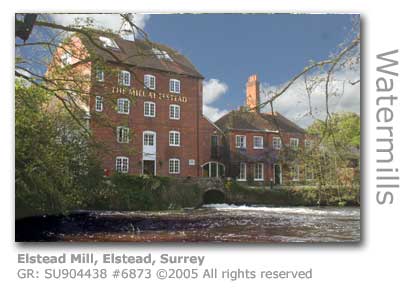
Thundry Meadows Nature Reserve As the Wey meanders through secluded fields beneath Charleshill and on towards Elstead, the river passes by the Thundry Meadows Nature Reserve (GR: SU 896439) on its northern bank. Picking up on a local ancient name that references to the Norse god Thor, the reserve is a Site of Special Scientific Interest (SSSI) that protects an area of unimproved wet and dry meadows. Over 100 separate species of plant have been recorded here and are protected by the Surrey Wildlife Trust. Trees alongside the drainage ditch system are being coppiced as part of a rotation and hedges have been laid with the meadows lightly grazed by cattle to maintain the open spaces for a wide diversity of wildlife. The reserve is open to the public under Defra’s Countryside Stewardship Scheme with cooperation from the private owner of the land, although current status should be checked with the Trust. The access point is at the GR above. Elstead Just beyond the meadows the Wey fills the pond feeding Elstead Mill (GR: SU904438). This is an ancient mill site with mills here for many centuries owned by the Bishop of Winchester with a reference in the Rent Rolls first appearing in 1208. It followed various uses including corn, fulling and malt.
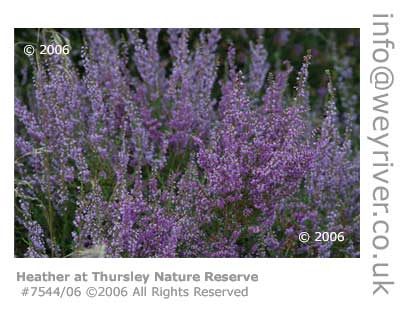
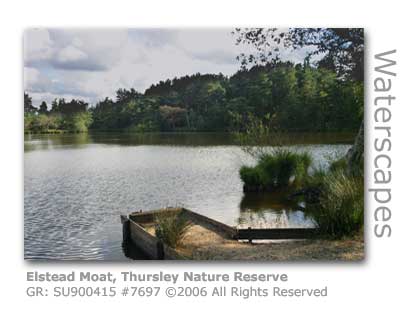
The original mill was completely burnt down during the Civil War in 1647 and rebuilt. Primarily a corn mill until it was converted in the 1830s into a factory producing worsted braid and which finally closed in 1881. Worsted is a stiff smooth fabric spun from wool and popular for decorative use on military uniforms. The mill once had two waterwheels, the one preserved today was originally on the outside of the building but now rests within a brick and weatherboarded extension displayed behind a glass screen. This large 15 ft (5 m) diameter and 5 ft ( 1.5 m) wide wheel was last used to generate electricity for the mill house until 1948. The existing building mostly dates back to the beginning of the 19th century. During a renovation in 1908 an old fireplace with a valuable fireback dating back to Henry VIIs reign was uncovered. The fireback was of Wealden iron manufacture probably originating from one of the many ironworks elsewhere in the Wey Valley. The small building by the millpond was once used as the administration and pay office for the work force. There is a Second World War pillbox to the front of the building. The brick and concrete built defensive structure, today bedecked with a huge hat of natural greenery, was part of the defensive line protecting southern England and is of type FW3/24 (1). (1) A hexagonal pillbox with an internal anti-ricochet wall and the rear wall lengthened to take two rifle loopholes in addition to five Light Machine Gun loopholes. Both 15in (38cm) and 42in (107cm) thick walls are common. Designed by DFW branch 3. The mill is open to the public in as much as the building was converted some years ago for use as a pub and restaurant. Situated on low ground the building and grounds are prone to flooding. Recent floods include January 2008 when the Wey burst its banks after heavy and persistent rain hit most of the country. Flood gates were opened upstream to protect a high intensity residential area as part of normal flood control procedures, which resulted in the river rising to such an extent that the downstairs bar was flooded and the car park was left standing in 2ft (0.6m) of water. In February 2009 the mill was again inundated by water after persistent heavy rain. The staff had to be evacuated from their quarters in the grounds. The Elstead Moat (GR: SU900415), a large lake renowned for its beauty and wildlife, is part owned by Waverley Borough Council (WBC) and lies just outside of the boundary of English Nature's Thursley National Nature Reserve SEE MORE BELOW. There is ample parking by the lake and well signposted paths including well-maintained boardwalk trails across the wet heath from the northern perimeter of the Reserve. Their Heath Trail provides a circular walk across the bog and through dry heath and scrub and covers 1.6 miles (2.5 km) Information leaflets are available on site. Heathland birds including woodlark, nightjar and Dartford warbler reside here, together with silver-studded blue and grayling butterflies. Interesting plants incude a variety of sphagnum mosses, common sundew (Drosera rotundifolia) and bog cotton (Eriophorium vaginatum). The heathland around is vibrant with the colour of Ling heather (Calluna vulgaris).
In 2005 the Council leased their 4.5 hectares to English Nature for 5 years to allow consistent maintenance and care, and provides an unbroken expanse of protected land running from The Moat to Thursley village and the A3. The land was originally acquired in 1973 as public open space. A furore has broken out locally (August 2006) with the introduction of new signs around The Moat by English Nature which signpost the beauty spot as 'Thursley Moat'. Elstead residents are particularly proud of their heritage but have been reassured that the signage will be changed when Natural England take over from English Nature in October 2006. MORE ON THE NEW AGENCY: NATURAL ENGLAND Other open spaces nearby are Hankley and Thursley Commons, both of which are Sites of Special Scientific Interest (SSSI). Hankley is largely military-owned land and is actively used for training, although the public does have access. Landmarc manages the common for the MOD. Training on Hankley has seen an increase in recent years which has resulted in increased conflict between military and civilian needs. In 2011 Hankley Common had 241,702 man training days recorded, a 34 per cent increase over activity in 2008. One of the outcomes of this increased activity is the decision by the military to close the 'military harbour area' at Hankley where their vehicles drop troops. This will have a direct impact on civilian vehicle use and has resulted in vocal complaints from users of the common.
The MOD has however announced that closure wont take effect until an alternative public parking site has been designated. A petition by local residents has been launched (February 2012) in a bid to have the decision reversed. It reads: 'The MoD stages military training exercises on Hankley Common around once a week. It is planning to permanently close the main, central car park because it is used by pedestrians and dog walkers and 'upsets military training'. The petition is being coordinated by a local pressure group Protect Access to Hankley (PATH) who are angered by a threat to the public's free access to the common for over 40 years.
An aggressive undergrowth fire (August 2010) on Hankley Common took eight fire crews drawn from Surrey, Hampshire and West Sussex to bring under control. The fire had consumed almost 50 acres (20 hectares) of heathland by the time it was finally extinguished. Such was the seriousness of the blaze, which had started in the parachute drop zone of the military training grounds, an Incident Command Unit was deployed with additional support from 10 Land Rovers and a six water tankers. The fire service believe the blaze was started when an abandoned car was set alight.
Other blazes in the Wey Valley during the year included a 'terrifying inferno' at Frensham Common (July 2010), Pirbright Common (May 2010) and Cobbett Hill in Normandy, near Guildford. The Surrey Wildlife Trust (SWT) has put itself firmly in the firing line by proposing to erect perimeter fencing (March 2012) around swathes of Thursley and Elstead Commons (as well as Royal, Bagmoor and Ockley). Their plan is to introduce cattle onto the commons in order to control undergrowth which is encroaching on fragile habitats. However members of the public who regularly use the open spaces are objecting.
The commons are controlled by Natural England and the Ministry of Defence (which owns 30%) with the Surrey Wildlife Trust.
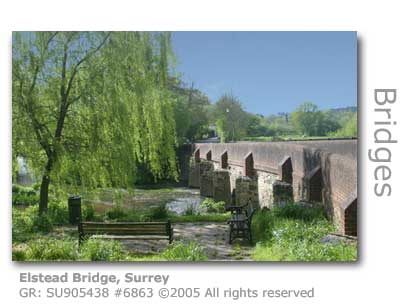
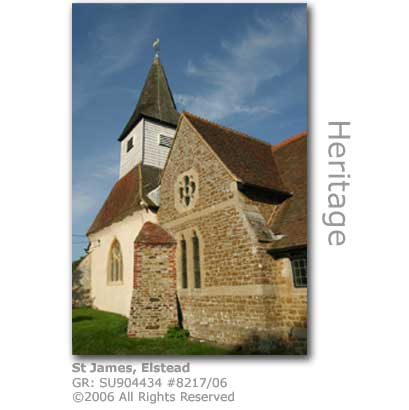
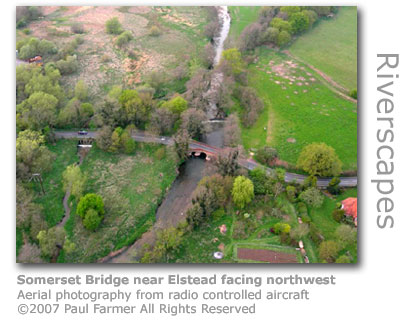
Sharp eyed locals have spotted unusual signage and movement of vehicles in the area (January 2012) which suggest that a film production company has chosen the commons for filming scenes of the new James Bond film Skyfall. Signs labeled '23' have been posted on approaches in common with those spotted in London filming locations for the 23rd 007 film starring Daniel Craig. Local reports have spotted members of the production crew frequenting hostelries in Elstead including the Woolpack. Visitors to the common (March 2012) could clearly see the construction of sets and a burgeoning village of the crews' trailers and marquees. Plasterboard and plywood were being used to create what is believed to be Skyfall Manor, a stately home which in the script is located in Scotland. A notice posted at entrances to the filming site advised that 'an action sequence' was being filmed and that this would involve the 'firing of blank rounds'. At the time actors Daniel Craig and Judi Dench ('M' in the film) were seen on set. Bond's unmissable silver Aston Martin was parked nearby. Bond films The World is Not Enough (1999) and Die Another Day (2002) were also filmed on the common. All of the filmed output of the Bond franchise has been produced by Eon Productions, who have created 22 James Bond films since 1962. An annual boat race is organised by the village in June each year to celebrate Elstead’s long association with the River Wey and is held on The Moat. It is usually an event with a difference, and in 2005 each boat entered into the race had to be made from paper sturdy enough to support the contestants, who to avoid disqualification had to stay afloat for at least 15 minutes. Now in its 19th year (2005) the event still attracts a good number of entrants, their highly decorated craft sporting names such as Fantaztic, Bumble B, Arachnid and Crazy Frog. Elstead Bridge (GR: SU905438) is an ancient structure of stone, with a brick parapet added in 1826. A second bridge built of concrete was added just downstream in 1993 to remove this bottleneck on the busy Farnham Road and help relieve some of the wear and tear on the old bridge. Locals and visitors alike often use the stretch of river downstream of Elstead Bridge for swimming. The river is accessible from the public footpath joining the Farnham Road (GR: SU905438) nearly opposite the entrance to the Mill. The village of Elstead, with a population of 2,547, is a traditional small settlement complete with green and village pub. There is evidence of settlement here since Neolithic times (4000 – 2000 BC) with the settlement developing around what was then merely a ford across the River Wey. The first documentation was in 1128 when 'Helestede' was listed in the foundation charter of Waverley Abbey St James Church (GR: SU904434) dates back to 1138 and has a scratch dial set into an east facing wall, which is extremely unusual as it would not catch much light here. Scratch dials, or ‘Mass dials’, were commonly located near the main door or priest’s door usually on a south facing wall and were very simple sun dials. About 8 inches (20 cm) across and roughly cut the dials consist of a stone on which a circular or semi-circular mark around which are chiselled a series of dots. A protruding rod or gnomon would stand straight out horizontally, although invariably these have been lost with time. Given the seasonally changing angle of the sun scratch dials were not particularly accurate but as precursors to more sophisticated sundials, clocks and watches would give a reasonable indication as to the time for regular services.
The original church was built 20 years after William Giffard, the Bishop of Winchester, donated two acres of meadow to Waverley Abbey in 1128. This building consisted of a chancel, a nave and a low shingled belfry spire. The walls of the present chancel are of the original 12th century structure as is the axe-dressed oak structure of the belfry. The church was gradually enlarged over the ensuing centuries with the porch added in the 14th century. The scratch dial was incorporated with the insertion of a three-light east window, and was cut into the stone on the exterior of the window in the 16th century. Galleries at the west end were built between 1700 - 1736 but removed in 1872 when the church was enlarged by the addition of the south aisle and vestry. The medieval font no longer remains but has been replaced by the font seen today, which was given by Bishop Sumner of Winchester in 1845. The belfry houses three bells, two of which were added with the original being recast in 1865. The organ, with the console today housed in part of the vestry, was installed by a Birmingham specialist firm in 1875 at a cost of £180. The local community has always had a proactive response to the upkeep of their church with continual refurbishment and improvements throughout the 20th century, and which continue today. These include the addition of an annexe providing meeting facilities and the opening of a Garden of Remembrance beneath the Cedar of Lebanon which was planted in 1849. The Friends of St James' provide funds through a charitable trust established in 2001 to ensure that the church remains in good repair. In 1536 upon the dissolution of Waverley Abbey St James was provided as a chapelry by the Rectors of the Parish of Farnham. The church register here also provides a good illustration that in the days before local administrative authorities the church also took note of important events requiring a legal record that weren’t related to church business, as does this entry:
The Old Cemetery in Elstead, located next to the Village Hall by the war memorial, is home to to two rare species of early summer wild flower. Shepherd's Cress (Teesdalia nudicaulis), a small species of the cabbage family, and Maiden Pink (Dianthus deltoides) flourish there.
The brainchild of the vice-chairman of the volunteer management team of the village hall, a cinema was launched in Elstead in February 2008. Peter Moon came up with the idea in order to raise funds for roof repairs and redecoration and intends to provide the villagers with a chance to see recent box office hits. The cinema was opened with a viewing of the latest James Bond film Casino Royale which reportedly attracted a capacity audience. The film was projected via a laptop computer. Elstead Cinema's second film will be the Bafta award-winning film Atonement. The Surrey Wildlife Trust reported in December 2008 that an incredible number of bats were discovered near Elstead. The finding, as part of the Surrey bat survey, centred on a single bat box that had been installed by the group where 12 Natterer's had taken up residence at Thundry Meadows.
Named after the 19th century German naturalist Johann Natterer who first recorded them, Natterer's have pinkish limbs with pink or light brown faces and ears and brown wing membranes. Their fur is also light brown. Living up to 20 years the bats emerge from their wrists at dusk to hunt small flies from foliage and branches, also taking prey in flight usually above water. They measure around two inches (45 mm) in body length with a large wingspan of 10 to 12 inches (25 to 30 cm) and weighing between 0.2 to 0.4 ounces (6 to 12 g). The Royal British Legion was able to establish its branch in Elstead thanks to the generosity of a local philanthropist. The shipping magnate Jack Billmeir gifted the 16th century Stacey’s Farm and the farmhouse grounds in 1949 to the organisation. The club’s 60th anniversary was celebrated (May 2009) with an open day at which the vicar conducted a ceremony in which the original key was presented to the club president Barry Whitaker who had been present at the 1949 opening as a young boy. The War Memorial on Thursley Road commemorates those lost in the two world wars. there are 37 names for World War I and 16 for World War II. Two names from other conflicts have also been added. Elstead Parish Council announced it was providing (April 2009)new allotments on part of a field it owns adjacent to Burford Lodge recreation ground in response to the growing ‘grow-your-own’ demand locally. However the newly established Elstead Allotment Association will not be able to proceed until funding issues are resolved for deer-proof fencing, supply water and an extension to the car park. The parish council has set aside £7,000 and one of the county councillors has pledged a personal donation of £2,000 although it is thought that there will still be a shortfall if the scheme is to come to fruition. The field on Milford Road was prepared for growing with Surrey County Council providing additional funding to establish 28 plots each of 70ft by 20ft (21m by 6m). Local farmer Derrick Pride provided his time free to plough the land in readiness for handing over to allotment holders. A car park next to the adjacent Burford Lodge recreation ground is to be extended, with the land to be fenced to deter deer and rabbits, and a water supply installed. The allotments were officially opened by the chairman of Elstead Parish Council in October 2009 with a final count of 31 plots.
Elstead boasts a high-tech eco-home built by the local Moxon family to replace their 1940s wood-built house. The house in Woolfords Lane was designed to incorporate a number of features reducing its energy and water requirements whilst providing a comfortable living space. High specification double glazed windows on the south side of the property maximise its 'solar gain' and extra thick brick and block work walls resting on a concrete raft base has increased the thermal mass of the building reducing extreme temperature fluctuations. This thick insulation has made the house essentially airtight. To overcome the intrusion of stale air a mechanical exchange system draws the air from the house and uses it to yourself the incoming fresh air. The ventilation system also eliminates condensation problems and runs on a mere 11 watts of electricity, equivalent to a fluorescent light bulb. Source: Westbrook Estate at Elstead was on the market (May 2011) for £20m. The 216 acre (87 hectare) property was a working farm from the 16th century until 1820 when a new owner, Thomas Stratford-Andrews built a country house on a hill on the estate. The family, owners of the Indo-European Telegraph Company that led the development of telegraph communications in the late 1800s, remained in residence until 1923. The next incumbent was the founder of the Ardath Tobacco Company, Sir Albert Levy, who built Westbrook House in the William-and-Mary style in 1930. The architect was the local Arts and Crafts specialist Harold Falkner. Sadly Levy died only seven years later with the property passing into the hands of the 'colourful character' of shipping tycoon Jack Billmeir, founder of Stanhope Shipping Company which was later to become part of P&O. Billmeir's occupation of the house was interrupted by a wartime requisition by the Canadian Military who moved out in 1946. Various owners followed until 1966 when the current Whitaker family moved in. Westbrook House has been restored with Billmeir's original interior and an Art Deco bathroom retrieved from a 1920s liner given a new lease of life. An east wing constructed by Holloway White Allom was added which includes an indoor swimming pool, spa, sauna, studio and gym. The house provides 19,000 sq ft (1,765 sq m) of living space with five main reception rooms and 10 en-suite bedrooms. A 12ft (3.7m) deep lake, walled garden, nectarine house and a viewing tower grace the gardens. Source: Famous Elstead residents have included Peter Sellers and Beatles drummer Ringo Starr. Ringo Starr and his family lived at 'Brookfields' leaving the village in 1969 to move to London. Footballer Ashley Cole owns Hurtmore House in Elstead Lane, Shackleford where he lived with his wife X Factor judge and Girls Aloud singer Cheryl Cole until their divorce in 2010. An Elstead school claimed an eco-first when it became the first school in Surrey (September 2010) to deliver its heating needs using locally produced fuel pellets manufactured from wood waste. St James' Primary School already holds a silver-eco award. The pellets are sourced from surplus trees felled at Thursley Common by Natural England and processed by Harvest Wood Fuels in Tilford. Parent James Little is the owner of the pellet producer.
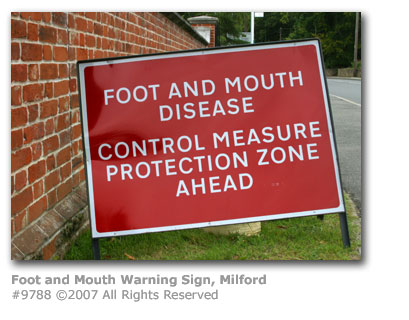
The 45kW biomass boiler, which can generate 40,000kW of heat and is expected to reduce the school's carbon dioxide emissions by 11.5 tonnes a year, cost £46,464. The installation was made possible by a grant of £23,232 from EDF Energy's Green Fund which was matched by funding from the Government's Low Carbon Buildings Programme. The Surrey Hills Wood Fuel Working Group was established (2010) to encourage people around the Surrey Hills Area of Outstanding Natural Beauty (AONB) to help manage woodland in the area by adopting locally produced wood fuel for heating. Elstead hit by A foot and mouth outbreak (August 2007) in cattle has devastated a popular Elstead farming family and shocked the local community. The last UK outbreak in 2001 resulted in the slaughter of 6.5m animals and the ruination of many farming communities. Derrick and son Roger Pride own Woolford Farm with its popular Pride Farm Shop. Cows from the farm that had been put out for summer grazing in a rented field in Wanborough near Guildford were discovered to be harbouring the 01 BFS67-like virus and immediate action was taken by Defra isolating the farm and culling cattle. A total of 120 cows from the farm have been slaughtered which include 38 head known to have the virus in the Wanborough field and the remaining cows held at the farm in Elstead culled as a precaution.
The type of virus isolated is known to be one used for foot and mouth vaccines and two laboratories in Pirbright only three miles away from the Wanborough field are being investigated as a possible source of the outbreak. A 3km exclusion zone and 10km observation zone have been thrown up around both the Elstead farm and Wanborough and Pirbright.
The farmer said that his father Derrick had found some of the cattle "off colour and drooling" on Thursday 2nd August and reported this to Defra.
The Prides are highly regarded by the local farming community as conscientious farmers.
Naturally the outbreak has dominated news in the UK and Europe, but media elsewhere across the globe have taken an active interest, with some interesting takes on Elstead and the community including this:
A public meeting was held (10th August 2007) organised by local MP Jeremy Hunt at Elstead Village Hall to provide local residents with the opportunity of being briefed about the foot and mouth restrictions. Defra minister Jonathan Shaw and an expert panel including Defra representatives, a divisional vet and the Reigate based Disease Control Centre were quizzed by the 200 members of public packed into the hall. At the centre of concern were compensation for local farmers who had lost their cattle in the outbreak and also criticisms over confused information on public movement within the protection zone. Especially effected are owners of dogs and horses, with stable owners frustrated by the confinement of their horses.
Sources: Tindle Newspapers, the owners of local newspaper The Farnham Herald, has offered interest-free loans to farmers and other businesses directly affected by the foot and mouth outbreak. The group made £250,000 available after the 2001 outbreak to help bridge the gap between the outbreak and the time when government compensation was paid, inevitably after a long delay.
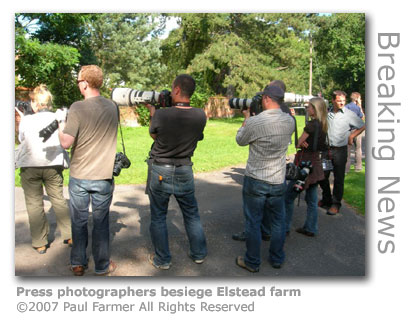
Source: Two professional photographers were summonsed to appear before Guildford Magistrates Court on alleged charges under the Animal Health Act of breaching the foot-and-mouth restrictions at Woolford Farm on 4th August. One of the photographers was fined £2,000 and charged with paying £5,000 in costs (February 2008) after a hearing at Guildford Magistrates' Court. Phillip Hollis, a freelancer covering the outbreak for The Daily Telegraph, found that in error he had strayed into a restricted area and was described as having been "overzealous" by the judge. The other photographer received a 200-hour community order and was charged with paying £1,500 in costs (March 2008). Roger Pride re-opened his farm shop (September 2007) after it was forced to close in August. Located next to the farmhouse on Woolford Lane just outside Elstead the shop usually stocks meat products from the farm although for the reopening the Pride's have had to rely on local Hereford cattle farmer Barry Myers owing to the 100% cull of their herds. In a gathering of supporters and friends the Mayor of Waverley, Bishop of Guildford and the government's rural advocate (1) Stuart Burgess celebrated this the first step for the family to get back on an even footing. Pride plans to re-stock with traditional English breeds of cattle at year's end once Defra gives the all-clear. The Prides state that they had at the time of the shop re-opening lost nearly £25,000 since the outbreak. (1) The Commission for Rural Communities was established in 2005 to provide "well-informed, independent advice to government and ensure that policies reflect the real needs of people living and working in rural England, with a particular focus on tackling disadvantage". The rural advocate acts as an official voice for rural people, businesses and communities. Surrey County Council announced (January 2008) that the foot-and-mouth restrictions will remain in place until September 2008. Officials have been concerned that barriers were being ignored by members of the public and restriction signs were being torn down. Scientists have warned that the virus can persist in the soil for a considerable time with a danger therefore present that people and animals can still unwittingly carry the virus underfoot.
Source: Surrey County Council announced (May 2008) that it had been advised that prosecution of either the government-run Institute of Animal Health or the US owned Merial drug laboratories would be impossible due to a lack of evidence to support a common-held belief that the Foot and Mouth virus originated from faulty pipework at the Pirbright complex. The council prosecution has floundered on the fact that it can't prove which laboratory was responsible as they share a drainage system. Source: The Institute for Animal Health, which is an internationally respected leader in research into animal diseases, has been earmarked for a £165m revamp although the debate as to how this will be funded is ongoing (June 2008). The parliamentary Innovation, Universities, Science and Skills committee has pressed for a solution as to who has responsibility for the site of the two laboratories in order to implement measures preventing another outbreak.
The Institute has developed vaccines into devastating conditions such as bluetongue and has diagnosed outbreaks of African swine fever in Europe. Source: Farmer Roger Pride finally got the all-clear from Defra on Wednesday 6th August 2008 and immediately started to prepare his outlying field in Normandy where the foot and mouth outbreak was originally detected. The 36 acre field had remained under restrictions for twelve months following the outbreak, which is estimated to have cost the farming industry £50m.
MORE HERE ABOUT THE FOOT & MOUTH OUTBREAK HERE Elstead's (Very Brief) Flirtation When local villagers saw a film production team take up residence (February 2007) in the Thursley Road Pavilion and learned that Elstead was to feature in a scene from Inkheart - The Movie starring Helen Mirren their excitement spread quickly. However when it transpired that the crew were filming a simple sequence through the back window of a speeding car at night their hopes of fame were dashed. New Line Cinema is making an adaptation of a best-selling novel about the adventures of a young girl whose father has the ability to bring fictional characters to life. The Elstead scene is likely to last only a few seconds it emerged. The local parish council received a donation of £200 for use of the pavilion. Other productions have chosen the wild openness of nearby Hankley Common to film scenes for action sequences. These include the BBC's Dr Who; the 90s BBC drama series Soldier Soldier starring Robson Green and Jerome Flynn; the 1980s BBC WWII Japanese POW series Tenko starring Stephanie Cole and Patricia Lawrence; and scenes from the 1999 James Bond film The World is Not Enough starring Pierce Brosnan. Source: Many thanks to Linda Prince-Caspian for providing additional information 07.07 In 2007 the American owners of an Elstead engineering works announced its closure despite being a profitable arm of the then ailing US auto parts supplier Federal –Mogul. The business had been founded by Hamilton Gordon in 1913 and named Weyburn. Rapidly developing a reputation for producing quality machined parts Weyburn became a public company in 1935 and managed a workforce of over 500 during the Second World War when it produced camshafts for fighter aircraft and tanks. Continued success saw expansion including the establishment of subsidiaries in America, Europe and elsewhere in the UK during the 1970s. In 1980 the firm in taking over a German company was renamed Weyburn-Bartel, and by the time it was bought by Federal-Mogul in 1998 had been in the hands of two other owners. Derek Watson, the son of one of the firm’s directors, who worked for Weyburn from 1922 to 1958, is staged an exhibition celebrating the company’s achievements in conjunction with Godalming Museum and the Rural Life Centre in Tilford. Watson works for the museum.
More than 150 employees attended the event (August 2009) where a wide range of memorabilia related to the history of the firm was on display, this including hand written accounts and minutes of past meetings.
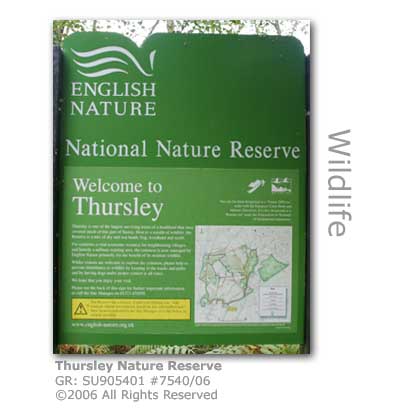
Thursley National Nature Reserve The Thursley National Nature Reserve covers commons that for thousands of years have provided natural resources for the local population. The reserve is just a remaining part of what was historically a huge heath that provided fuel, grazing, building materials, medicine and food as well as a habitat for a rich resource of wildlife. The commons were occupied for almost a century by the military, a use that peaked during World War II when units from the Canadian army were based on the commons. The heathland with its rolling hills and marshland also provided a varied military training ground in peacetime - SEE BELOW
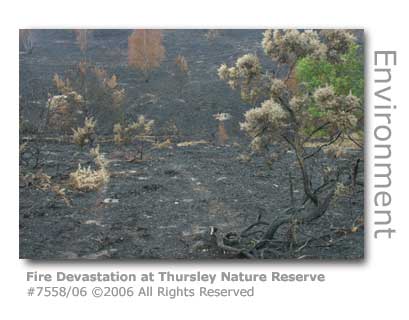
The economics of the area also shifted over time and traditional uses of the commons changed with forestry becoming an important industry locally. Large plantations, particularly of Scots pine (Pinus sylvestris), were developed and there is still much evidence of this today. Scots pine, in its timber form referred to as Deal or Redwood, is treasured as a utility timber combining adequate strength with light weight and ease of working. Treated the wood is extremely durable and has been extensively used for telegraph poles and fencing. The wood was also used locally in the 18th century for the manufacture of waterwheels and domestic water pipes. The site is designated as a Natura 2000 site under the European Union Birds Directive and the European Habitats Directive. It is also designated as a Ramsar Site under the Convention on Wetlands of International Importance. The reserve was all but destroyed by a devastating fire in July 2006 (SEE BELOW). Surrey Wildlife Trust was taking a lot of flack (March 2012) for its plans to erect a perimeter fence on Thursley and Elstead Commons in order to contain grazing cattle they want to introduce to keep undergrowth under control. MORE HERE Fierce Heathland Fire The 400 acre National Nature Reserve at Thursley (GR: SU905401) has been devastated by a massive fire that police initially suspected may have been caused by an act of arson. CLICK FOR GENERAL INFORMATION ON THE RESERVE The fire started on Friday 14th July 2006 and a week later was still burning. Over 120 firefighters drafted in from all over Surrey with additional crews volunteered by adjoining counties fought the inferno which rapidly spread across the tinder-dry heathland to threaten the village of Thursley and an adjoining mobile home park. 20 knot winds contributed to the difficulties the fire crews were experiencing. Such was the gravity of the situation helicopters were scrambled to provide information to the ground crews who at the peak of the fire were fighting in full respiratory gear in near zero visibility due to the dense smoke.
English Nature, which manages the reserve, fear for the worst as the reserve forms part of the largest remaining areas of Surrey heathland and is home to hundreds of species of insects, small mammals, birds and reptiles.
English Nature have managed to conduct an initial assessment of the extent of the damage and reckon on around 200 acres to have been lost.
Birds inhabiting the reserve include ground nesting species such as nightjars, woodlark and Dartford warbler that are particularly vulnerable to fire.
The Fire Service believe this to be the worst heath fire in the county since 1976, which resulted in the evacuation of local residents and animals from adjoining farms and equestrian centres. Two firefighters were taken to hospital when the fire was at its peak. Site manager Simon Nobes had been alerted to the fire at 12.30 am and had tried to control it in the early stages.
Surrey Police had arrested a 52 year-old Thursley man on suspicion of arson.
The police investigation eventually cleared (December 2006) the suspect after it was concluded that the fire was not of suspicious origin. An annual unofficial horse race run by travellers along Thursley Road was prevented from starting by the police who had blocked the road on Saturday due to the fire. The travellers had retired to the Woolpack pub on Elstead Green where a serious fight broke out requiring attendance by police in full riot gear complete with shields and CS gas. Six men were arrested. The current heatwave in the Wey Valley, with temperatures in the upper 90s F (mid 30s C), is causing concern that similar fires will break out in other sensitive areas. Thursley Common and Reserve is close to Elstead (5 miles) and adjoins the Elstead and Ockley Commons. Sources: The following is the text of an open letter written by the Deputy Chief Constable of Surrey Police to the local villagers in appreciation of the help given to the emergency services during their attempts to control the fire:
English Nature with other conservation groups are working together to try and restablish Thursley Nature Reserve by redressing again the original natural balance. The groups are also taking the opportunity of the fire for forward management planning. The Royal Holloway College geology department has taken samples of charred vegetation from across the reserve to undertake laboratory analysis of how hot the burn was at each point. English Nature are also maintaining a record of what vegetation is growing back at the same points, so that combined with the laboratory results predictions can be made as to what will grow after any future fires to help the team tailor the long-term management of the reserve. The fire has also provide an opportunity to re-grade tracks and improve their drainage and base to ensure that the reserve in future will be more accessible to fire fighting vehicles enabling the more remote areas to be reached a lot more rapidly in any future incidents. Much of the boardwalk network that provided access to the public is currently unsafe because of the fire and needs replacing. Trees are being cleared around rights of way and bracken will be controlled to stem its advance over exposed ground. English Nature is confident that heather, which is the main vegetation of the reserve and on which much of its wildlife depends, will regenerate quickly as the plant is very resilient. Some vulnerable species are being rescued and re-homed. This includes sand lizards and other heathland reptiles, an operation being overseen by the Herpetological Conservation Trust. Source: In a review (January 2007) of the Reserve's regeneration progress Natural England (1) are confident of an eventual full recovery, although this may take up to 10 years to achieve. In 1976 the common suffered from a similar fire and its recovery then has given today's management team some comfort. By the time of the July 2006 fire over 10,000 different species of flora and fauna had been identified in the reserve.
Natural England have also thanked the many environmental groups and local people for their support. Thursley villagers raised £700 for restoration work in a special Christmas concert. (1) Natural England is the new environmental agency formed in October 2006 through merging English Nature, the Countryside Agency and the Rural Development Service. Source: Natural England commenced (June 2007) an £8,000 restoration project to replace sections of fire-damaged boardwalk that provides access to the boggiest section of Thursley Common. Over half of the almost mile-long (1.6km) boardwalk was destroyed by the fire and renovation will be carried out largely by local volunteers. Natural England has reported (July 2007) that the Thursley Reserve is making encouraging progress towards full recovery, although it is estimated that it may take up to 10 years to fully achieve.
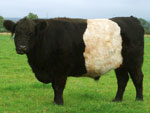
Source: Thursley Nature Reserve was temporarily closed to walkers (August 2007) whilst the Defra Foot & Mouth restrictions were being enforced around Woolfords Farm in nearby Elstead where an outbreak of the disease was reported. The reserve fell within the 3km exclusion zone placed around the infected farm and Natural England staff placed warning signs at all footpath access points. MORE HERE In a ceremony held on the recreation ground at Thursley (September 2007) a commemorative tree was planted by Surrey Police Chief Constable Bob Quick with representatives from the ambulance and fire services to mark the local community's thanks for the work of the emergency services in tackling the 2006 blaze on the common. The event, which was organised by Surrey's Local Resilience Forum (2), featured the arrival of the emergency services helicopter that had been used at the height of the fire to coordinate activity on the ground. Bravery Awards were presented to the firemen actively involved in fighting the fire during the ceremony. (2) The Local Resilience Forum is a coordinated group involving local government and emergency services with responsibility for managing 'major incidents' Thursley village hall presented a performance (September 2007) of a locally topical play to raise funds for the restoration of the local heathland. The Last of the Summer Whines, written by a local resident and which told of the success of the community-owned Three Horsehoes and the disastrous fire on the common, raised £9,500. The money will be used to form a trained volunteer group to help minimise fire risk and aid in the control of any future outbreaks. Natural England launched (April 2008) a campaign to prevent further outbreaks of wildfires which included advice to local residents and visitors to the nature reserve on how to avoid causing a fire. Particular concern is over discarded cigarettes and the use of barbecues. Banners, posters and leaflets are being distributed in the campaign. Since the blaze in July 2006 the Surrey Fire and Rescue Service has invested in off-road fire-fighting equipment. The fire service has also worked with the Northumberland Fire and rescue Service to provide specialist training to all its firefighters. For the first time since the 1920s cattle are again grazing (April 2009) on heathland that is part of the Thursley Nature Reserve. Five Belted Galloways have been released on to four hectares of Ockley Common as part of a venture by Natural England and the Surrey Wildlife Trust. The Trust owns the cattle.
Source: Six belted Galloway cattle were introduced (May 2010) to the reserve by Natural England and the Surrey Wildlife Trust, who own the animals. The new animals have been introduced following the success of the trial started in 2009. "The results of the grazing last year were encouraging, with the over-domination of grasses including molinia, or purple moor grass, much reduced," said James Giles, Natural England reserve manager. "The long-term benefits of grazing are creating a greater variety of habitats and wildlife in a very eco-friendly way. No fuel is used unlike mechanical management, nor chemicals for weed control." Surrey Advertiser 14th May 2010 PHOTO-FILE OF THURSLEY NATURE RESERVE FIRE PHOTO-FILE FEATURING IMAGES OF THURSLEY RESERVE New Threat Five months after Thursley Nature reserve was devastated by fire (MORE HERE) this important heathland habitat is now under threat from within. Silver birches and pine trees are springing up across the common and is necessitating the deployment of cutting edge science in order to try and save the heath. Natural England's site manager Simon Nobes was interviewed (January 2007) on BBC Radio 4's Today programme and revealed the extent of the problem.
However research at London University has revealed scientific findings that could help find a solution. The university's scientists have used the common as an outdoor laboratory for many years.
The findings after examination of the DNA extracted from fungi suggest that there is a close symbiosis between spores deep underground and that the heather fungi may have started to produce fungi on trees. The researchers are working closely with the Royal Botanical Gardens at Kew to ascertain if there has been a key change in the fungal components of the common.
Source: Students from Merrist Wood, the agricultural college near Guildford, volunteered their help to Natural England to undertake clearance of invasive birch and pine trees from the common. Throughout the winter (2007-2008) 40 trainees undertook clearance of scrub to encourage young heather plants to become established and recreate a healthy heathland habitat. Selected areas of trees damaged in the 2006 fire have also been felled, but Natural England have been careful to retain clumps to protect the specilaised habitats that have evolved beneath them.
Source: Rare Butterfly Returns to Thursley Prior to the devastating fire of 2006 which nearly completely destroyed one of Britain's most important nature reserves, Thursley Common has welcomed back the rare silver-studded blue butterfly.
On the eve of the second anniversary of the fire the reserve's owners Natural England announced they have found more than one hundred of the iconic butterflies.
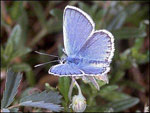
The silver-studded blue, so named due to the silvery blue metallic spots on the underside hind wings, relies on a close symbiotic relationship with ants to breed successfully. Their eggs are laid on or close to the ground often near ants nests, commonly those of the black ant (Lasius alienus). Once the larvae hatch the ants remove them usually to their nests underground where they feed off a honeydew-like secretion produced by the larvae. The larvae in return benefit from a regulated environment safe from attack by predators. Emerged butterflies usually leave the nest from July to mid-August and take wing. The silver-studded blue has undergone a major decline in the UK over the last 50 years. Large populations of grayling and purple emperor butterflies were also found along with 26 recorded dragonfly species, and solitary species of bees and wasps. The reserve again now supports populations of woodlark, nightjar, Dartford warbler, hobby, peregrine, merlin and short-eared owl. Local residents were praised by Natural England who have since the fire raised over £8,000 which has been used to help rehabilitate the heathland, as well as train and equip volunteer fire wardens and repair visitor facilities.
Source: Thursley Village Thursley, or Thoreseley as it was known in the 14th century, is a small picturesque village with a population of 500 people close to the A3 between Milford and Hindhead. It is thought that a modern translation gives meaning to the name as 'the god Tunor's leah' with 'leah' meaning a sacred grove from Celtic times.
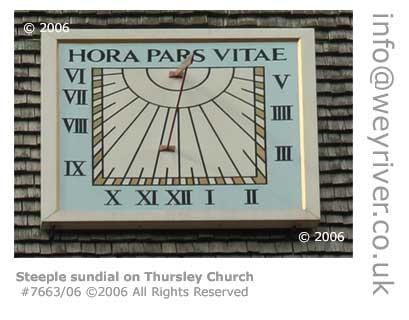
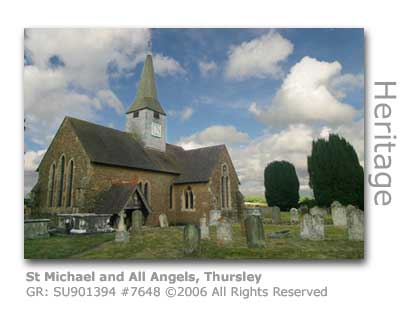
The Church of St Michael and All Angels (GR: SU901394) was originally built as a 'chapel of ease' to Witley, and although the original chapel was not mentioned in the Domesday Book there are records of it standing on the site c1100. The church itself was built of Bargate stone from nearby Godalming, has chalk dressings and has had a number of modifications over time. The timber bell-turret with shingled spire was erected c1500 and houses three bells, one of which is mediaeval. The turret has a sundial with the inscription 'Hora pars vitae'. Extensive alterations were made in the 19th century including the addition of a transept, baptistery and porch. SUNDIAL PICTURE
The vicar of St Michael and All Angels launched (January 2008) an appeal to raise £30,000 to commission a leading glass engraver to create a screen to close off the vestry. The screen, in glass to allow light to continue to reach that corner of the church, had the initial design proposed by the engraver Tracey Sheppard approved. The large-scale drawings depict a 'Thursley Tree of Life' with a tree in a heathland setting licked by flames but bursting into life. Around the tree are a Dartford warbler, dragonflies and a lizard in ferns and gorse. The Dean of Guildford dedicated the screen's artwork in November. The seven foot-high (2.1m) engraved and etched screen with two opening doors was installed in the church in April 2009 and is the church's first new work of art since the installation of the stained glass windows. So enthusiastic was the support forthcoming from villagers when the fund-raising appeal was launched that the full amount was raised without any need for additional funding.
An unknown sailor, who was murdered nearby in 1786, after having been drinking in a pub in the village, is buried in the churchyard. Three men were tried and hanged at Hindhead for the crime. MORE HERE
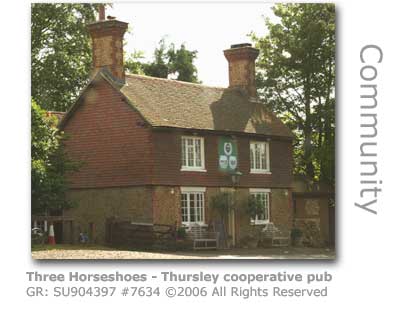
The village pub The Three Horseshoes (GR: SU904397) was saved having been closed for five years when over twenty villagers raised the funds needed to purchase the business in 2004. In an application to the Borough Council (2005) the licencees were approved in seeking additional licence to provide 'facililties for making music, films and plays' which underlines their determination to give the village a real focus for social activities. Sir Alan Traill, a former Lord Mayor of London, was listed as a shareholder in the business in 2004, which trades as Three Horseshoes Thursley Ltd. The previous owner had tried to sell the property, which dates back to 1840, as a private house.
Thursley won an award for 'Building Community Life' in the Surrey Village of the Year Awards 2005. The community was cited as having very enthusiastic informal inclusive support with good examples of Community Spirit and the community ownership of the pub was highlighted as helping to preserve the heart of the village. The awards are organised by Surrey Community Action. There was a wartime camp for Canadian soldiers near Thursley, who used the commons nearby for training. Tweedsmuir Military Camp was built in 1941 and was named after the Governor General of Canada at the time, who also as John Buchan wrote literary works including The Thirty Nine Steps. There were a number of camps in Britain built to house units of the Canadian Army destined for action in Europe. The country was also under intense pressure at the time to process over 300,000 troops returning from Dunkirk including Allied soldiers. In 1940 the War Office authorised the construction of five camps within reach of Aldershot where the British Army was headquartered, of which Tweedsmuir was one. The camp was built by the Royal Canadian Engineers and took seven months to complete. In December 1941 the first Canadian troops moved in. Tweedsmuir comprised living quarters, washing facilities and latrines, stores and training facilities. A theatre and tennis court were to be added later. The camp, which acted as a discharge facility for 'non-effective' personnel returning from active duty, officially described by the Canadian authorities as 'medical' and 'mental cases', was administered by a detachment of the Lorne Scots (Peel, Dufferin and Halton Regiment). The official military designation for the unit was the First Non-Effective Transit Depot (1 NETD) to segregate their function from other detachments of the same regiment who were deployed on active service in Europe. A striking feature of the camp were the lawns and small garden plots complete with rustic fencing that had been established under the enthusiasm of one of the camp's officers who organised regular fatigue parties to tend to the gardens. In common with most permanent camps Tweedsmuir had an active Entertainments National Service Association (ENSA) organised by the British authorities to provide entertainment for armed forces, and it would appear that the camp's facilities were well appointed.
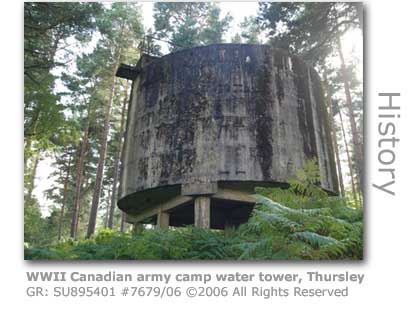
Contemporary records show that personnel at the camp had close links to the village of Thursley where Canadian troops helped villagers with vegetable plots and maintenance and in return Thursley ladies made curtains for camp buildings. The camp hosted Christmas parties for the village children. The camp was heavily bombed in 1942 and a large number of incendiary and high explosive bombs wrecked much of the camp including the NAAFI, sewage system, water supply and Officer's Mess. Thankfully no personnel were killed although six officers were hospitalised. It took eleven months to restore the camp to full functionality. Immediately after the close of the war the camp became a demobilising depot for Canadian Repatriation Units and ceased this function in early 1947. Original plans for completely closing the facility by the end of 1949 were scrapped when it was realised that there were ever increasing numbers of displaced people from Europe needing to be settled in Britain. The Polish Resettlement Corps took over Tweedsmuir in order to accommodate and process Polish nationals who were unable or unwilling to return to what had become a communist controlled state. The Poles were to provide much needed paid-labour throughout the area which included skilled engineers working at the Dennis vehicle factory in Guildford, labourers on farms and work in the building sector. Some of the women at Tweedsmuir secured work at Hurst Farm in Milford near Godalming which the Secrett family still run today (MORE HERE). The camp was not to finally close and be dismantled until early 1960. A water tower (GR: SU895401) is all that now remains of the camp, although the road layout, parade ground and some building foundations still remain. We recommend that you visit the Tweedsmuir Military Camp website for further information. The site is particularly well-researched and very comprehensive in content. Zen and Wies Rogalski who run the site are members of a Polish family that were accommodated in the camp for resettlement in Britain VISIT HERE.
A Canadian soldier murdered his 'common law wife', a local girl, during the war and the scandal became known as the Wigwam Murder. The soldier, one August Sangret, was sentenced to death in 1943. A standing stone or menhir can be found nearby on Thursley Common. One of the region's few surviving dame schools has been restored in the village (2006). The school (GR: SU901394) was built at the turn of the 19th century in the churchyard, and following the allocation of funds by the parish under Rev William Lang from the £120,000 church improvement scheme has been restored saving it for the village. The children attending the school paid a penny a week, and could opt for additional lessons to 'be taught manners' for another penny. Dame schools were founded to provide private education for working class children before they were old enough to work. Education was not compulsory for children in England until 1880 and children from working class backgrounds were rarely privileged enough to receive formal schooling, so these schools provided at least a rudimentary start for underprivileged families. They were usually run by an elderly woman who taught the children to read and write and instructed on practical skills such as sewing. This account, albeit not relating to Thursley, gives an idea as to what education was like in a dame school.
Charles Dickens refers to dame schools in his novel Great Expectations which were widespread during Victorian times. Instruction was based around the ability for children to memorise words, spellings and sums 'parrot fashion'. The women running the schools had no formal training and were often regarded more as providing an early form of child care rather than a good education. Go further downstream: PHOTO-FILE OF THURSLEY NATURE RESERVE FIRE PHOTO-FILE FEATURING IMAGES OF THURSLEY RESERVE © Wey River 2005 - 2012 |