|
HOME |
Wey Navigation The proximity of New Haw to the Thames, and the huge markets of London and Europe, ensured that the area was to remain highly industrious long after other areas along the Wey Valley fell into decline. Hackering Jack at Coxes Mill was to become a symbol of the industriousness along this stretch of the Wey, although not without dispute. |
Wey WEY HISTORICAL click image to enlarge WEY BLOG WEY SUMMERTIME "It was a memorable day in the life of the 45ft former hire-boat we had lovingly refurbished and christened 'Summertime'. With most of the work completed and the new colour-scheme gleaming, we were ready to start a new chapter - one that would include more leisurely cruising and rather less hard work, we hoped..." Blogger Andy S 15th November 2006 WEY NUDGE WEY FLOWN MOVE ON |
|
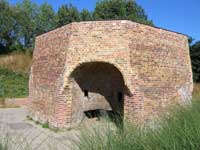
Wey Industry Just downstream of the bridge at New Haw Lock (GR: TQ055631) there was an official Navigation Wharf operational for several hundred years at which goods could be both loaded and temporarily stored in a warehouse under the watchful eyes of a Navigation wharfinger. The wharf has long since been built over. A lime kiln operated near to the wharf.
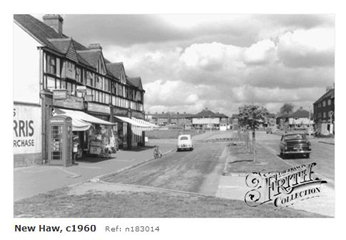
There has been a settlement at New Haw for at least 800 years when the first documentary note of its name appeared in a will in 1187. The word ‘haw’ is of Anglo-Saxon origin meaning flat marshy land by a river.
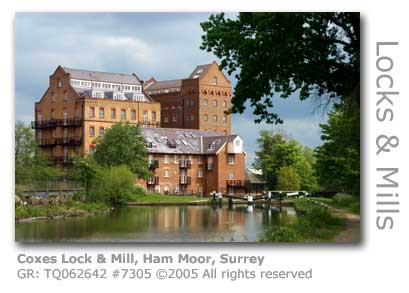
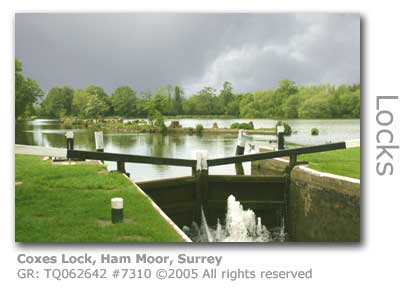
A large timber yard that once used the waterway was on the west bank downstream of New Haw Lock, now consumed by the ever hungry property developers. Further downstream on the towpath bank alongside the sharp right hand bend as you approach Coxes Mill pond you can see evidence of Heresey’s watercress beds that operated here until they were closed in 1963. Look out for the overgrown hollows. Watercress, a popular garnish and addition to salads, grows naturally in gently flowing water and was quite common along the Wey. Commercial cultivation started along the Wey Valley in the late 18th century, and the earliest large-scale cultivation in Surrey was at Abinger Hammer (GR: SU ) on the Tilling Bourne, a Wey tributary. The development of the railways in the 1850s enabled the cress to be cut, packed and loaded onto trains to be on the tables of restaurant diners in London a few hours later. Although Heresey’s didn’t expand to the size of 25 acres of beds at Abinger, it was still a considerable concern. Coxes Lock & Mill Having opened in 1653, for well over a century of the Wey Navigation’s operation Coxes Lock (GR: TQ062642) - rise of 8ft 6in (2.59m) - was in splendid isolation. Coxes is the deepest unmanned lock on the Navigation and is 1.5 miles (2.4 km) from the Thames. In 1776 an ironmaster recognised the potential the site offered and started to build his iron mill which became known as Coxes Lock Mill. It is generally regarded as industrially the most significant mill on the Wey, its importance reflected perhaps by the fact that it was not to finally close until 1983, making it the last commercially operated mill on the Wey Navigation. The huge hammer fondly known locally as ‘Hackering Jack’ was powered by the waterwheel, drawing its power from the mill pond. The huge mill pond was dug to overcome fluctuating water levels caused by the operation of the lock alongside with a cill at the entrances to the Navigation to prevent any back-flow when the river levels drop. Drawing water from the river as the mill expanded soon ensured that this would become a contentious issue between the mill and the barge owners. The pond was constructed without seeking agreement with the Navigation Commissioners. The Commissioners however resorted to biting their collective bottom lip as they needed the revenues such a large mill would attract from the barge traffic needed to service it. It wasn’t for another six years before the mill and the Navigation struck a deal. In payment for the water one shilling for each ton loaded for transportation in either direction between Coxes and Thames Lock was to be paid, with a backstop payment of £130 annually if the tonnage was not sufficient. At full speed the hammer could deliver a pulverising 45 blows a minute and such industriousness was not delivered quietly. Hackering Jack was so noisy that the infamous 3rd Earl of Portmore, who owned the adjoining Portmore Estate, did everything in his power to try and get the mill closed down. He eventually got his way when the lease in 1808 was passed from Alexander Raby, an ironmaster from South Wales, to one John Bunn who converted the mill to flour in the 1830s. Mill owners were well versed in having to change usage in order to survive, and Coxes Mill was no different. The mill was even used for silk weaving for a short period, although the venture was unsuccessful. With the advent of new technology at the end of the 19th century Coxes was financially strong enough to invest, and unlike many of its contemporaries further upstream went from strength to strength. The mill was rebuilt in 1901 and extended in 1906, becoming one of the most important industrial buildings in the country at the time. New machinery technology saw the demise of waterpower at the mill when power sources switched at first to steam, and then finally to electricity. By the mid 1960s a huge great wheat silo standing at 137ft (42m) had been constructed, with a further flour silo erected in 1969. In the same year Captain Steve White, who is featured throughout this web site by way of his recollections of his life on the river, was the last bargemaster to transport wheat to Coxes Mill as traffic switched to the roads. Barge crews at the time where able to buy loaves baked at the mill in order to test the quality of the flour for a penny a loaf. The mill joined with Allied Mills' 21 other mills in the country, and by this stage was producing an impressive 60 tonnes of flour each day. The production of five grades of white flour together with wheatmeal, wholemeal and bran was achieved by the installation of state-of-the-art milling machinery from Switzerland which utilised fluted steel rollers. In recognition of the efficiency and durability of older machinery the miller continued to operate a hundred year old belt-driven sifting machine alongside all his gleaming metal gadgetry. The three mill buildings, having been listed for preservation under a Grade II category, was converted to residential use after its closure in 1983, and now houses a considerable community of apartment dwellers who have been attracted by the idyllic setting next to the lock and large mill pond with its abundant wildlife. The complex also boasts a private residents-only gym and swimming pool. An apartment in the Daniel Lambert Mill providing two bedrooms and two bathrooms on the ground floor and complete with a balcony overlooking the canal was available for rent in August 2008 at £1,250 per month. Move on to the next stretch of the Wey Navigation: © Wey River 2005 - 2012 |